
Want to add some exotics to your landscaping or diversify your home greenhouse? Hibiscus, clivia, jasmine and more – see which plants are worth a look.
Tropical hibiscus will be a wonderful decoration of both the dacha plot and the interior of the flat. To grow it and give the right care, it is not necessary to be an experienced florist.
If you observe simple rules, then throughout the entire vegetation period hibiscus will please with its bright colours.
And they come in a variety of shades – from red and orange to bluish and purple.

Choosing a specific variety will help to combine exotics with other plants in the garden or room.
Regardless of the method of cultivation, hibiscus likes an abundance of sun and water, and prefers rich, slightly acidic soils.
This flower belongs to the bromeliad family. For example, you may be familiar with the pineapple.
Echmea is an unusual tropical plant with dense, oblong leaves that grow upwards.
They form a rosette, within which pink, similarly shaped flowers appear in summer (in the garden) and in the last weeks of winter (in indoor conditions).

It’s important to transplant any offshoots as soon as they appear, because the adult plant is likely to wilt after flowering.
As a tropical specimen, the Echmea likes high humidity and is able to absorb moisture from the air by special scales on its leaves.
In the garden, clivia can only be grown in pots or vases – it prefers cramped containers rather than open ground.
But it can be placed in a shaded spot where other flowers do not get enough light.
At home, place clivia on the unpopular northern windowsill. It needs rich soil with a good drainage system so that water does not stagnate.
It should be watered once a week during the growing season, and once every 2 weeks for the rest of the year.
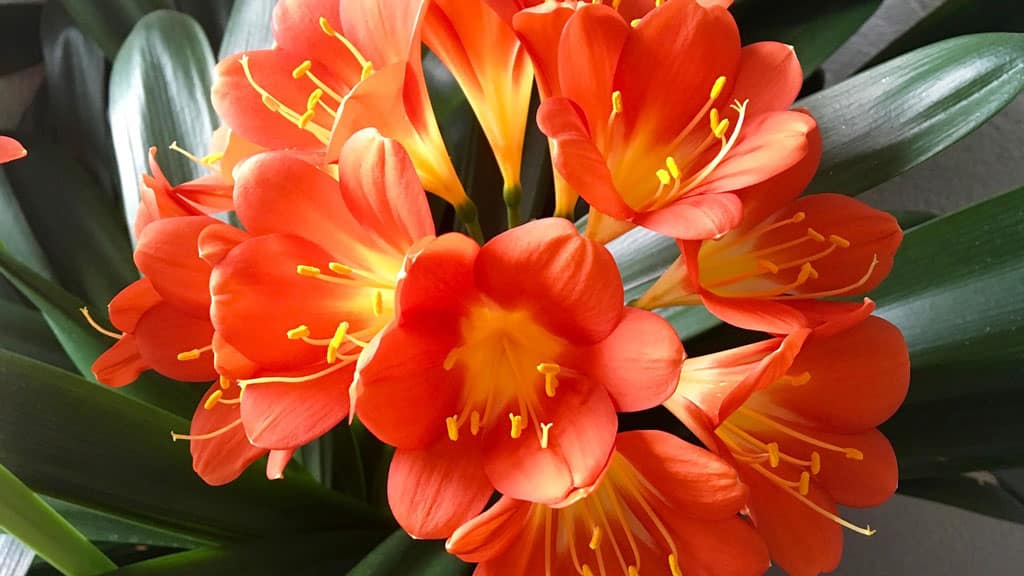
In indoor conditions, clivia blooms in the winter months, more often in February.
The bell-shaped flowers open one after another for a whole month – it looks spectacular!
If you take the clivia outdoors in the summer, flowering is also possible during this period.
For many, jasmine is the model of a beautifully flowering shrub. Its delicate white (and in some varieties pink, cream) flowers are a perfect addition to both the garden and the home greenhouse.
Jasmine blooms for quite a long time – from late spring to early autumn.
It loves water – in the open ground water it even in mild weather, and even more often in drought.
Water the indoor specimen as the topsoil dries out – a traditional recommendation for tropical plants.

To keep the shrubs looking attractive, once a year it is necessary to prune old, broken, frozen or dried branches.
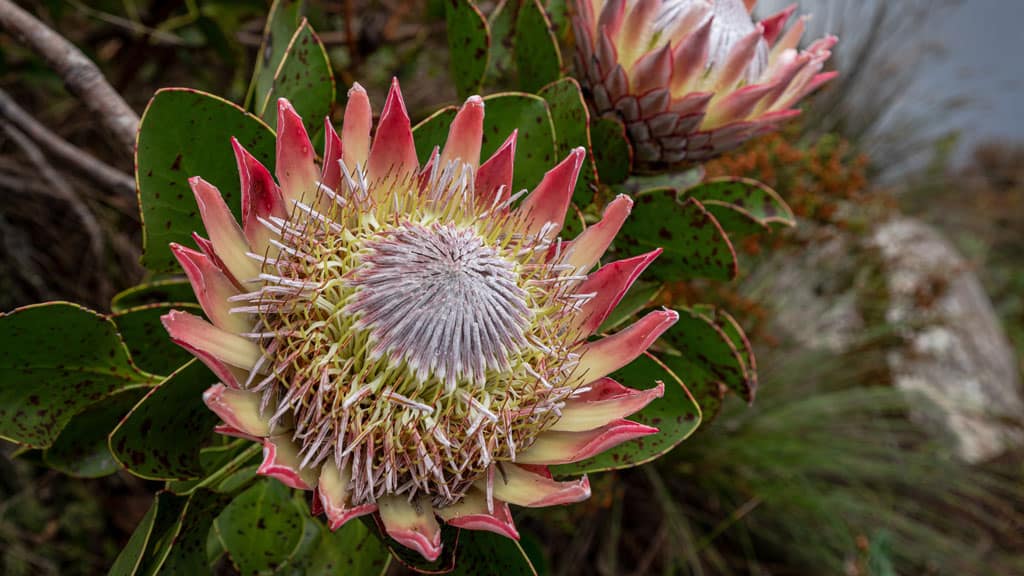
This species of protea got its name for a reason – the large flower is very similar to an artichoke.
The folk name is “honey pot” because of the sweet nectar contained inside the flower-pot.
If you want to decorate a garden plot with it, it is better not to plant it in the open ground, but put it in a voluminous pot.
It can be filled with acidic, breathable soil – in it protea develops best.
During the vegetation period, do not expose the “artichoke” to temperatures below 20 degrees – it is worth considering that in the middle strip of Russia, colder days do occur.
As for room cultivation, protea can occupy the southern windowsill, on which even direct sunlight a few hours a day will not harm it.
Liana with an interesting name is grown on the site in hanging cachepots for vertical gardening.
If it will be outside all year round, it is important that the temperature does not fall below 5 degrees – exot is more suitable for the southern regions.
But as a potted plant bougainvillea is not difficult to grow anywhere.
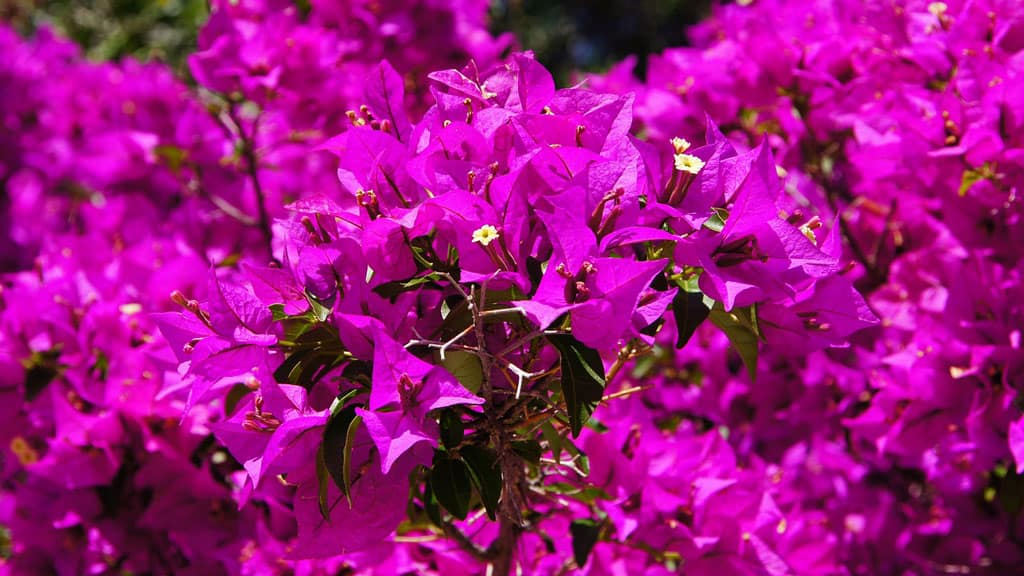
For abundant flowering, provide it with bright but diffused light, as well as regular spraying. Just don’t get it on the flowers themselves.
Their most common shades are pink, lilac, purple.
One of the reasons why canna is favoured by gardeners is its fast growth. And if you regularly apply compost or manure to the flower in the open ground, it will reach a great height.
Another advantage of garden cannas is its ability to grow in damp, waterlogged soil.
So if your plot has such soil and you find it difficult to grow any crops, Indian canna is your option.

But the bright red or orange flowers can please you not only outside, but also inside the house.
It is even easier to grow an exotic seedling in room conditions.
A well-lit place, watering with tempered or filtered water, and wiping the leaves with a cloth are all you need for successful cultivation.