
One of the most important auxiliary tools in the kitchen is a chopping board. Given the variety of options, it is not difficult to buy it. But the choice is too great, and can confuse those who want to get a really durable, convenient and safe product. Without a cutting board, it is extremely difficult to prepare even the simplest dishes without risking your health, and this is very important, especially for families with children and people with food allergies.
In our article, we will help you make a decision and tell you about the types of cutting boards, the materials they are made of, and what features should not be ignored when making a purchasing decision.
The very first criterion we recommend to look at when choosing a cutting board is what it is made of. Even if you need to save money and can’t spend a significant amount of money, we suggest that you go for proven and reliable raw materials, because such a board will serve you for many years, not just a couple of months.
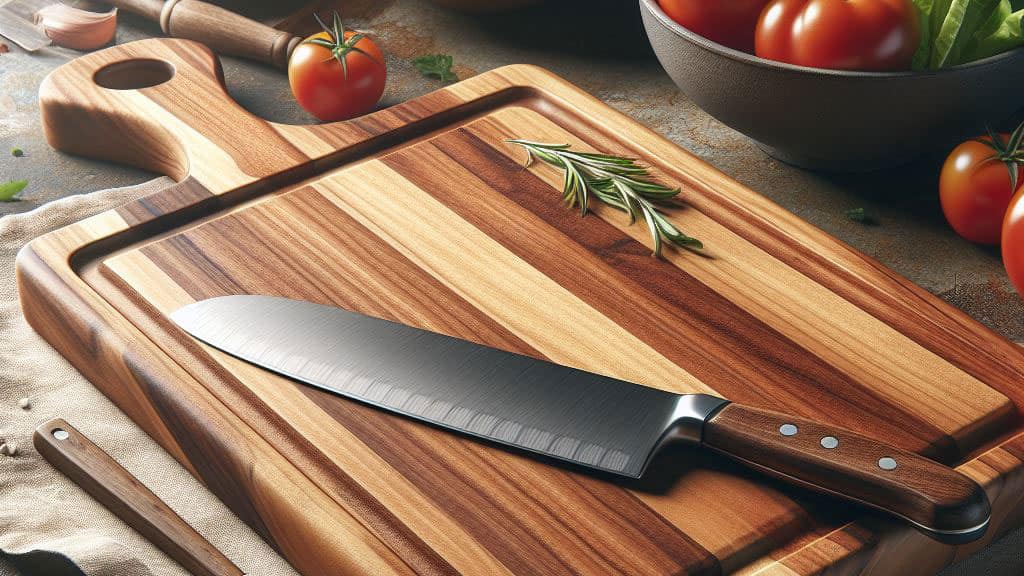
Many of us agree that wood products are the most practical, versatile, comfortable and harmless, that’s why they are so popular. But each type of wood has different characteristics, advantages and disadvantages. But if we generalise, then cutting wooden boards are distinguished by their multifunctionality, because they are suitable not only for cutting, but also for the beautiful presentation of some dishes. On them you can cut any products, both cold and hot, to baste meat. But because of the porous surface, the material easily absorbs odours and moisture. Therefore, you need to take care of such products carefully and adhere to the manufacturer’s recommendations.
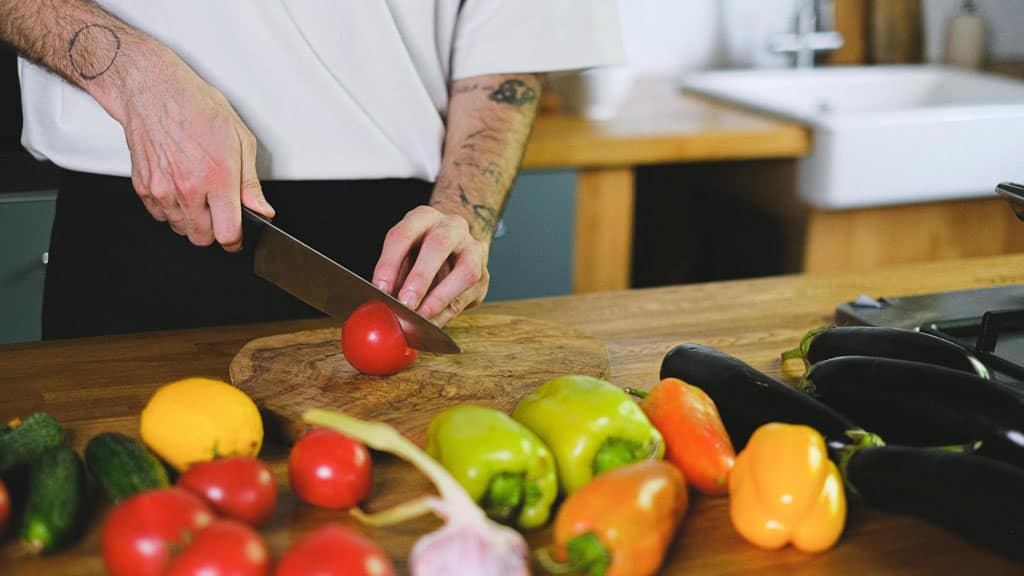
Given the variety of wood varieties, it is worth first understanding the classification: wood can have different hardness/softness. This is measured in kg / cm². The harder the piece, the more durable and reliable it is, less prone to damage and cracking. Traditionally, hardwood kitchen boards are more popular than softwood, as they retain their appearance better and last longer.
Soft wood types often lose out to hard wood, as they are less wear-resistant and durable, and easily absorb foreign odours. But many people choose softwoods because they are less dull and lighter, which means they are easier to use. We have chosen the most popular softwoods, because each of them is unique in its own way.
Wood for cutting boards can differ not only in species, but also in the way the wood fibres are orientated. This will determine not only the durability and functionality of the product, but also the sharpness of the knives. Some boards have a negative effect on the blade, because they have longitudinal fibres that the knife cuts. There are two types of boards by type of fibre direction:
Many people think that bamboo can be attributed to trees, but this is not true. In simple words, the plant is a huge single-trunked grass with powerful and hollow stems. To make kitchen planks, bamboo is cut and glued together. The result is a strong, lightweight and neat board. The material has a number of advantages:
Of course, nothing in the world is perfect, so bamboo planks have some drawbacks too. They are made up of hard and long fibres, which contributes to the gradual deterioration of knife sharpness. Due to improper care and storage, the planks can lose their properties, become more brittle and change in appearance. If you use only one product for all foods (meat, fish, vegetables, bread) and do not wash it, over time bacteria can breed all over the surface, despite the natural antibacterial properties of bamboo.
Because of the plasticity and versatility of the material, the range of plastic products is enormous. To find the best plank, it is worth evaluating all the advantages and disadvantages of the material, as well as correlating this with your needs. But in this case, we suggest taking a slightly different route. There are thin and thick plastic kitchen boards on the market today. The thickness of the plastic board is of considerable importance, so we will consider this issue in more detail.
These are very popular and affordable models that can be bought in almost any supermarket. A pleasant price and attractive design are liked by many buyers. But it is worth knowing about the disadvantages. More and more studies show disappointing data about plastic. For example, when cutting food on a plastic cutting board, microplastic gets into our body together with cooked food.
Thin boards do not last long, they quickly become scratched and lose their appearance. Even if you don’t care that much about the visual aspect, you should know that dangerous bacteria accumulate and actively multiply in the cracks and damage that occur. Despite the fact that plastic is easy to clean, it is almost impossible to get rid of microorganisms that have penetrated deeper than the surface. That’s why experts recommend to dispose of scratched thin plastic boards in time, so as not to risk your health.
Thick plastic boards are more durable and hard-wearing than thin plastic boards. They don’t scratch as quickly, which means less microplastic complements your food recipes. Some manufacturers enhance the hygiene of their goods with an additional antibacterial coating. This offers the opportunity to reduce the risk of bacterial growth. Such models are heavier and bulkier, they do not bend.
When choosing plastic kitchen utensils, pay attention to the labelling. For example, polyethylene terephthalate, polyethylene, polypropylene are considered safe. They do not emit toxic substances. But there is also plastic unsuitable for food and heating, so pay attention to the composition of the product.
Silicone accessories for the kitchen have been favoured for quite some time. Especially for those who are not committed to classic solutions made of natural materials. Spatulas, special moulds for baking, sheets for rolling out dough – very convenient and functional. They take up little space, are easy to clean and last a long time.
As for cutting boards made of silicone, they also have many attractive sides. You can take such kitchen utensils on a trip, picnic, fishing, etc. They are easy to twist, lightweight and non-skid. Some of them fold up to become larger or smaller. The flexibility makes it especially convenient to easily pour sliced ingredients into utensils without making a mess around.
To all of the above, silicone is harmless and non-toxic material and, despite its softness, reliably and for a long time retains its integrity even when exposed to sharp objects. As for the disadvantages, it is worth mentioning the tendency to retain odours and the formation of stains. Also, due to its softness, such a board is very easy to damage with a knife, so there is a chance that it will not serve you for a long time.
It is extremely important to choose products made of high quality glass and trust only trusted manufacturers. Then you will complete your kitchen equipment with a beautiful, unique and durable helper. Glass boards are easy to clean, do not accumulate odours, do not stain and do not become a breeding ground for dangerous microorganisms.
But the material has a very impressive list of disadvantages, which is important to consider:
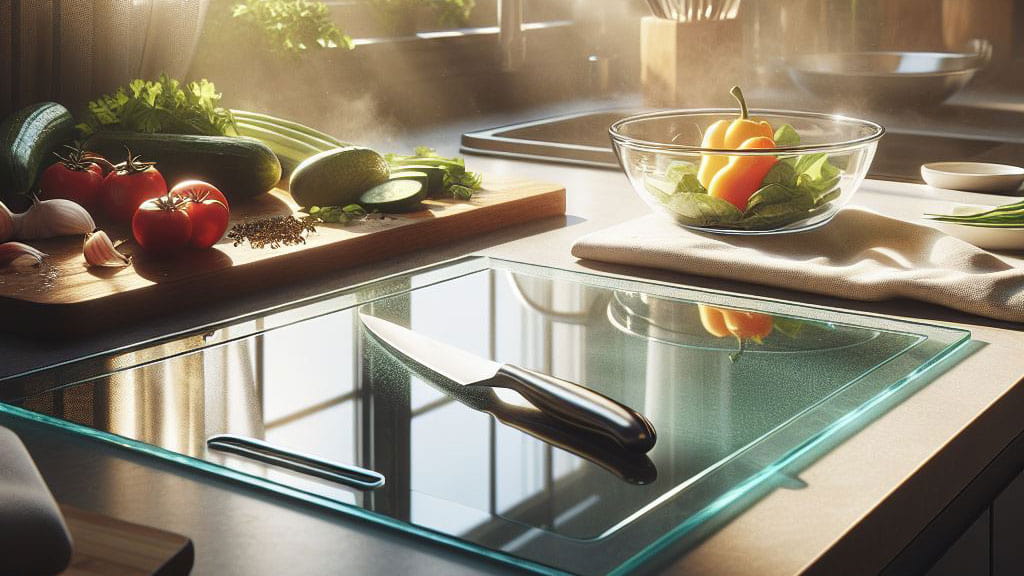
Thus, we would recommend using glassware as serving or decorative items. If you still decide to buy a glass cutting board, do not forget to take into account all the safety measures and peculiarities of working with such a kitchen helper.
Cutting boards made of stone undoubtedly attract attention with their unusualness and impressiveness. But let’s see how practical and useful such an accessory is in the kitchen. Reviews of those who have already managed to acquire such a modern helper are quite positive and optimistic, but in some ways similar to reviews of glass boards. The stone is also heavy and bulky, has a very hard surface, which quickly dulls the knives. But at the same time do not underestimate the stone kitchen boards, because they can become a spectacular addition to the festive table, serve for serving dishes. You can choose a product with a beautiful pattern and matching the colour of the kitchen interior. For example, granite or marble favourably emphasise individual style.
Planks of stone are easy to maintain and clean, but it is not recommended to use abrasive detergents for washing, so as not to leave fine scratches on the smooth surface. If you have chosen a flat and large enough board, it will be possible not only to cut and serve food, but also to roll out dough. In general, the material will please with its durability and resistance, will serve for a long time and decorate your kitchen and dining room.
Despite the fact that for most buyers the choice of board is reduced to wooden and plastic models, there are other materials on the market. Composite is a relatively new kind of base for kitchen boards. However, it is not only modern, but also more environmentally friendly than the popular plastic or silicone. Composite (Epicurean) consists of a mixture of several materials. Most often these are wood fibre and polymers / resins. The constituents are carefully mixed, pressed, shaped into a final form and complemented with auxiliary parts.
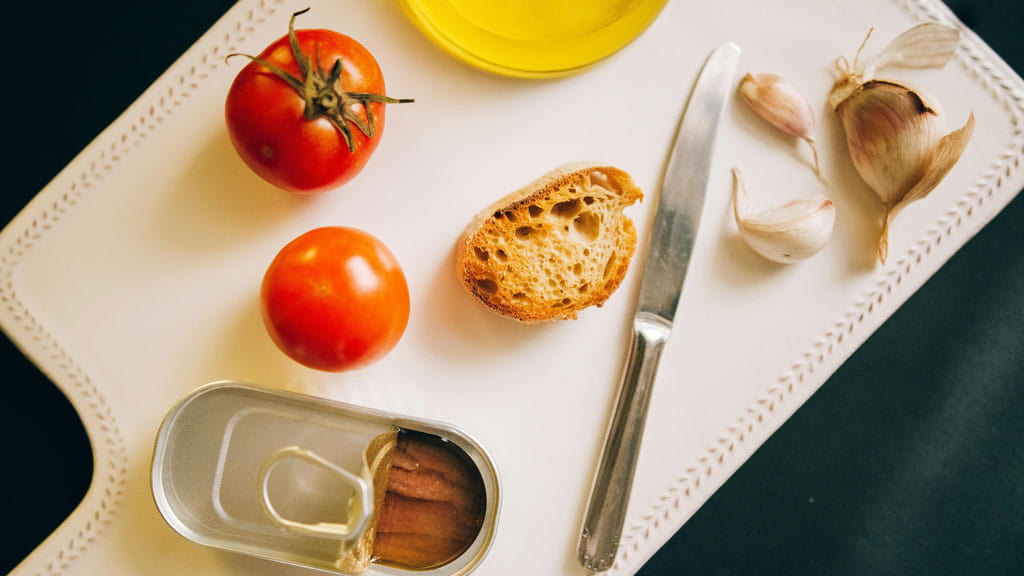
Composite gives you the opportunity to experiment with the colour, design and shape of your products. Therefore, it is possible to find a plank that will harmoniously complement your kitchen. Among the pluses should also be emphasised lightness, strength, durability, ease of maintenance. Products have a smooth non-porous surface, so they are not afraid of moisture and dampness, practically do not absorb odours.
To the main disadvantages of composite models include a high cost, a rather hard surface, which gradually spoils the blade. For those who want to minimise the use of plastic, composite may not be suitable. After all, the composition sometimes contains this artificial material.
Butcher block is one of the most popular requests on kitchen appliances and accessories websites. And in fact – it is one of the subspecies of cutting boards, which is made of wood and is designed to work with meat, such as deboning, cutting or chopping, . Such a block was originally used in China many centuries ago, but has gradually become popular all over the world. As the name suggests, it is a meat chopping and cutting implement that was used in butchers’ shops. Considering the level of workload in such shops, an ordinary kitchen board would not have lasted long there. Therefore, the most important thing for a butcher’s block is the grade of wood and the thickness of the product. As before, and now it is so made of hard wood – oak, maple and others. The minimum thickness of the product – from 1.5-2 inches, otherwise the board can not be considered exactly a butcher’s block and is considered an ordinary cutting board.
Traditionally, a butcher block has an end cut, which again is justified by the loads on it. Recently, however, there have been blocks with a side cut, which are considerably cheaper and less wear-resistant.
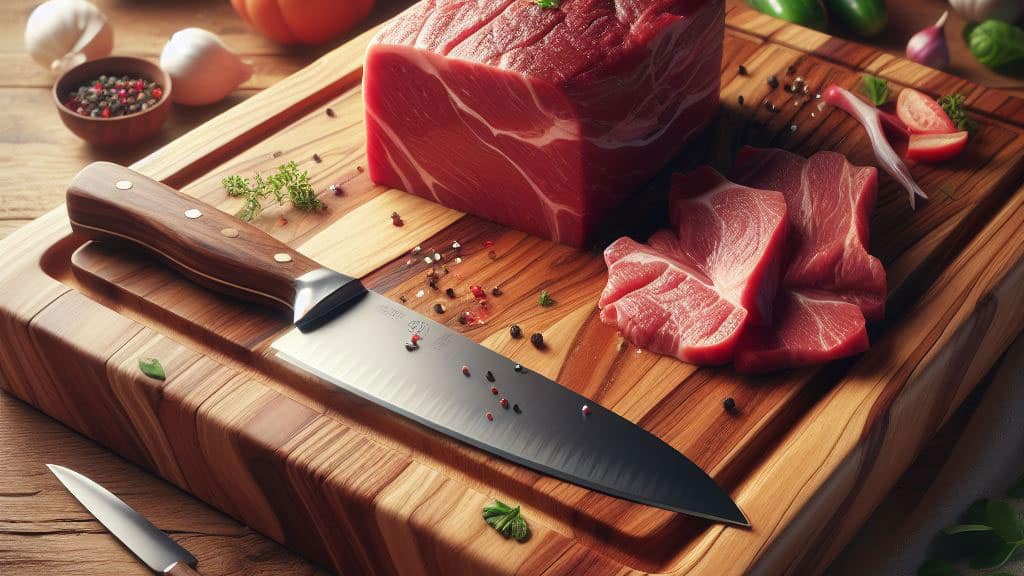
In addition, butcher blocks are always large enough to comfortably handle meat – it is recommended that the product be at least 12 x 12 inches.
It is worth noting that in the conditions of the average family kitchen butcher’s block is hardly often in demand. Agree – it is not often that we chop large pieces of meat, or animal carcasses. In most cases, a good quality and sturdy board is enough, or better still, several, depending on your eating habits and lifestyle.
Most cutting boards are equipped with additional features that make it easier to prepare food as well as to maintain and store the products. When choosing a cutting board, it is worth considering which additional features will be useful to you, taking into account your lifestyle and the organisation of your kitchen space.
Most kitchen boards are reversible, but not everyone uses the second side for fear of cross-contamination. However, experts assure that it is safe as long as you follow all the precautions and clean your board well. Agree, it will be much more convenient if you can use both sides of the board for its intended purpose.
Safety is very important in all kitchen processes, because we use knives and other sharp objects to prepare food. There are also open flames and hot containers of liquids in the kitchen. Cutting ingredients can be a traumatic experience if the kitchen board suddenly slips off the wet work surface. Experienced cooks advise putting the cutting board on a small damp towel, this will help the board not to slip. But on sale you can find models with special non-slip feet or a coating that helps the board to stay firmly in place, even if you are cutting something hard or bulky. However, it’s important to remember that these boards can’t be used on both sides.
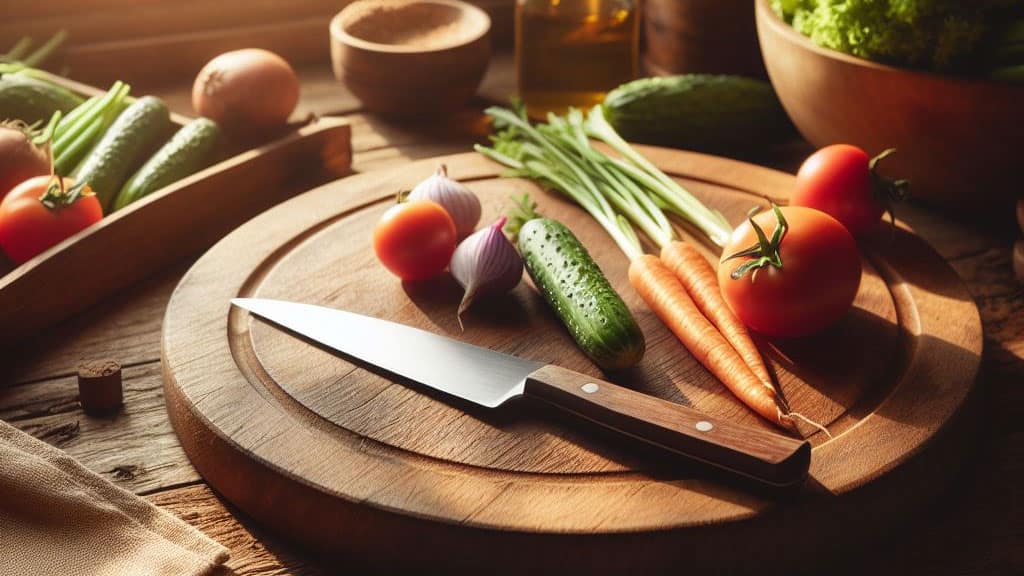
Cutting boards with a groove around the perimeter are practically indispensable when it comes to cutting meat or slicing juicy foods and ingredients. During processing, meat or fruit juices drain into these grooves, providing convenience and helping to avoid mess. If the board does not have these grooves, the liquid will drip directly onto the table, creating unnecessary mess. The same goes for serving food on the board. Since the food will not be eaten immediately, the juice will drain into the gutters without dripping onto the tablecloth, which is very important during festive meals.
Many of us are so used to using the dishwasher that we put in it not only dishes that are suitable for automatic washing, but also other inappropriate kitchen accessories. Such things often include kitchen boards, to which long contact with water is contraindicated, as it will cause irreparable damage to them. Therefore, we advise you to consider whether you are ready to hand wash your chopping board before buying it. If not, look for models that are dishwasher safe. These include plastic, composite, silicone, glass, marble. As for wooden boards, there are models that can also be washed in the dishwasher. These are hardwood models that are specially treated before sale. Nevertheless, many experts advise not to take risks and wash all types of wooden kitchen utensils by hand.
A 2in1 set consisting of a board and a knife can be a very favourable purchase. In particular – it is a good option for a gift. But you need to look at the purchase carefully before making a decision, to make sure that your kitchen lacks just such a knife and such a board. Professional chefs, or people who are really passionate about cooking, often choose a particular brand or material and they won’t be suited to this option. However, for most hostesses, this is not as important. And buying a universal board and knife will benefit your kitchen if you consider all the nuances before buying.
Personalisation has long been a stylish way to accentuate your style, and make a fab product – truly personal. Engraving on the board in the form of a wish, logo, initials will be a great way to make a gift to a colleague or loved one really memorable.
But personalisation can also concern the board itself – its material, shape, size and additional functions, if you decide to make it to order. It will be more expensive than buying a standard model, but you will get a unique product that meets all your requirements.
Chalkboards with handles are handy if you decide to store them on the wall, hanging them on special hooks. It can be not only the wall, but also a special drawer or a shelf in the cupboard, which is equipped with fasteners for boards and other kitchen accessories. This method of storage will also become an additional stylish accent in your kitchen, giving it a cosy atmosphere.
Experts recommend using more than one chalkboard in your kitchen. At the same time, you should carefully make sure that each of them is used for a certain type of products or processes. This approach will avoid cross-contamination and minimise the risk of food poisoning. The HACCP (Hazard Analysis and Critical Control Point) system recommends these combinations of colours and products:
You can buy ready-made multi-coloured sets of boards, or mark with different colours the ones you have. However, it is best to buy new models, in a set or individually, to start using and sanitising the products properly.
Board sets are very popular, especially the coloured models that meet the food code described above. You can also purchase sets of boards made of wood or glass, in different shapes and sizes. Before you decide to buy a set, think about how many pieces you need and for what purposes. What do you cook most often? Do you use the boards for serving food? Where will you store them? Once you’ve answered these questions, you’ll be sure to buy the right set for your needs.
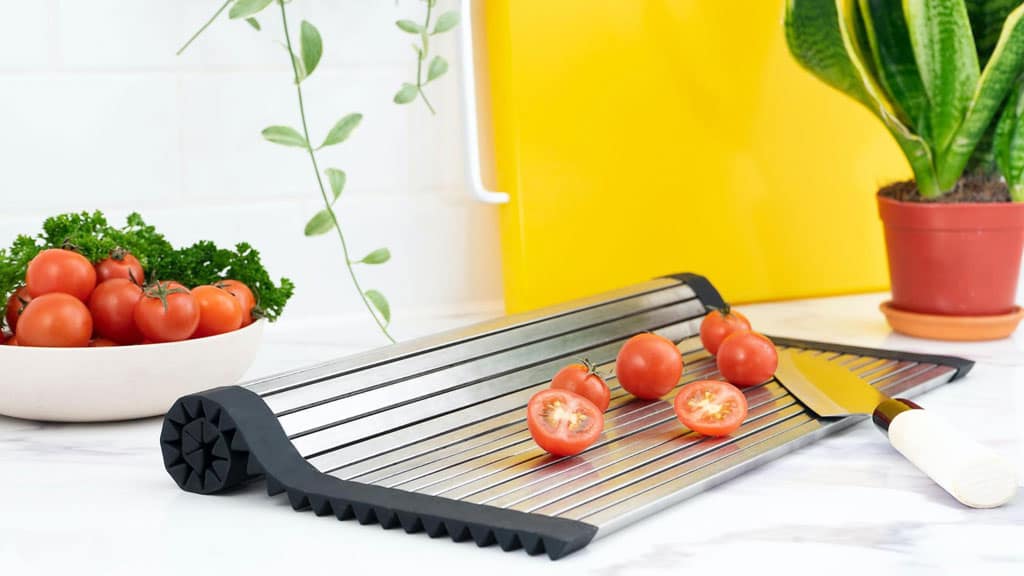
Very often cooking, especially for a large family or consisting of several dishes, results in a mess in the kitchen. Much of this mess is formed in the process of chopping and moving ingredients around. If this is happening to you too, it is worth considering a special board that is placed on the kitchen sink. This is a very practical product that can be purchased in different modifications and different materials. The general idea is that you can cut products and immediately wash them, move them to the right containers, clean the board and knives, etc. Thus you will significantly reduce the amount of time it takes to clean the kitchen after cooking. One of the disadvantages of such a model is that it can be larger than the boards we are used to. But the benefits it brings are definitely worth the inconvenience.
A rardelochnaya board with an edge is specially designed for convenient and secure attachment to the work surface. In addition, you can transfer the chopped ingredients into the container without moving the board without the risk of dirtying the edge of the table.
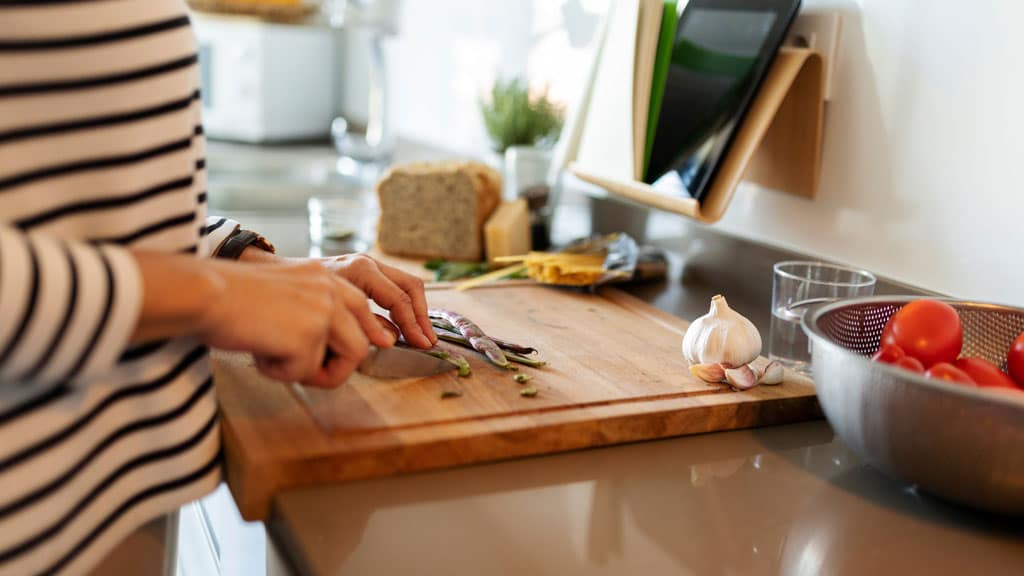
Having decided on the best material and additional features, we move on to the next criterion, which is equally important. The choice of shape and size can make the everyday use of the kitchen board as convenient as possible, and extremely unfamiliar, so pay attention to this nuance. Especially important is the shape of the board from the point of view of its storage. Models of unfamiliar shapes will be more difficult to put in drawers, put on top of each other and find a place in the cabinets.
The effect of the board on knife sharpness is not the most obvious criterion for choosing a product, but it is worth paying attention to, especially if you value your knives. Especially since both parties can suffer in this tandem – a sharp blade can easily leave scratches on wooden, bamboo and plastic products. But the harder the surface of the board, the more damage the knife gets. With use, it quickly becomes dull, so it needs sharpening regularly.
Glass and stone are the hardest of the materials, so they deteriorate the sharpness of the blade very quickly. As we said above, these boards are undoubtedly very sturdy and spectacular, but still serve better as serving boards.
Wood, on the other hand, varies. Softer woods are more delicate to the knife, while hard woods are the opposite. If you’re worried about the condition of the blade, and you prefer wooden boards, then definitely favour end boards. The fibres in such models are arranged perpendicular to the surface. When the knife slides across it, it simply pulls the fibres apart, rather than cutting them. The surface then becomes the same as it was before use. Such a “partnership” is considered to be the most long-term and reliable, because both the board and the knife retain their functionality and appearance as much as possible.
Also not bad reputation in terms of the impact on the knife, have a popular recently composite boards, which is not surprising, because they are made of pressed paper, which in turn is made of wood.
The size of your kitchen board depends on your personal preferences and lifestyle.
If you cook for several family members or stock up on ingredients, you will definitely need at least one large double-sided board – for vegetables and meat.
Smaller boards are great for cutting small portions of snacks or fruit for 1-2 people.
Also very important is the board storage system you choose, the size of your kitchen and whether you have the necessary surfaces or fixtures. As with the shape of the board, the size of the board also depends on the individual situation and eating habits of the customer.
Natural wood models require more delicate and gentle regular cleaning. To keep your wooden product clean and hygienic, you can use a mild dish detergent, sponge or brush. This arsenal is sufficient for everyday cleaning. 1-2 times a month disinfect the product and lubricate with food-grade mineral oil.
Glass and stone models are heavy, so it will take strength and care to wash them properly. Use soft sponges and dishwashing detergent. Avoid abrasives and harsh brushes.
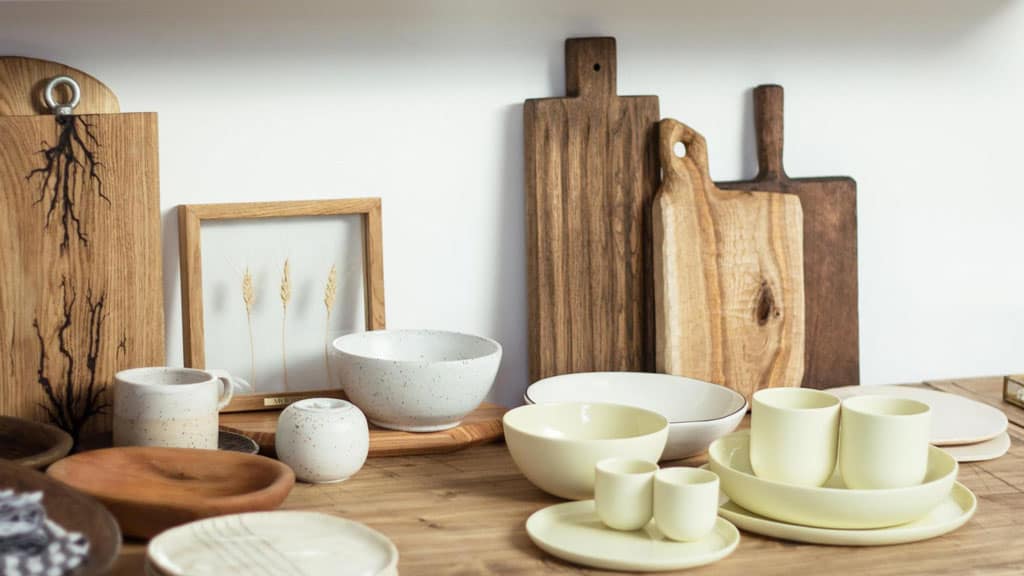
The main rule for cleaning all chopping boards is to wash them immediately after use, without allowing food and liquid residue to dry. Otherwise, stains and unpleasant odours may remain, and bacteria will actively multiply.
Any kitchen utensils should be stored after they have dried out completely, especially if they are in a closed space. This should be the case with boards. After washing, wipe them thoroughly with paper towels or a dry kitchen towel and leave them to dry completely on an open surface. You can then put them away in a designated storage area – on a shelf or in a drawer.
To summarise, we would like to add that the kitchen board significantly affects the comfort and speed of cooking. And tasty and healthy food is indispensable for a quality life, so it’s worth remembering that important things can start with small beginnings.
We hope that armed with the knowledge we’ve shared, you’ll be able to decide which board or boards you need with ease and confidence. Choose truly quality products, made by people who know their craft and have an eye for brand reputation. In this case, your kitchen helper will serve you for many years and will not cause a minimum of problems.