Newsletter Subscribe
Enter your email address below and subscribe to our newsletter
Enter your email address below and subscribe to our newsletter

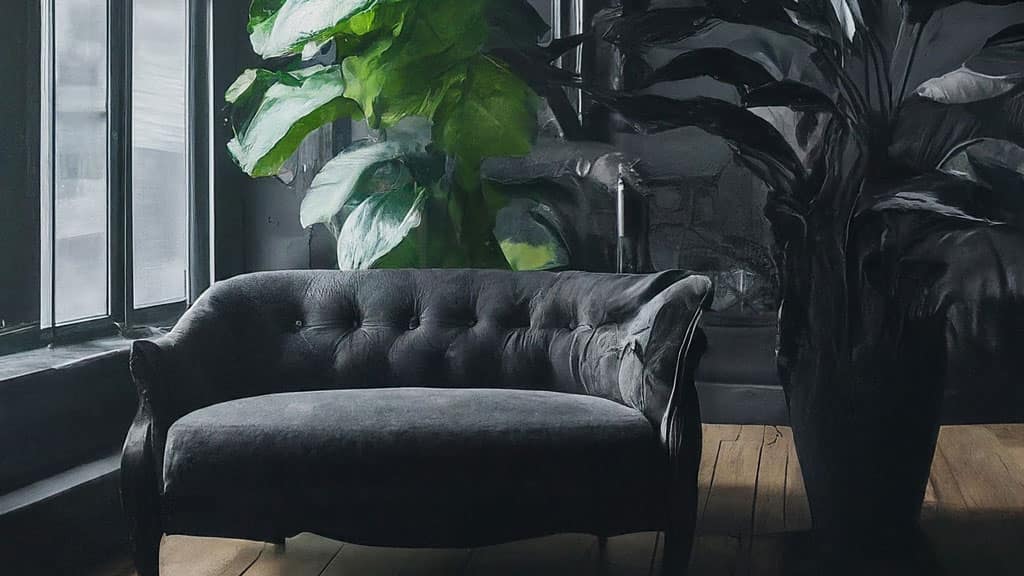
A growing trend in interior design integrates a touch of darkness into bright spaces. This often includes the use of dark – almost black – indoor plants. These unique elements add a sense of appeal, drama, depth, and even intrigue to a room.
Such so-called gothic plants are not the typical green foliage you’re used to. They have leaves or flowers varying from deep burgundy color to almost black. The tendency to use these unique specimens is part of a broader trend called Gothic gardening, which is both about cultivating dark plants and creating a specific Gothic atmosphere and mood in gardens and interiors.
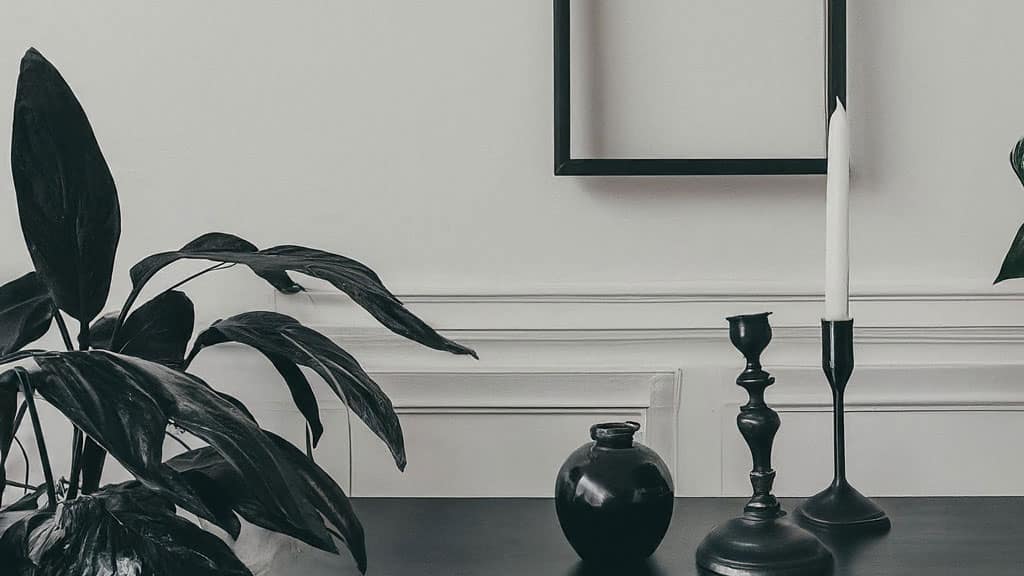
We invite you to plunge into the world of black indoor and outdoor plants! We’ll take into consideration their popular species, the nuances of their care, and their use in the interior of the house or the design of the garden. Whether you are a beginner or an experienced grower, this article will tell you everything you need to know about these gloomy gothic beauties.
Black houseplants have long been attracting the attention of not only plant lovers, but are also used in interior design and for good reason. They have a uniquely intriguing and refined aesthetic twist and stand out sharply from the traditional green plants that everyone is used to and thus attract the eye.
The dark foliage of these plants creates a dramatic contrast against the lighter elements of the décor, adding depth and dimension to any room. And this contrast is not only visually appealing, but also gives the room a gothic style and charm, as well as a sense of mystery and elegance. As black colour is often associated with power, elegance and mystery.
Black indoor plants are not just a couple of unique flora representatives. There are several dozen different species, which also have a big range of shades of foliage and colors – from purple to real black. So, everyone who wants to buy a plant like this will be able to find a variant that will be to their liking. This list includes the Black Velvet Elephant Ear, the Black Coral Snake Plant, the Black Magic Ti Plant, and a number of others. Each one of them is attractive in its own way and has its character.
When creating a gothic garden in your home, an important consideration is choosing the right plants that will not only add zest to the room, but also thrive in it. Let’s take a look at some of the most popular types of dark in-house flowers and their features.
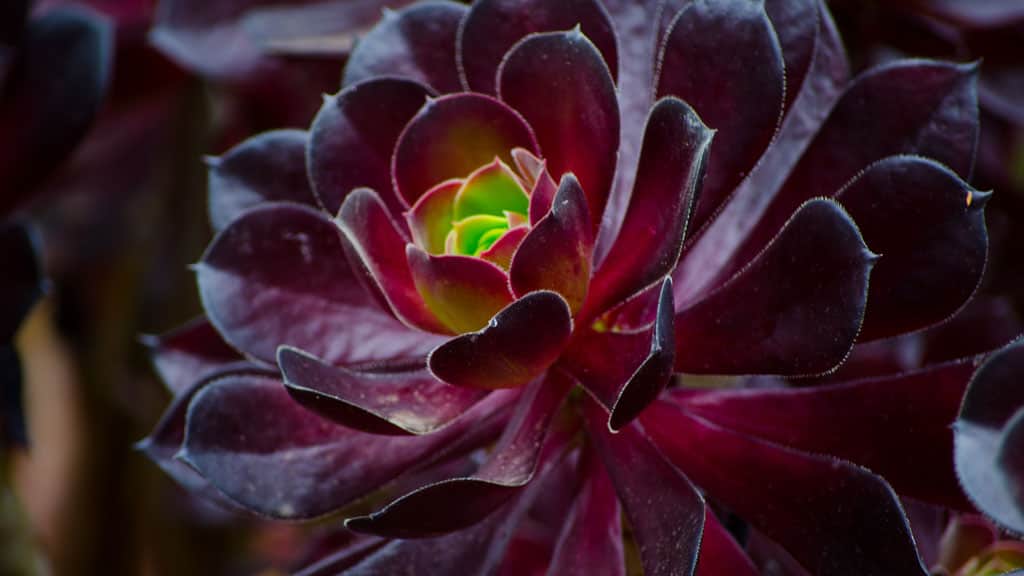
The Black Rose Succulent, scientifically known as Aeonium arboreum ‘Zwartkop’, is a charming plant that can complement any collection in the indoor garden. Its distinguishing feature is its beautiful dark purple, almost black foliage. It forms striking rosettes consisting of waxy leaves that look very much like flowers. These rosettes grow on the tops of stems that can be over 3 feet long.
The leaves of Black Rose succulents can turn almost black if they are in the sun often. This plant is especially striking when it releases bright golden panicles of small star-shaped flowers in spring.
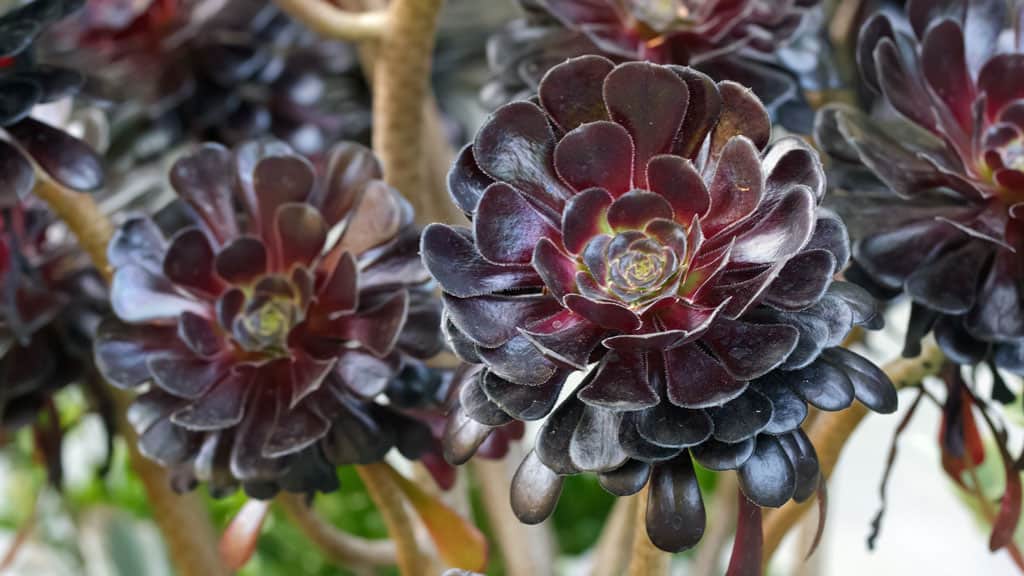
Black roses need plenty of bright but indirect sunlight for healthy growth. Outdoors, it should preferably be grown in areas where it will only be able to receive sun for part of the time – for 6 hours in the morning and afternoon. But if you plan to raise it indoors, it is important to put its container near the brightest window in the house so that at least 5–6 hours of sunlight are received. The plant is very sensitive to this, and if it does not get enough light, the leaves will start to lose their dark color and turn green.
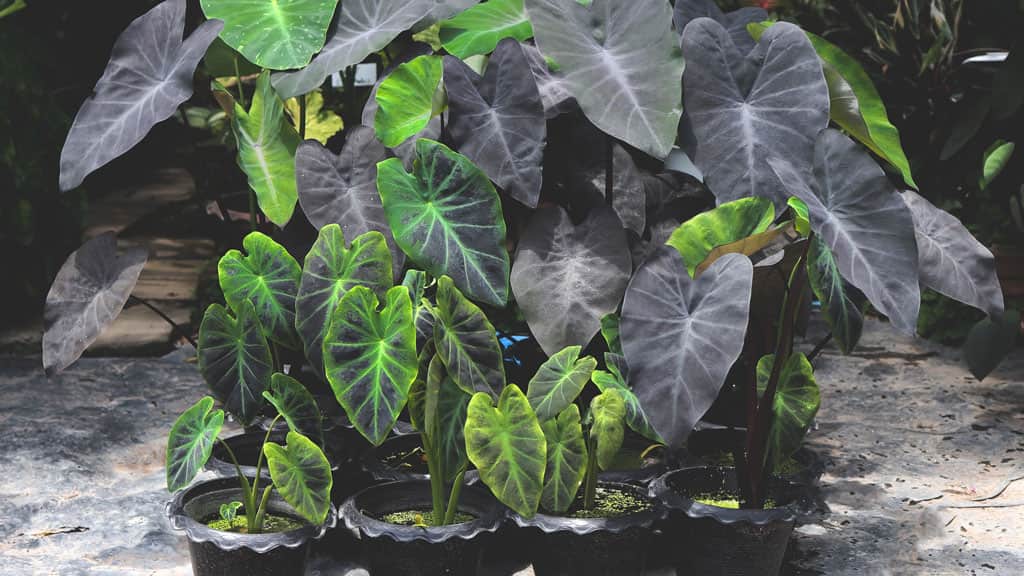
Colocasia ‘Black Magic’ is a tropical hardy perennial of the Aroid family (Araceae), also known as Taro. It is native to tropical East Asia.
Its leaves appear green at first but then darken to a deep purple-black color with age. This foliage is arranged on sturdy, ebony-red stems, making it a unique and striking indoor plant that will become the center of attention.
It is low-maintenance, can reach up to 3–6 feet in height and width, and grows quickly, so it will easily fill large containers and space in your home.
It should be noted that the plant is poisonous to dogs and cats, so it is not recommended for pet owners. Eating the leaves of the plant can cause stomach upset in humans.
This kind of Alocasia originated from the rainforests of south-eastern Asia. It is also called Alocasia Black Velvet and has dark green (close to black) velvety heart-shaped leaves with contrasting white veins.
This unusual contrast has made this indoor plant popular and looks spectacular in small spaces. Since Alocasia grows slowly, it will always remain compact.
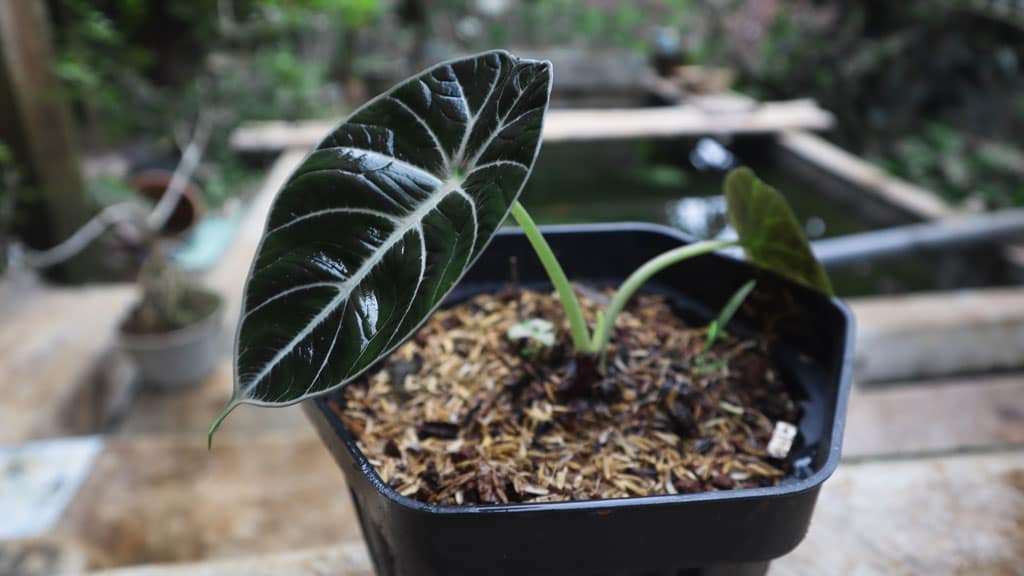
Alocasia ‘Black Velvet’ likes high humidity, so it grows well where there is sun and moisture. Suitable places in the house can be the bathroom or kitchen. But if there are pets in the house, you should keep it out of their reach, as the plant is toxic to both pets and humans.
The Raven ZZ plant, officially known as Zamioculcas zamiifolia ‘Raven’, is a stemless evergreen plant with pinnate leaves rising from the roots. It is striking and elegant, thanks to its glossy leaves with rich dark green, almost black color. Its foliage darkens over time, so the leaves are bright lime green at first before turning nearly black. Zamioculcas zamiifolia ‘Raven’ is now considered one of the trendiest indoor plants on the market, although it debuted relatively recently – only in 2009 as part of Costa Farms’ ‘Trending Tropicals’ collection.
The Raven ZZ plant grows slowly, starting at 6 inches and eventually reaching 3 feet tall and wide. However, its growth is highly dependent on indoor light. Although it can survive in low light conditions, it will not develop well in such conditions – it will barely grow and will be sluggish and unattractive. Its ideal conditions are bright indirect light, as direct sunlight can burn the leaves.
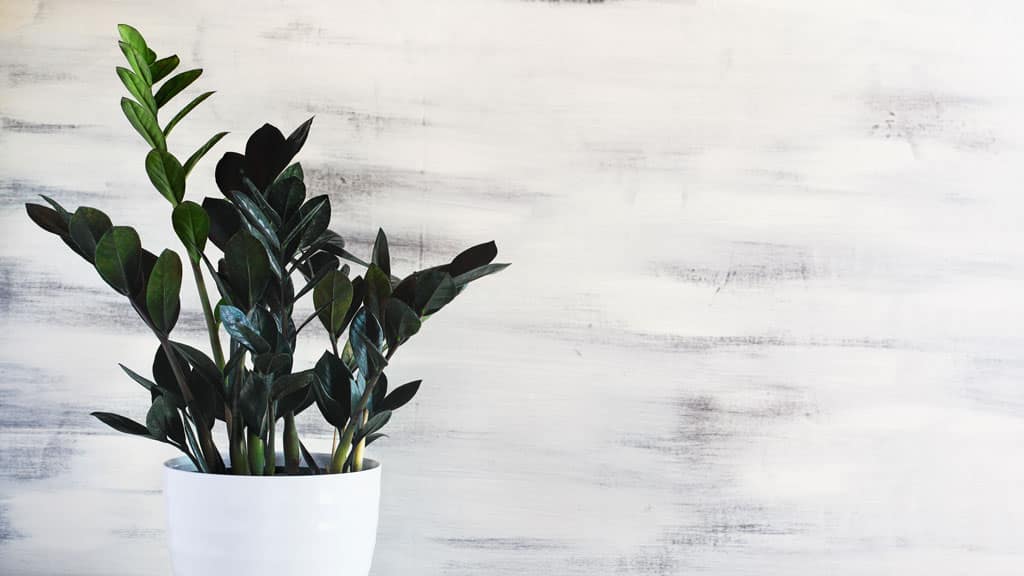
Zamioculcas zamiifolia ‘Raven’ is easy to care for, so it will suit even busy people. In addition to being pleasing to the eye, this plant can remove a number of toxins from the environment, such as toluene and xylene. But like other varieties of ZZ plants, it is toxic to humans and pets, so it’s worth considering if you have children or furry friends in the house.
The Burgundy rubber tree, scientifically known as Ficus elastica ‘Burgundy’, is one of the varieties of the rubber tree Ficus elastica. It has dark green leaves with a thick, glossy sheen and deep redness. The leaves are large, about 8–8.2 inches long and about 4 inches wide, and the plant itself can be quite large.
Indoors, Ficus Burgundy is limited in its growth to a height of 6–10 feet. However, it can be grown as a bonsai, and its development can be slowed by regular pruning. In this case, the plant will be shorter. In the wild or outdoors, this evergreen perennial can reach a height of 100 feet.
It is native to the rainforests of South and Southeast Asia, so it prefers bright indirect light and cannot tolerate low light. It gets full direct sun in the morning and late afternoon, but bright midday sun can cause leaf scorch.
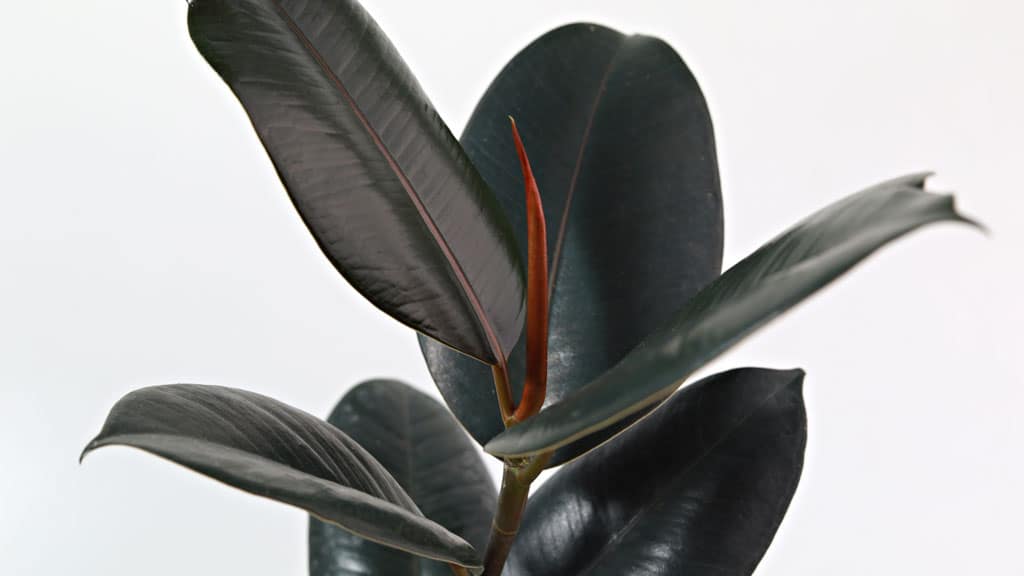
This magnificent plant is not famous for its flowers. Like other figs, it needs fig wasps for pollination. To attract them, the plant produces insignificant, small, egg-shaped inflorescences called sycones. These sycones are not very fragrant and are greenish-yellow in color. They appear in pairs in the leaf axils of mature trees.
The ‘Burgundy’ rubber-bearing plant is considered durable and able to withstand unfavorable conditions and requires little care. Therefore, it is a great choice for those looking for not only beauty but also functionality in their green companions. The Burgundy Rubber Plant will give any room a special tropical flavor, and it doesn’t matter if it’s a home or an office.
Its toxicity level is mild, but it is still dangerous for humans and pets. Even when the plant is pruned, its milky latex sap can cause skin irritations.
Although it looks like grass, Black Mondo Grass is an evergreen perennial. Its leaves grow in bunches and resemble grass. They are 8 to 12 inches long and range in color from dark purple to almost black. This spectacular foliage makes Black Mondo Grass a colorful representative of any indoor garden.
In summer, Black Mondo Grass produces small bell-shaped flowers in pink and lilac. The flowers are followed by glossy dark purple berries, which add to the plant’s charm.
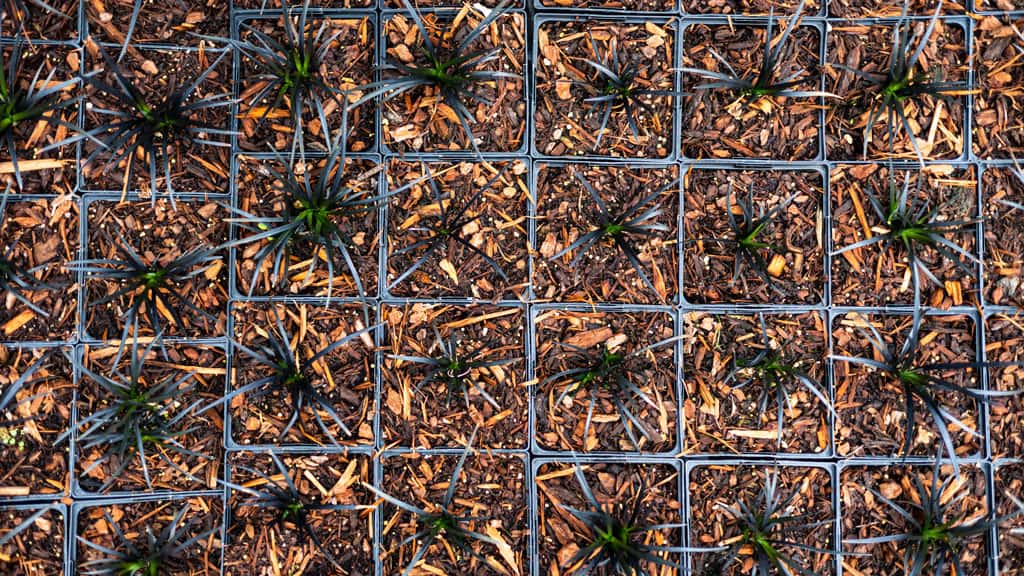
Black Mondo Grass grows slowly to 6–8 inches tall, but once established, forms a dense, weed-proof bed. Although it is mostly used in the open ground as a ground cover, edging, or shrub bedding in gardens, it is often grown in containers on patios and balconies.
Black Mondo grass is not just a plant, it’s rather a statement. Its impressive, almost jet-black foliage shows the beauty of nature’s darker side. It’s perfect for adding drama and contrast especially when grown with silvery or golden leaves plants. So, if you want to add a gothic charm to your indoor garden, Black Mondo Grass is the plant for you.
Another charming plant that can add a touch of drama to any indoor garden is Echeveria ‘Black Prince’, scientifically known as Echeveria affinis.
This succulent grows slowly. It has dense rosettes of fleshy, pointed leaves that are from dark maroon to almost black. Rosettes can grow up to 5 inches tall and up to 6 inches in diameter. As the rosettes grow and mature, they give off shoots around the base, forming a dense clump.
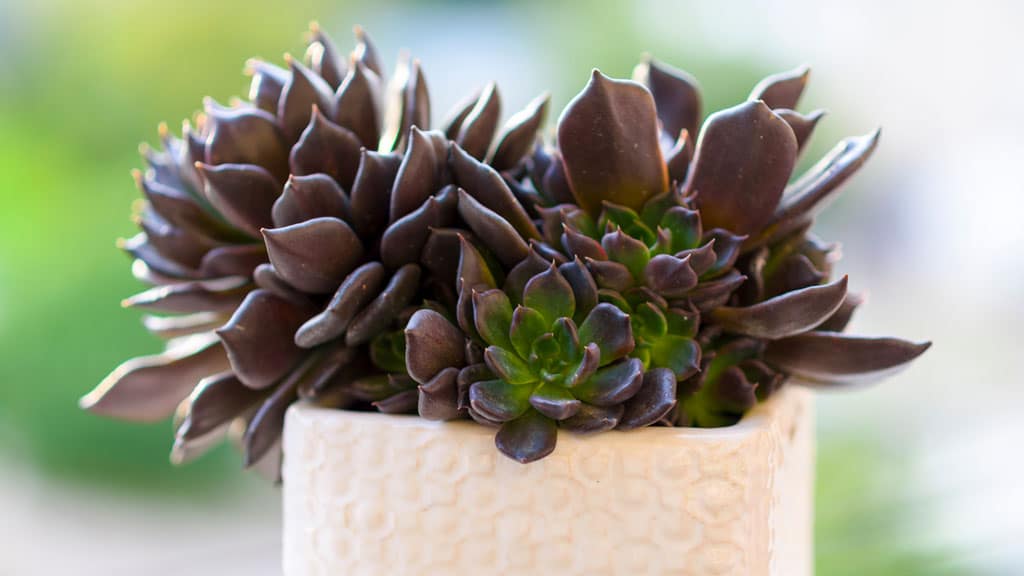
The new shoots in the center of the rosettes always create a striking contrast of bright green with dark outer leaves. If Echeveria ‘Black Prince’ doesn’t get enough light, the leaves lose their color, but in full summer sun, they can turn copper-orange. In late autumn and winter, the plant develops bell-shaped red flowers that contrast with the dark rosettes.
The following unusual flower will definitely bring an element of intrigue and mystery to any indoor garden. The Black Bat Flower, or Tacca chantrieri, is a unique and exotic plant native to the tropics of Southeast Asia and is known for its striking black flowers. The flowers, up to 2 inches in diameter, have a bat-like look, with large wing-shaped bracts and long, tendril-like filaments that can reach 28 inches in length. The plant has received other names for this unusual appearance, such as “devil’s flower” or “cat’s whisker.”

Plant this rare flower in a shady part of your yard if you live in a warm climate, but in cooler regions, keep it indoors.
Peperomia ‘Burgundy Ripple’ is a tropical leafy plant native to Brazil. It belongs to the pepper family, which is why many people call it pepperberry. It is a type of flowering perennial that stays relatively small and compact.
The Burgundy Ripple variety is characterized by tiny heart-shaped leaves that are dark purple (practically black) and intricately wrinkled. The leaves have deep ridges and a unique texture that differentiates it from other houseplants. Young leaves are lighter, but as the plant matures, they darken to a rich, deep black color.
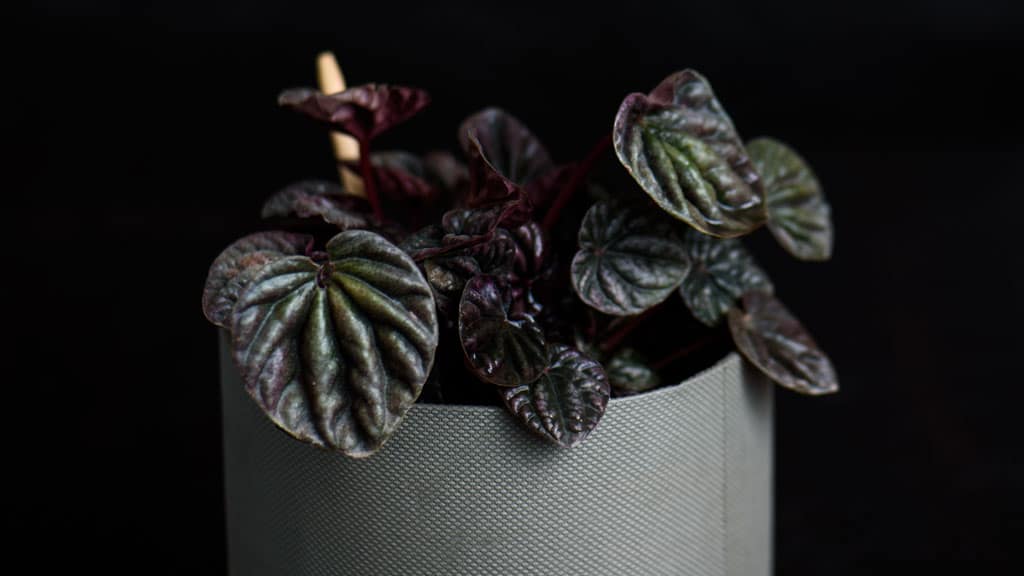
This flower grows slowly and usually stays compact, making it an ideal companion for small spaces indoors, such as windowsills and tables. It can be kept as a houseplant or used as an unusual foliage for beds in tropical regions.
Sinocrassula yunnanensis, also known as Chinese Jade, is a small perennial succulent native to southwestern China, specifically Yunnan Province. Although there are not many truly black plants in nature, Chinese Jade comes closest. Its unusual shape and dark coloring make it a unique addition to any collection of gloomy, gothic houseplants.
Chinese Jade forms dense rosettes of dark bluish-green leaves with purple speckles. If you want to get exactly the black color of the leaves, give it full sun. Rosettes grow to 0.4 inches in diameter and form a dense clump. The leaves are semicircular with a convex lower surface and a somewhat flat upper surface, up to an inch (2.5 cm) long and 0.2 inch (0.5 cm) wide. They end in a pointed tip and are heavily coated with short, soft hairs.
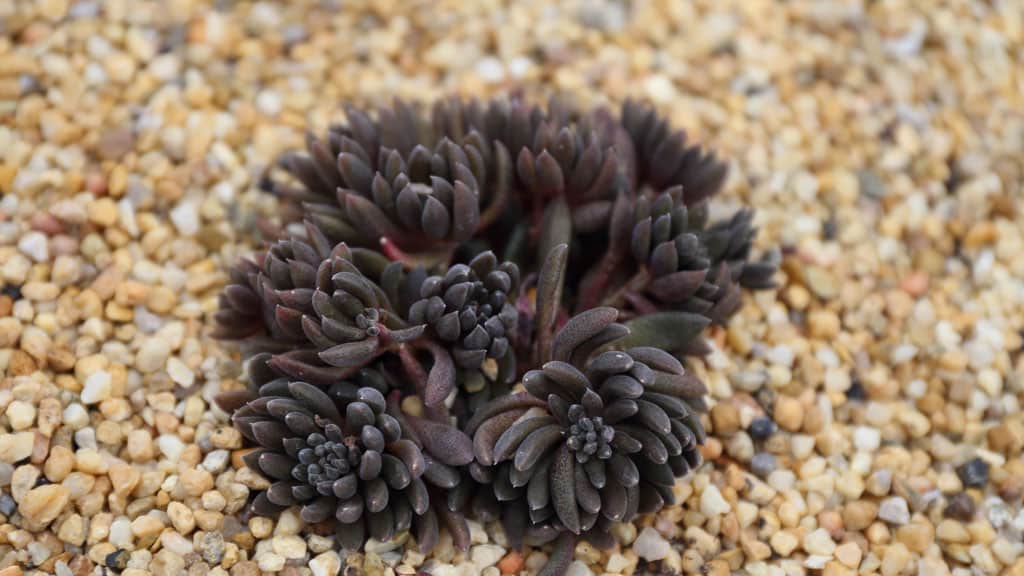
In Fall and early Winter, stalks with dense, flat bunches of light yellow or yellowish-green flowers grow out of the rosettes. The flowers may have an orange-red tinge if the plant is in full sun. After flowering, each rosette dies off and is replaced by offshoots. The plant is monocarpic, meaning that each rosette flowers only once.
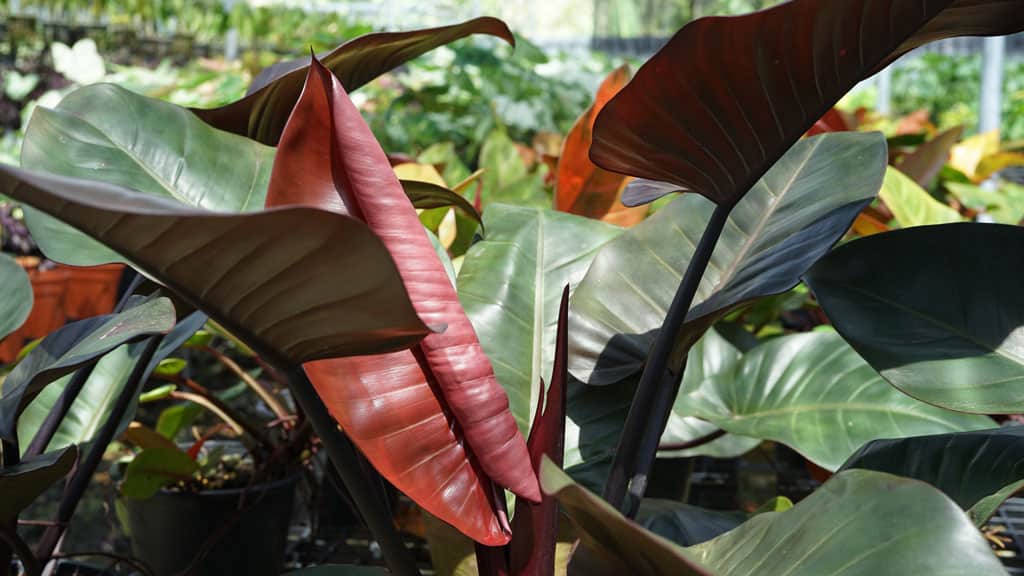
Philodendron ‘Black Cardinal’ is a tropical indoor plant. Its well-known broad and glossy leaves go through a stunning color transformation over the growth.
The leaves are light copper-green before changing into a deep, glossy dark-green, which makes an outstanding aesthetic contrast. The underside of the leaves often stays a reddish-purple hue. The stem may also have a maroon shade. Despite its gloomy name, Black Cardinal is by no means dreary or ominous. On the contrary, it is a charming addition to any indoor plant collection.
The plant size can be up to 3 feet tall and 3.5 feet wide. Its leaves are large and broad, each reaching 2 feet long and 8 inches wide. Young plants have smoother and slightly smaller leaves, but they quickly grow to full size as the plant matures.
Black Cardinal, like all philodendrons, should be grown out of reach of biting pets or curious children due to its toxicity. But despite this, the plant itself is stunning, hardy, and versatile and is suitable for all plant lovers regardless of whether you have experience in growing plants or are just starting your plant-growing journey.
Alworthia ‘Black Gem’, also known as Aloe ‘Black Gem’, is a popular intergeneric hybrid of Aloe speciosa and Haworthia cymbiformis. It made this list because of its unusual leaves. The color of the thick triangular leaves of this plant changes from dark green to reddish or bronze in bright sunlight. The more sun this succulent receives, the darker and redder its leaves become.
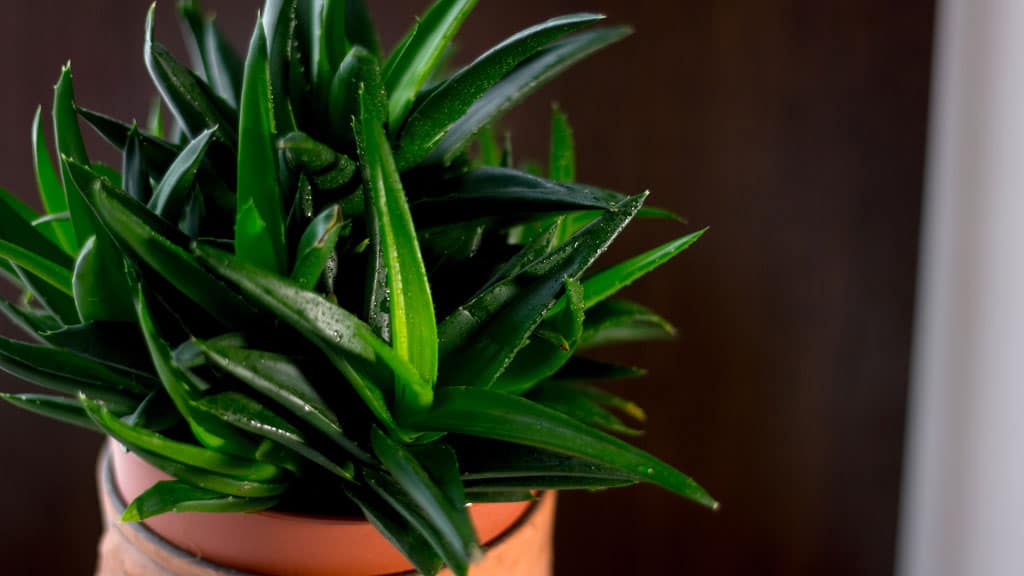
Haworthia ‘Black Gem’ is very easy to care for, and a well-grown plant can be very beautiful. It reproduces freely and grows quickly, forming a dense clump. In winter, the plant prefers bright light, and it can tolerate bright summer sun after acclimation.
The plant is also known for purifying the air. In addition, it is an ideal plant to give as a gift. It is a beautiful plant that can improve the overall look of a living room.
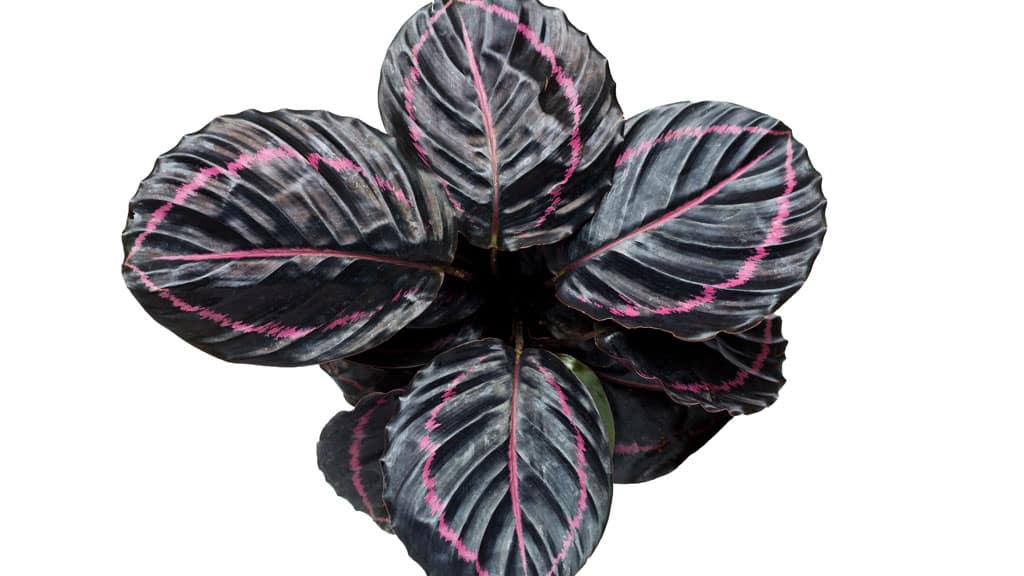
Meet Calathea ‘Dottie’, a charming indoor plant from the Calathea family. This species is notable for its unusual leaves and dynamic behavior.
It is a contrast plant: it has very dark, almost black leaves with a bright pink pattern that runs along the rib vein of the leaf and around its perimeter. This coloration gives the plant a slightly emo touch.
The Calathea’s ‘Dottie’ leaves move during the day following the light and then curl up at night which creates a captivating sight.
One of the unique features of Calathea ‘Dottie’ is its ability to increase the humidity level in the surrounding space. Therefore, it is an excellent choice for dry areas.
The plant is also pet-friendly, making it a safe choice for families with furry friends.
The hybrid Anthurium ‘Black Love’ stands out in the world of gloomy gothic houseplants. This evergreen perennial plant is characterized by heart-shaped, highly polished leaves of a dark green or almost black color. The flowers, which are often mistaken for deep purplish-black spathes, are actually large bracts that cover the aroid spadix.
This plant thrives in a warm, brightly lit room, but away from direct light. It prefers high humidity, making it a great choice for areas such as the bathroom or conservatory.
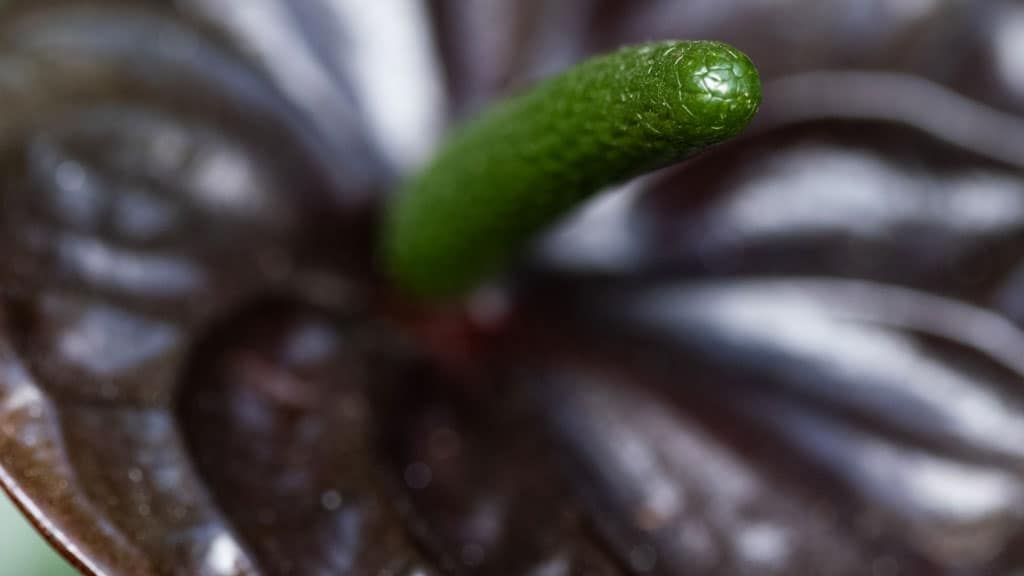
Anthurium ‘Black Love’ is a compact plant that will make a great addition to any enclosed light garden on an east- or west-facing window, as it prefers to grow in partial sun. Its hardiness and relatively low maintenance requirements make it an ideal gift for a busy person.
Orchid ‘Dracula simia’, commonly known as the Monkey Orchid, belongs to the Orchidaceae family and the genus Dracula. It grows on other plants for physical support. The flower gets nutrients and moisture from the air and rain, and is not attached to the ground. This class of plants is called an epiphytic orchid.
The Monkey Orchid’s homeland is Ecuador and Peru in South America, where it grows in high cloud forests at an altitude of 1,000 to 2,000 meters. It is not just a plant; it is a living, breathing work of art. It blooms at any time of the year, with several flowers opening successively on the inflorescence. The positioning of the column, petals, and lips is similar to a monkey’s face. This resemblance gave the plant its common name and made it an unusual and charming addition to any indoor garden.
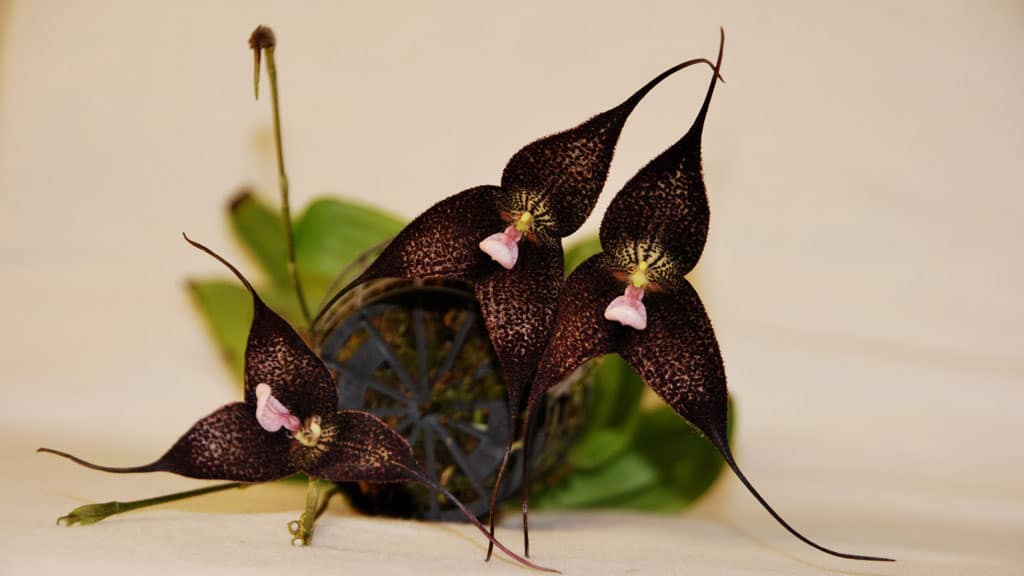
The flowers of the Monkey Orchid are between 2 and 6 inches long and fragrant with the scent of ripe orange. They come in a variety of shades, including red, green, yellow, pink, lavender, and purple (practically black). All of the abovementioned factors make it an outstanding species of interest for plant lovers around the world.
The Rare Black Orchid, scientifically known as Catasetum Monnierara, is a hybrid of three orchid families: Catasetum, Cycnochees, and Mormodes. This plant stands out in the orchid world by being one of the blackest species to date. Such a unique feature has earned it the nickname “Witch’s Witch” and made it a prized acquisition among plant enthusiasts.
Catasetum Monnierara is a healthy plant with large pseudobulbs. It blooms with adequate heat, water, and fertilizer during the spring and summer months. After or during flowering, these plants usually shed all their leaves.
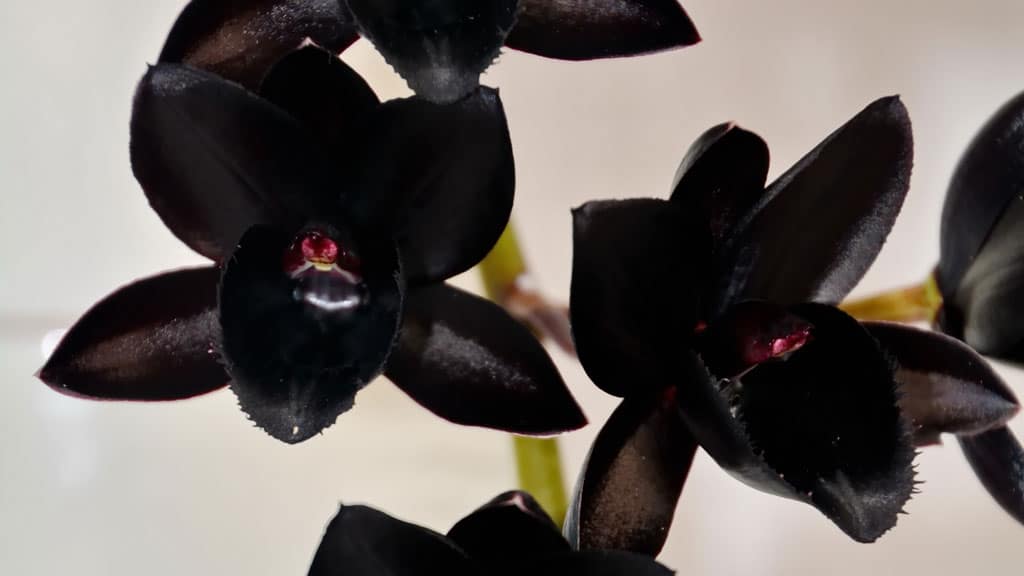
The plant was awarded FCC/AOS by the American Orchid Society on October 2, 2003, for its superb black flowers and abundant blooms (the plant had 2 stems with 42 flowers).
This unique variety of pansies is not actually black but a deep, rich purple or burgundy color that becomes almost black, especially in shady light. Their dark, velvety petals contrast nicely with the bright yellow centers common to many varieties of pansies, creating a fascinating visual treat.
The plant grows from 5 to 30 cm (6 to 12 inches) tall. The plant’s velvety flowers are 2.5 to 5 cm across and have five petals.
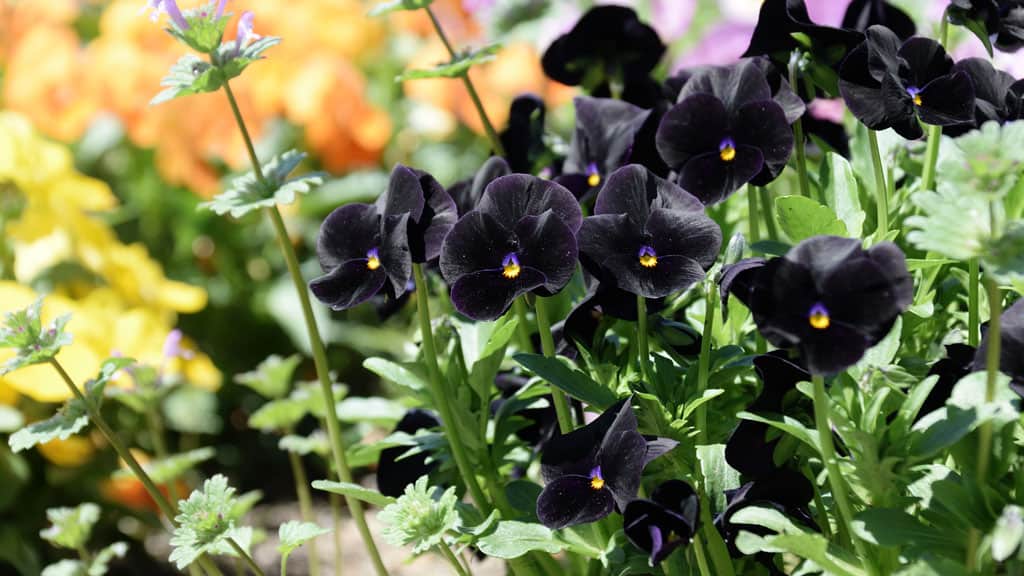
Black pansies belong to the Violaceae family and are the product of long domestication and hybridization. They are short-lived perennials, usually grown as annuals. They are vigorous, fast-growing, colorful flowers that are a great choice for early and late containers or garden beds. Add them to the garden in autumn to create a slightly spooky atmosphere, or use them to add contrast to spring plantings. Indoors, pots of similar flowers will also be a standout, especially on windowsills.
The Black Calla Lily, also known as Odessa Calla or Zantedeschia aethiopica, is a flowering perennial in the arum family. This plant was first cultivated in the Middle East. It has been sold all over the world as a valuable rare indoor plant.
The Black Calla Lily is a proof of nature’s creativity. Its dark, velveteen flowers, which are often confused with artificial, have an unreal beauty. A lush green backdrop of the plant’s elegant arrow-shaped leaves makes the dark flowers even more bright.
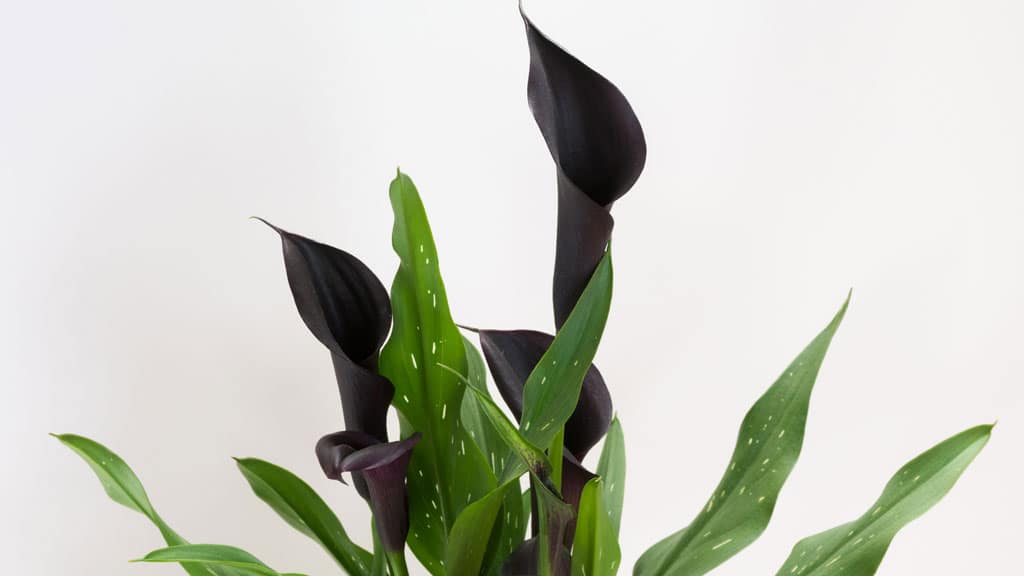
The leaves emerge from the tuber in autumn and remain green all winter. In spring, a dark purple-black spadix enclosed in a purple-black spathe appears. The plant has a specific odor of rotting fruit to attract flies that pollinate it.
If you place Black Calla Lily among bright, pastel colors, it will add drama and contrast to your spring blooms. These almost black flowers are great for container growing and cuttings.
The Black Jewel Orchid, scientifically known as Ludisia discolor, is a terrestrial species native to the rainforests of South Asia. It has become popular because of its dark foliage rather than its exotic colors. The plant’s broad velvety, and almost black leaves with bright pinkish-orange veins are its most attractive feature.
The Black Jewel Orchid is an ideal choice for the beginner as it is one of the easiest orchids to grow. It can survive well in low-light conditions, as it does in its natural habitat on the forest floor.
As an indoor plant, the Black Jewel Orchid can grow 6–12 inches tall and blooms once a year with whitish flowers. The flowers are not as impressive as the attractive leaves, but they add an extra zest to this plant.
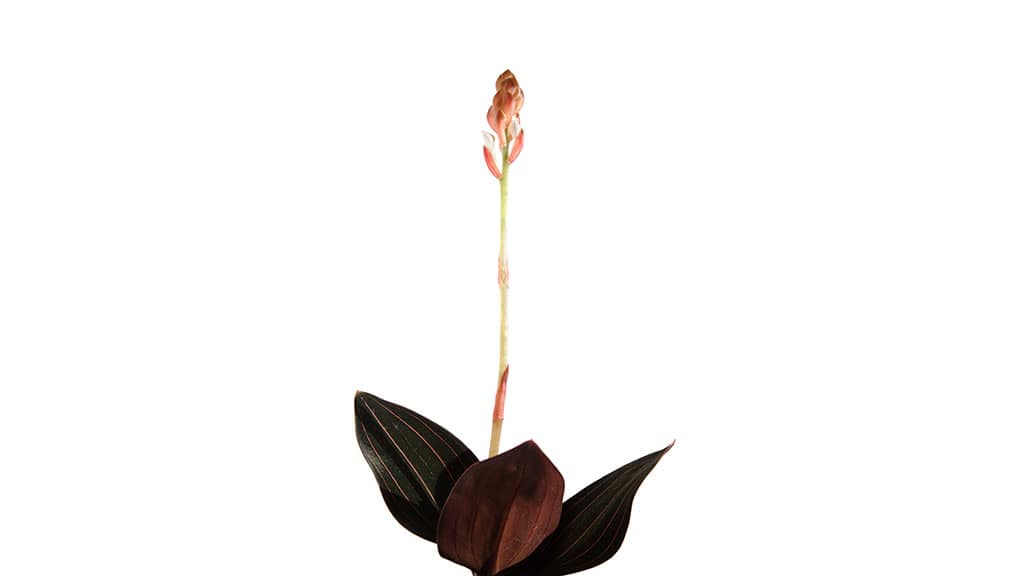
The Black Jewel Orchid is not just a plant; it’s a work of art. Its dark, rich foliage with contrasting white and reddish stripes across the leaves makes it a striking addition to any indoor garden. Placed in a contrasting or minimalist pot, the Black Jewel Orchid is sure to attract attention.
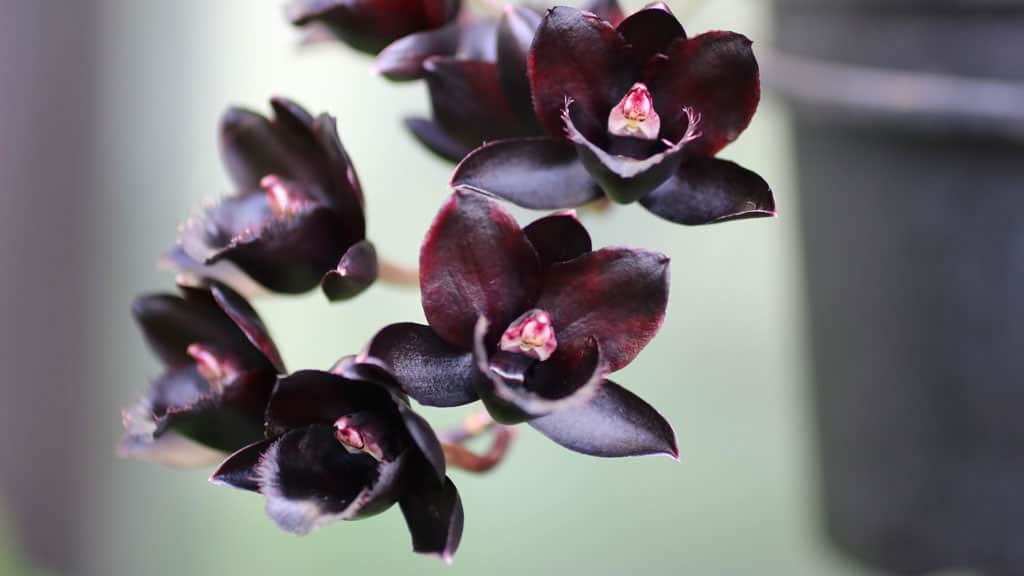
The orchid Fredclarkeara After Dark ‘Black Pearl’, often called ‘Black Pearl’, is the first human-made orchid with almost pure black color. It is famous for its incredibly dark flowers that emit a spicy-sweet fragrance. Although the flowers look black, they are actually a very dark red color.
The flowers appear during or after the shedding of leaves during autumn and winter and can reach a size of 6-8 cm. These orchids flower best in bright light.
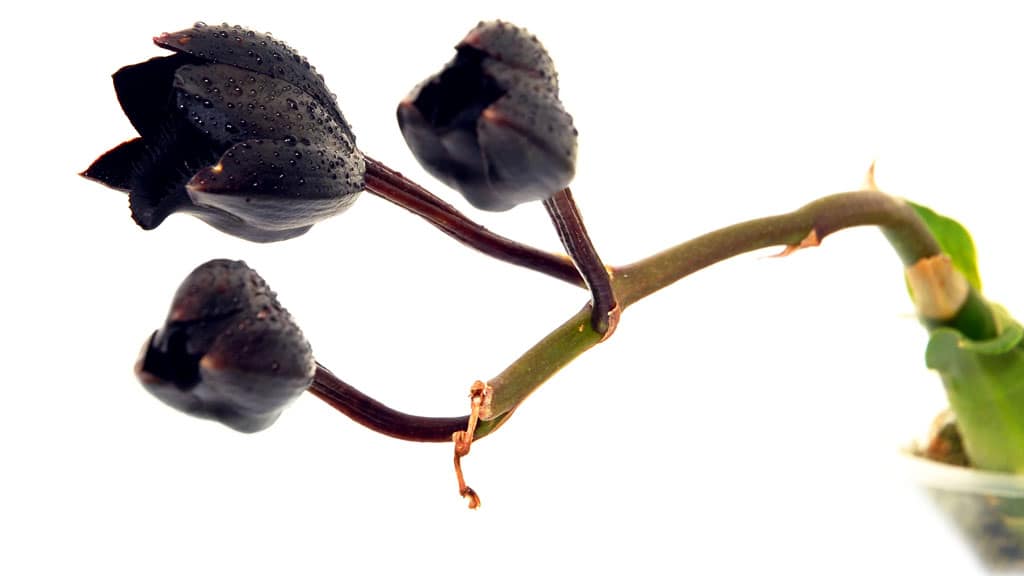
As this orchid grows, it will be able to produce more flowers at the same time. Therefore, if the plant is large enough and cared for properly, it can have more than 20 flowers and several flowering branches. Overall, the ‘Black Pearl’ variety is considered easy to grow.
Hellebores ‘Dark and Handsome’, also known as Lenten Rose, is a member of the Wedding Party Series, chosen for its vigor, bright floral displays, and rich colors. The plant forms bushy clusters with thick, leathery evergreen leaves. It blooms profusely in early to mid-spring, displaying large, double, nearly black or black-purple silky flowers measuring 2.5 to 3 inches with lime green centers that stand out against the dark inflorescences. These nodding beauties grow on tough stems and contrast with the shiny dark green evergreen foliage. You can get double inflorescences of rich colors if you properly care for the flower.
Hellebores ‘Dark and Handsome’ grows in a bushy, upright bush to 8–24 inches tall and wide. It is an evergreen perennial that blooms in spring with one of the first flowers. It will surprise you with its early spring flowers, if you place it in a shady spot.
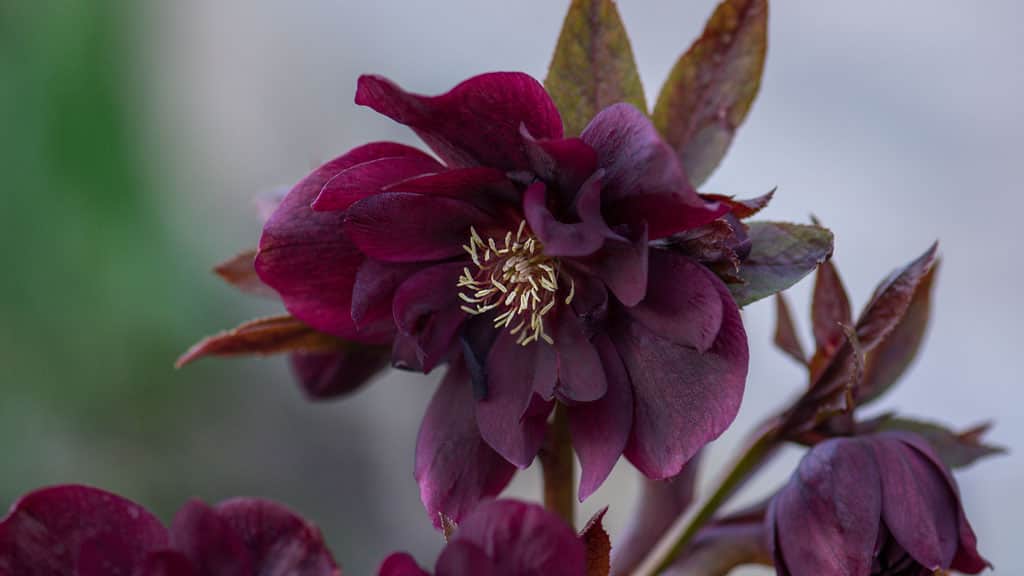
Hellebores are easy to grow and will make a welcome addition to shady borders, containers, under trees, or large shrubs, in woodland gardens and cottage gardens. For maximum visual impact, these plants are best planted in groups. Their flowers provide valuable nectar for early pollinators. Although hellebores are not the plant that deer or other animals seek out, they may come and feast on your hellebores if other food sources are scarce.
Lenten Rose is toxic for animals and humans. It is better to wear protective equipment (gloves and others) when handling it, as it can irritate the skin.
With its unique dark beauty and ease of care, Dark and Handsome Hellebores is the perfect choice for those who want to add dark elegance to their in-house garden.
Black Oxalis, also known as Purple Shamrock, is a perennial native to South America. It is usually loved for its dark purple, almost black leaves, which are triangular and typically grow in groups of three. On particularly cloudy days or at night, they fold up almost like an umbrella but open again with morning light.
Purple Oxalis has a moderate growth rate. It grows and flowers vigorously from autumn to spring and becomes dormant in summer. This may not happen every year, especially if you are growing it as an indoor plant. During dormancy, it requires a change in care as it requires much fewer nutrients. It blooms again in autumn when cooler weather arrives.
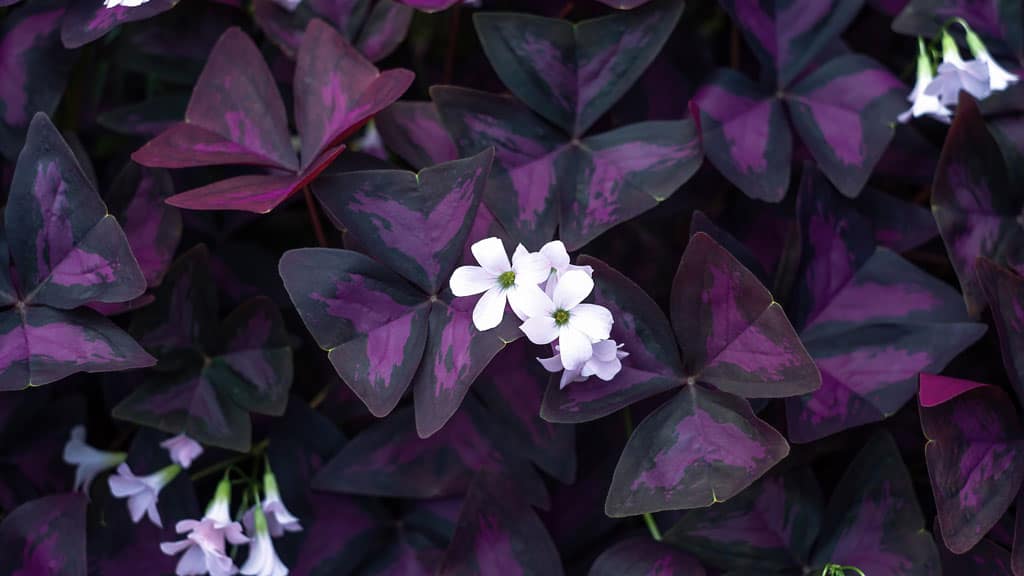
The plant blooms with tiny white to pale pink or lavender-colored flowers. Best planted in spring, it thrives in gardens or shaded ornamental beds, and is also well suited for containers as a houseplant.
Remember that all parts of Purple Oxalis are poisonous to humans and pets.
To keep your dark-leaved plants beautiful, you need to understand their specific requirements and give them the right care. Here are some important tips to help you keep your black indoor plants healthy and bright.
Proper lighting is essential to keeping black plants healthy and pigmented. Most of them need plenty of indirect but bright sunlight. Only under these conditions do they grow strong and vibrant. However, if you decide to grow your plants outdoors, choose a spot where they can be in partial sun for 6 hours in the early morning and afternoon. But it’s also worth considering some specific requirements for the particular plant you’ve chosen.
Proper watering also plays a huge role. Most of the plants mentioned above prefer soak-and-dry watering. Make sure the soil is at least 2 inches dry before watering again. Overwatering often leads to root death, which worsens the whole plant. On the other hand, not watering enough can be a reason for the plant to lose its vibrant color.
Most indoor plants are tropical and prefer warmer temperatures and high humidity. They grow best at temperatures from 40°F up to 100°F. They cannot tolerate extreme cold, so that they will need protection from sudden temperature changes. Most of the species mentioned above also prefer a humid environment, so use a humidifier or a pebble tray filled with water to support the humidity level.
Since all the mentioned plants are mostly from different species, there is no one-size-fits-all solution when it comes to soil, fertilizer selection, and fertilization periods. It is better to follow species-specific recommendations.

Plants with black leaves sometimes face problems such as leaf discoloration or pest infestation. Lack of light will usually cause the plant to lose its dark, rich color, in which case you should move it to a brighter spot protected from direct sunlight, which can burn the leaves. If your plant is affected by pests such as aphids or spider mites, use a mild insecticidal soap or neem oil for treatment.
The color of the foliage is determined by the pigments contained in its cells. In dark plants, the cells contain a high concentration of a pigment called anthocyanin. This pigment absorbs all colors of light except blue and red, so the leaves appear black or almost black.
Yes, dark plants are natural. Some have been produced through genetic variations in nature. However, some of them are the result of breeding or genetic modification to enhance dark pigmentation.
You should consider that each plant species can have special lighting requirements, so it is best to stick to specific recommendations.
Black Indoor plants in Gothic decor is not just a design trend but also a form of expression, deep symbolism and cultural significance.
In Gothic culture, the black color is often linked to power, elegance, and mystery. It also represents the unknown and the unconventional. Plants can bring these symbolic elements into the home in a physical and living form.
Historically, dark colors play an important role in Gothic decor, reflecting the cultural and artistic flow of the time. The Gothic aesthetic, with its emphasis on individuality and exploration of dark themes, finds perfect expression in the use of indoor plants with dark leaves. Whether you are drawn to the mystery of the unknown, the elegance of the unconventional, or the power of the mystical, black indoor plants are a way to bring these elements into your home.
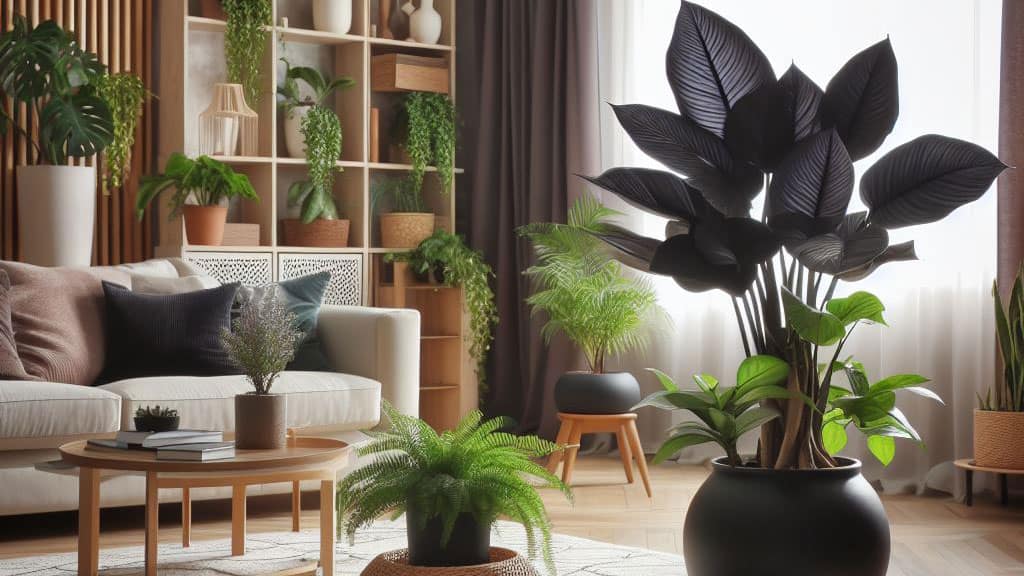
What is more, using dark plants in Gothic decor can also be a form of visual storytelling. Each plant reveals the story with its unique shape, texture, and hue of black. Together, they can reflect an individual style and the atmosphere you want to create in your space.
The range of dark plants is huge, so we encourage you to share your experiences and photos of your Gothic garden. Visit local shops or search online to make your own perfect set of dark plants. Benefit from these plants’ elegance and mystery and improve your home interior with the gloomy beauty of black shades.

Enter your email address below and subscribe to our newsletter