Enter your email address below and subscribe to our newsletter

Repairing a Lawn: Expert Tips and Guide

A lawn is not only a joy to behold, but there are many problems that need to be solved to keep the grass beautiful and healthy. In this article, we will look at the most common ones and how to restore your lawn.

Types of Lawn Damage and Their Causes

Dry patches and unsightly holes in the lawn are every gardener’s greatest annoyance. There are many reasons for this, including improper maintenance, pests, disease, harsh winters, inadequate fertilisation or even your pets.
Image by Dianne from pexels.com

Unwanted vegetation

One of the most common problems is recovering a lawn from unwanted vegetation. Weeds and moss not only spoil the appearance of the lawn, but also smother the more delicate turf grass and prevent it from growing to its full potential.

Weeds

There are several ways to get rid of them:

  • Mechanical, which involves spot removal with a special root remover. The tool picks up the weed together with the root and leaves only a neat, almost invisible hole, which is easy to fill.
  • Chemical – with the help of lawn herbicides. These are special selective preparations that kill weeds but do not harm the lawn grass. When using them, it is important to follow the instructions and choose the active substance aimed at destroying the prevailing vegetation: dandelion, sedge, horsetail and others.

The choice depends on the number of weeds – if there are few of them, the first option is suitable. On abundantly affected areas, it is faster and more effective to apply the second method. Regular and timely mowing also helps to prevent weed overgrowth.
Image by Lisa Fotios from pexels.com

Moss

Moss is another frequent visitor to lawns, which appears for a number of reasons: excessive moisture and poor soil drainage, soil acidity, sowing in shaded areas, mowing too low, which depresses grass growth and allows moss to “clog” it.

To get rid of moss and restore the lawn, all these factors favourable for its appearance should be removed: conduct aeration to improve soil drainage and saturate it with oxygen, reduce acidity, adjust the height of mowing, treat the lawn with special preparations that inhibit moss.

Pests

The lawn also suffers from a variety of pests. It is best to prevent them from appearing on the lawn, but if you have not seen to it – promptly eliminate already committed atrocities.

Moles

No one wants to see molehills digging up mountains of earth on a flawless green lawn. The most effective way to protect yourself from uninvited guests is to place a net on the ground before sowing the lawn so that they can’t get through to the upper layers. But if the mole’s already on the plot, the plan is this:

  • first get rid of it with special traps or repellents;
  • then remove the earth mounds, carefully seal and tamp the passages, and if necessary, sow grass in these places.

Underground insects and larvae

Another threat lurking underground is the larvae of codling moths, bears and other harmful insects that gnaw on roots. This causes the lawn grass to wilt and spots to appear.

Having noticed the first signs of underground pests on the lawn, it is worth treating with suitable insecticides. On their basis, a solution is prepared and the ground is spilled, so that the active substances reach their main goal.

Pets

Cats and dogs can also cause damage to the lawn. They pose two main threats – mechanical damage in the form of dug holes and trampled grass and the toxic effects of excrement, especially urine, on the grass.

Image by Matthias Zomer from pexels.com
  • In the first case, you can try to train your pets to walk on the lawn or provide a secure perimeter fence. Damaged areas will need to be replanted with earth and sown with new grass, preferably of a special trampling-resistant variety.
  • In the second case, it is also worthwhile to re-educate the pet and teach it to defecate outside the lawn. If you catch him in the act, try to drench the defecation area with water as soon as possible to reduce its concentration and the risk of yellow stains.

Diseases

Most lawn diseases like snow mould or grass rust are caused by pathogenic fungi. The use of specially selected fungicides will help to defeat them. Timely fertilisation is also recommended – fertilisation will strengthen the immunity of the grass and make it more resistant to disease and help it to recover afterwards.
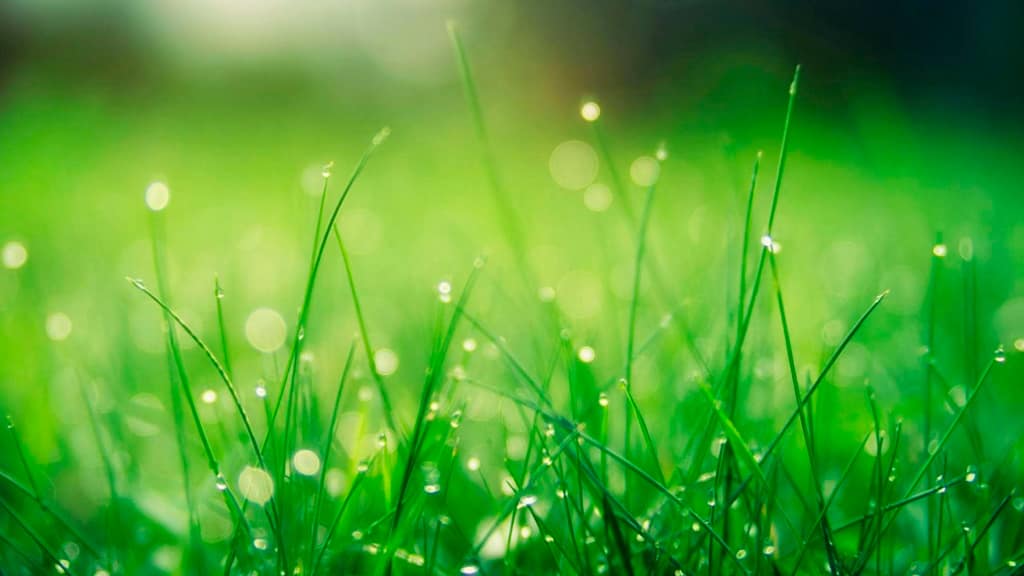
Image by Johannes Plenio from pexels.com

Burns

Lawn grass can get burned in several cases: from the wrong application of concentrated fertilisers and directly from sunlight.

In both cases, it is worth adjusting fertilising and watering methods.

  • Fertilisers should be applied evenly – a high concentration in one place will cause the area to burn out. Special seeders and spreaders can help. It is also important that the grass was dry when applying fertiliser, then the granules will not stick to it, but will immediately fall to the ground. Heavy watering is carried out afterwards.
  • Water the lawn in the morning or evening, avoiding getting the grass wet in the afternoon sun.

Drying out

This can be caused not only by natural drought or improperly organised watering, but also by the structure of the soil. Most often this problem occurs in heavy soil. If it is difficult enough to correct the composition of the soil, then it is quite realistic to do it with watering – in hot months, water your lawn every 2-3 days. It is best to use special irrigators and sprinklers, which evenly distribute moisture over a large area, preventing overwatering of individual areas.
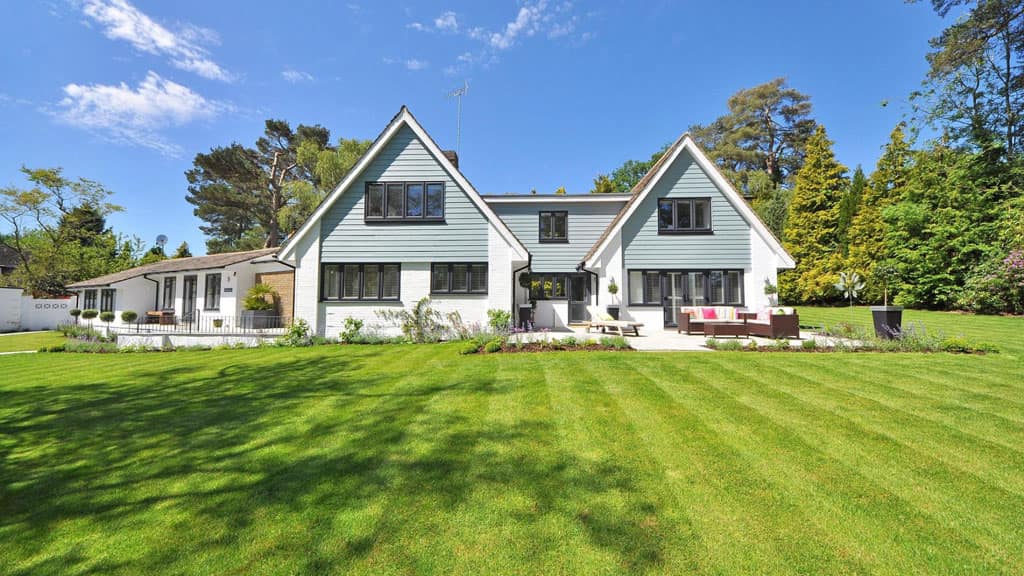
Image by Pixabay from pexels.com

Overwintering

Often in the spring, you’ll find patches of lawn that have thawed out. The old grass has died and the only thing left to do is to carefully remove it, sow the empty spots with new seeds and wait for them to sprout and turn green.

It can no longer be resuscitated, but it is possible to understand the causes and prevent the appearance of uprooting next time. The main problem is poor autumn preparation of the lawn for wintering.
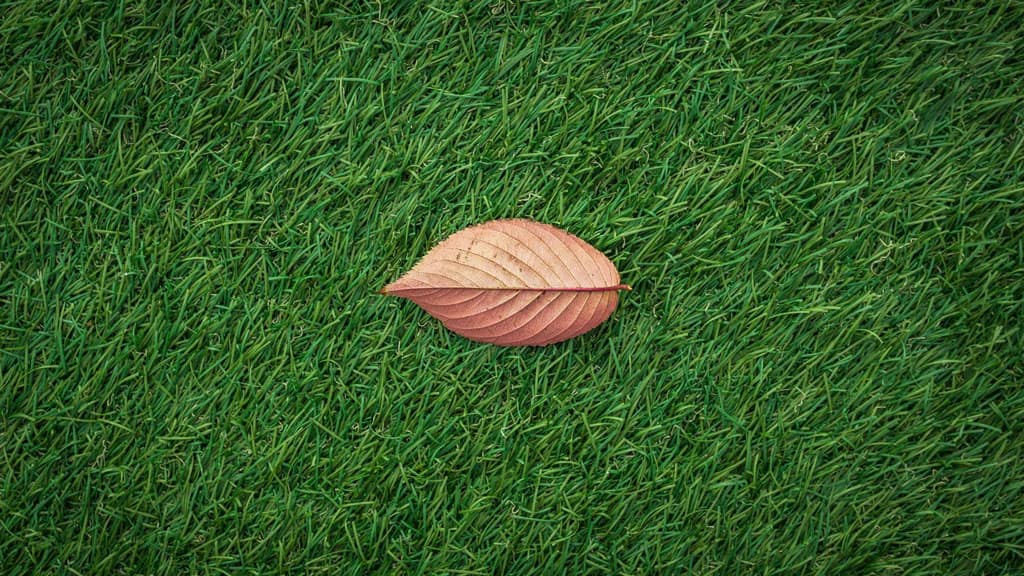
  • The final mowing should be done in the autumn – too long grass will bend under the snow and start to fade.
  • Do not leave fallen leaves, pieces of cut vegetation or foreign objects on the lawn – any foreign bodies stimulate the appearance of mildew.
  • It is recommended to remove a layer of dead grass with a scarifier – cardinal combing will help prepare the lawn for winter. True, it should be carried out at least a couple of weeks before the onset of cold weather, so that the lawn has time to recover.
  • Also during the winter period, the icy crust on the snow, which blocks the air supply, provokes the drying out. It should therefore be broken by making punctures. In addition, it is not advisable to walk on the lawn in winter – in spring you will find yellowed, trampled grass on the paths.
Image by Pixabay from pexels.com

Loose and stunted grass

This problem can be found in young lawns and old lawns alike. Often the cause is too compacted soil, which clamps the roots and prevents moisture and fertiliser from reaching them freely. Aeration – piercing the ground with a pitchfork or a special aerator – will help to solve the problem. This procedure oxygenates the soil, makes it lighter and stimulates the active growth of grass.

Poor lawn growth can also be due to the low fertility of the soil on which the lawn is sown. Therefore, regular fertilisation, according to the season, is one of the important measures.
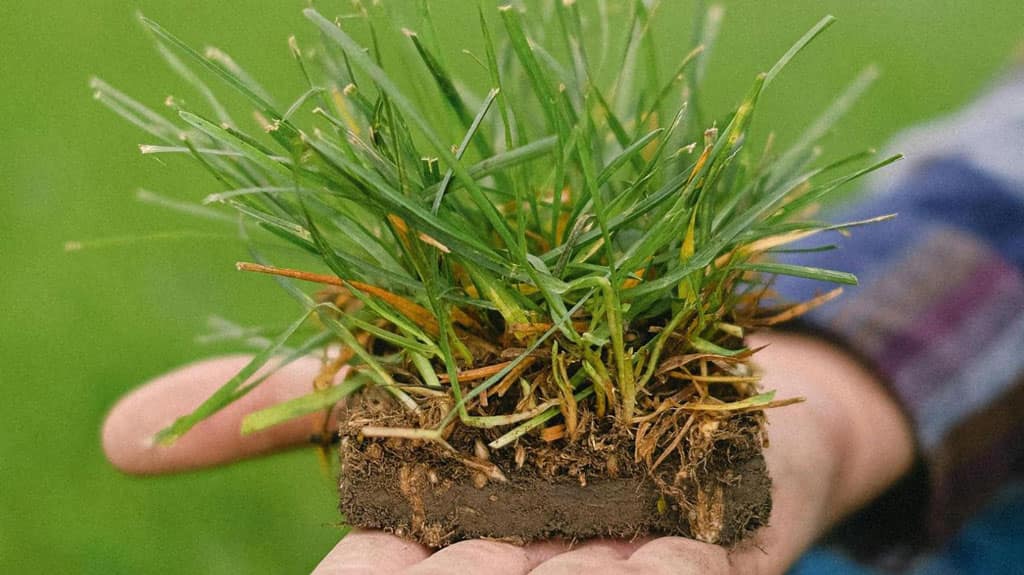
Image by Anna Shvets from pexels.com

Another reason is poor quality seeds or sowing them too infrequently, without following the consumption rates specified by the manufacturer. Such a lawn will have to be “thickened” by reseeding.

9 steps to revitalise your lawn

Before you can take decisive action, you need to identify the reasons for the poor quality of your lawn. A little time spent on this will help to avoid similar problems after the grass has been repaired. If gross mistakes have been made, the lawn should not be repaired, but redone or even created elsewhere on the property.
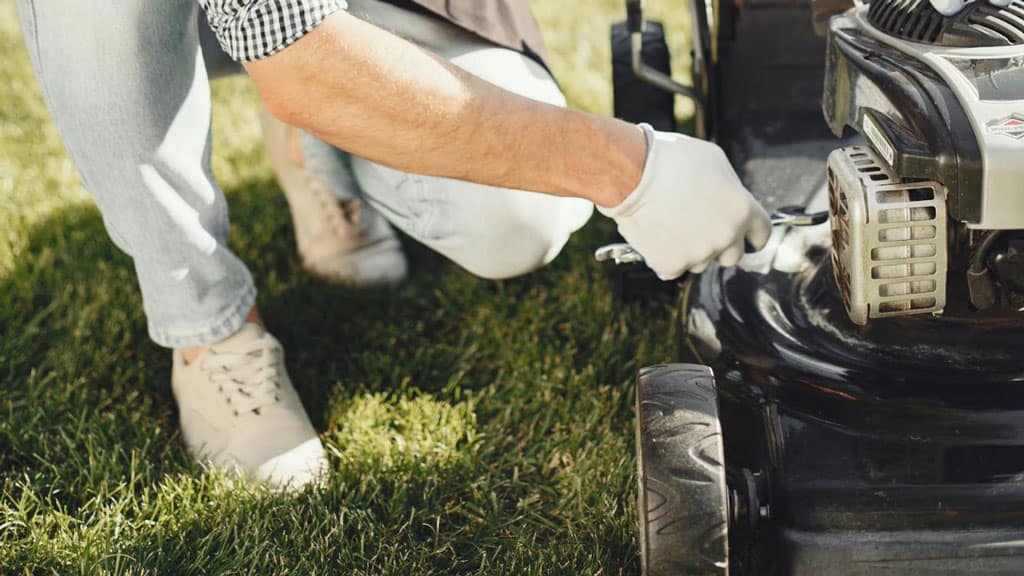
Image by Gustavo Fring from pexels.com

These serious mistakes include:

  1. unsuitable soil or its improper construction: lack of drainage, lack of a layer of fertile soil of sufficient thickness. In this case, the entire old lawn will have to be removed along with the soil and a new one laid;
  2. excessive shading. Here it is better to replace the lawn grass with varieties designed for shaded areas, which feel good in the shade, break up a flowerbed, rabatka with shade-bearing plants, add landscape elements in the form of small architectural forms.

In other cases, attempts to revive the grass carpet will lead to success.

Algorithm for restoring a neglected lawn

Operations that need to be performed:

  1. Weed removal. If the degree of weed infestation is small, you can destroy them manually. But if the lawn area is large, it is better to use selective herbicides. These products eliminate dicotyledonous varieties, so the lawn grass, which belongs to monocotyledonous plants, will not be harmed.
  2. Mowingto a height of 2-3 cm. If the grass has not been mown for a long time and has already started to sprout, the lower leaves will start to turn yellow and die from lack of light. This radical mowing is done in order to make further “treatment” more effective.
  3. Comb out the “felt” – the layer of dead plants. This will give more objective information about the condition of the lawn. Moss and debris that depresses the lawn grass are removed during the combing operation. A rake with low tines that do not damage the tillering node is suitable for this operation.
  4. Aeration – helps to prevent overconsolidation of the soil and provides a flow of oxygen to the roots. The procedure is carried out using special sandals with studded soles or ordinary forks.
  5. Verticulation (scarification). The main operation when restoring a lawn. A special device with cutters cuts through the turf in 2-3 cm increments to a depth of up to 7 cm. Through these furrows, more water, nutrients and oxygen are delivered to the roots. Newly sown lawn grass seeds will germinate more quickly in soil loosened in this way. The cut turf will be stimulated to divide and grow. After just 2 weeks, the grass will start to bush actively, forming a dense, thick carpet.
  6. One more sweeping with a rake – to remove debris lifted to the surface by the scarifier knives.
  7. Lawn levelling. Where there are bumps or holes, carefully cut the turf with a sharp “T” shaped tool, turn the edges of the turf away and replenish or level the ground. Afterwards, return the turf to its place, press down firmly and water liberally.
  8. Seeding of gaps. Spread complex mineral fertiliser on top of the clean, loosened lawn, then sift fine fertile soil in a layer of up to 2 cm. Roll with a hand roller weighing at least 50kg. If the gaps appear to be below the general level, add more soil and roll again. Then sow the seeds, and on the gaps – 2 times more abundantly.
  9. Water abundantly.
Image by Anna Shvets from pexels.com

How to restore a dry lawn

If the grass has not been watered for more than a month in a hot, dry summer, it can burn in the sun completely, up to the state of hay. In this case, the lawn will have to be redone.

If there are any signs of life, you should try to restore it. To do this, first carefully comb it out with a light rake, so as not to damage the weak living blades of grass.

Then water abundantly at the rate of 2 buckets per 1 m2. Watering is better to combine with treatment with stimulants. To do this, use this algorithm: first water with clean water, then – aqueous solution of stimulants.
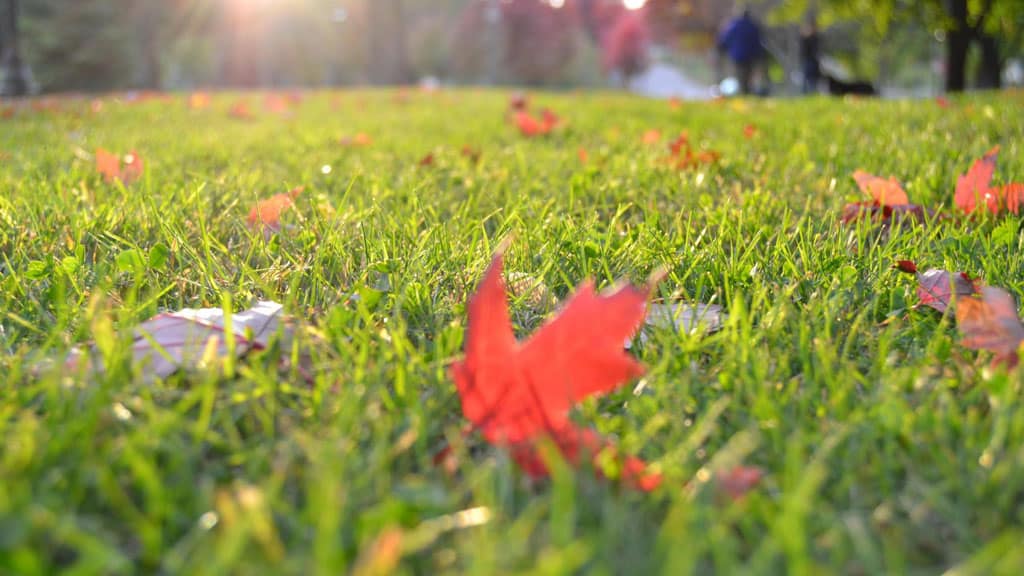
Image by Jennifer Victor-Larsen from pexels.com

In hot weather, you should moisturise your lawn every day, monitoring the condition of the soil:

  1. if the water runs off the surface quickly, increase the intensity of watering;
  2. if puddles form, the water volume should be reduced.

After 10-15 days, the lawn will turn green with young seedlings. Mowing starts when the grass has reached 8-10 cm. It should be cut no lower than 6-8 cm. Low mowing is possible only after the grass cover is fully restored.

How to quickly repair a trampled lawn

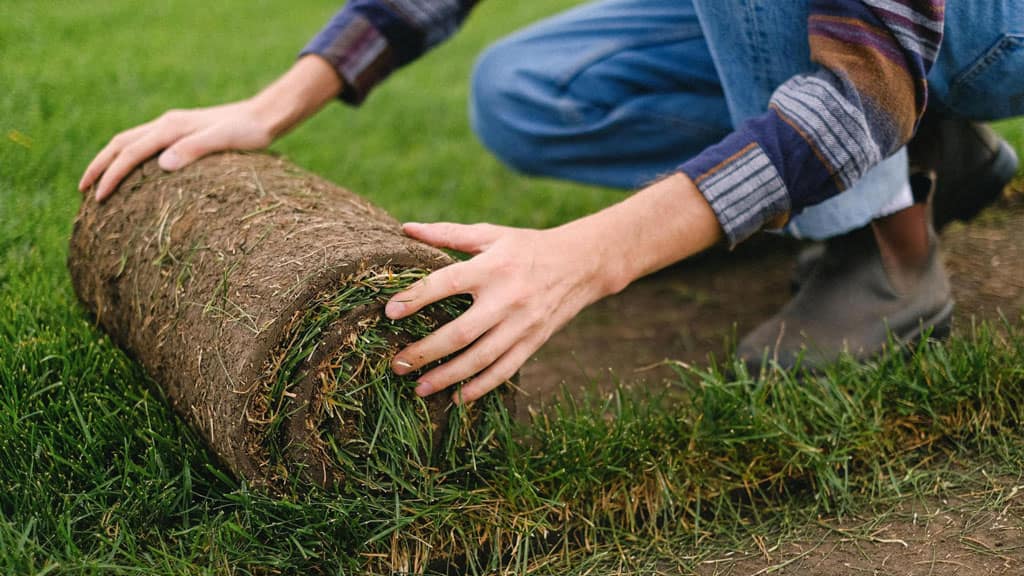
If the overall condition of the grass cover is satisfactory, but the appearance of the lawn is spoilt by small areas where there is no grass or it grows rarely, it makes sense to repair the lawn with a roll turf. For this purpose, the grassless area is loosened, levelled, fertilised and abundantly watered.
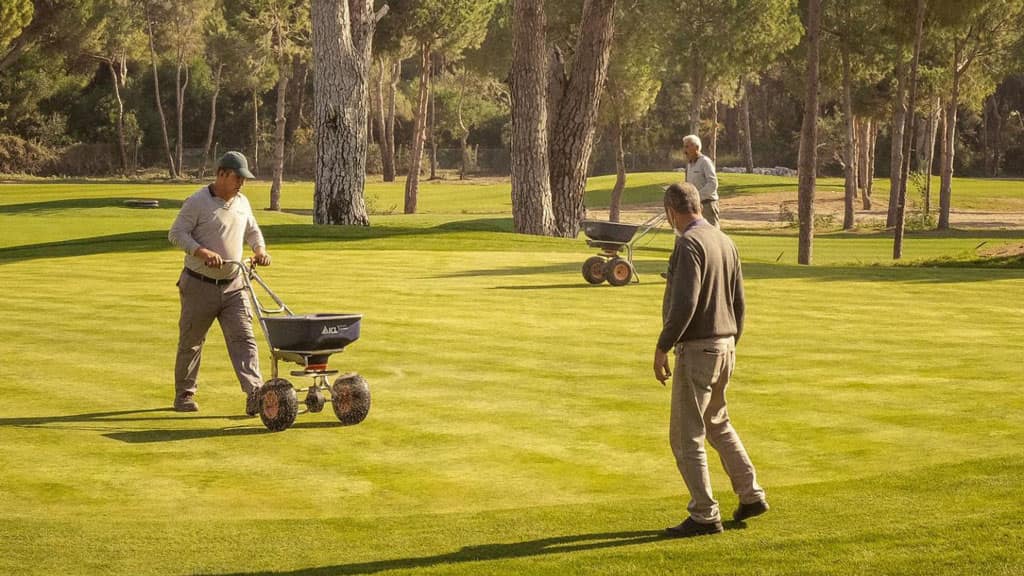
Image by Azra Tuba Demir from pexels.com

From the roll of turf, a patch is cut to the shape of the gaps with 2 cm more on each side. The patch is placed on the area to be repaired and rolled. Fill the seams with mulch. Water again and leave it under a load for a few days until it takes root.

How to remove an old lawn if it cannot be restored?

If gross mistakes were made at the stage of creating a lawn, if more than 50% of its area has died as a result of poor quality care, or if weeds prevail over cultivated plants, it makes sense to completely replace the old lawn.

Seeded grass is much more difficult to remove than rolled grass. The roots of the seeds penetrate much deeper into the soil, so it takes a lot of effort to remove them.
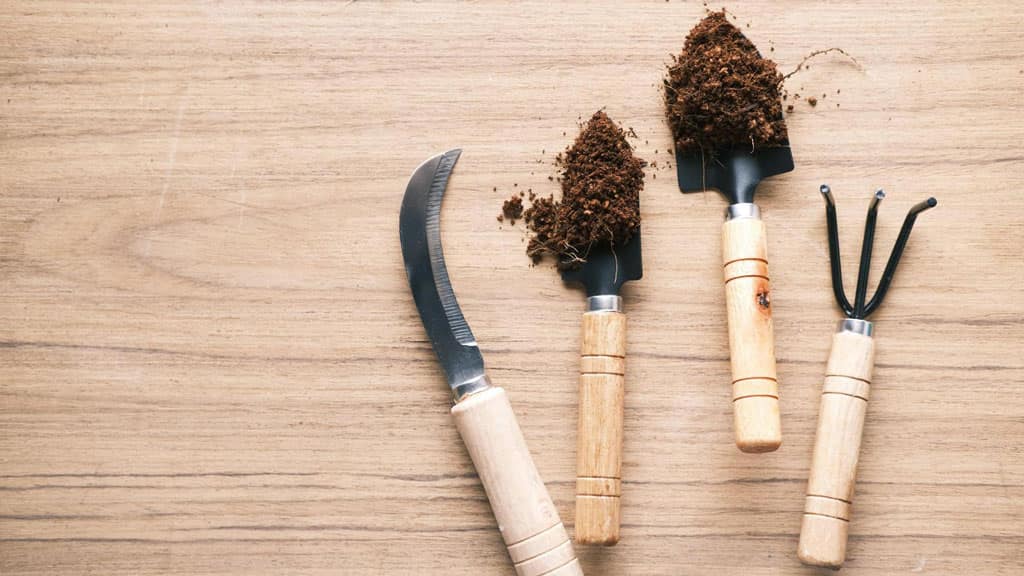
Image by Towfiqu barbhuiya from pexels.com

To do this:

  1. remove up to 5cm of this thick and dense turf with a sharp spade;
  2. cultivate the soil under the removed turf;
  3. compact the soil;
  4. add fertile soil.

Then sow lawn grass seed or spread rolled turf.

The cut sod can be composted, but it is more efficient to recycle it on site as an organic fertiliser. This saves energy and preserves the fertile layer. The pieces of old turf are turned grass-side down, watered with biopreparations, covered with a black film and left in the sun. After 2 months, the cut turf turns into humus, which can be reused.

Rolled lawn is spread on a special substrate of sand, its base is separated from the main soil, so such a roll is easy to remove, pre-cut into small pieces.

How to prevent damage to the lawn grass

In order to keep your lawn happy for as long as possible, you need to take timely measures:
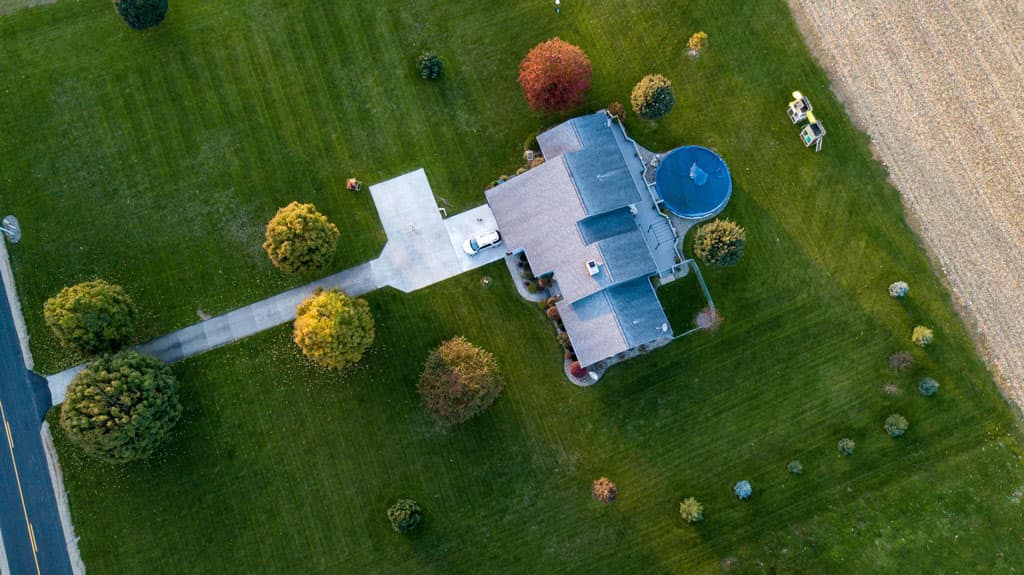
Image by Tina Nord from pexels.com
  1. in spring: comb out old grass and aerate the area; apply a complex fertiliser with a high proportion of nitrogen, preferably long-lasting; water; reseed bare patches if necessary;
  2. in summer: stimulate grass growth with a shock dose of nitrogen and potassium fertiliser; water, especially in dry summers; cut regularly with a sharp tool to a permissible height: for hot weather at least 3 cm, for humid summers up to 2 cm; control weeds;
  3. in autumn: reduce mowing frequency and height (to 6-8 cm) no more than 2 times a week; feed with phosphorus and potassium fertiliser, without nitrogen; aerate in dry weather; sow new seeds if necessary until the end of September.

Regular lawn care is in the long run more cost-effective in terms of time and investment than restoring it.

Anna Smith
Anna Smith

Anna Smith is a valued member of team, where she seamlessly blends her passion for home ideas and her love of writing. She is an eclectic writer and design enthusiast originally from sunny California. At the age of ten, she moved with her family to the picturesque landscapes of Croatia. From a young age, Anna dreamt of a career in journalism, with aspirations of writing captivating stories and sharing her insights with the world. However, life had different plans for her. It was her love for transforming living spaces, renovating old furniture, and crafting exceptional interior details that steered her towards a career in home design. Anna's creativity knows no bounds, and she is renowned for her ability to combine modern aesthetics with vintage charm. Her design philosophy is all about breathing new life into old items, making every corner of a house a unique and stylish reflection of the homeowner's personality.

Articles: 30

Leave a Reply

Your email address will not be published. Required fields are marked *

Stay informed, subscribe now!

Enter your email address below and subscribe to our newsletter