Newsletter Subscribe
Enter your email address below and subscribe to our newsletter
Enter your email address below and subscribe to our newsletter

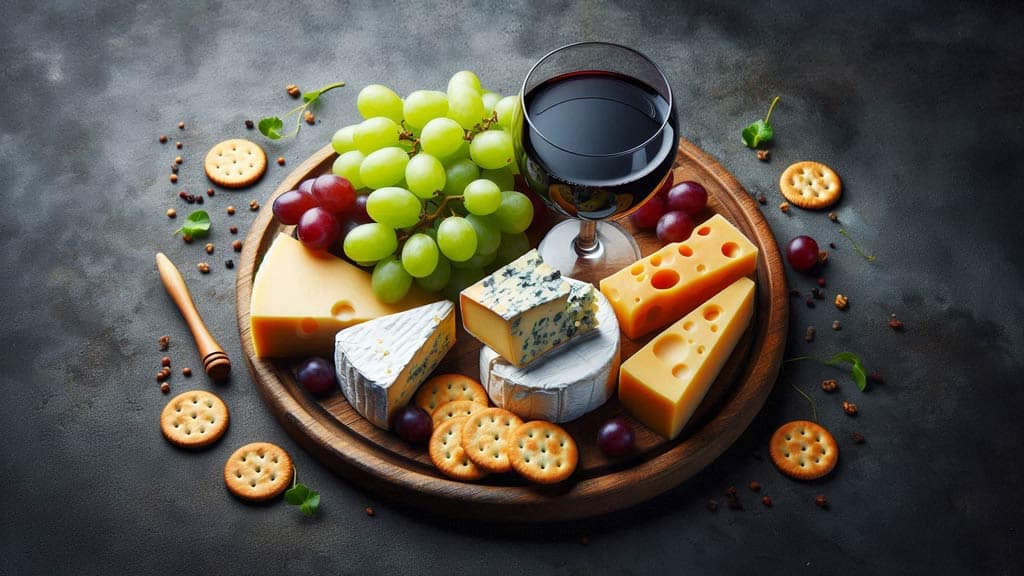
Cheese plate is not the most affordable dish today in every sense. But sometimes you want to eat deliciously and beautifully with your guests. Learn how to put together a cheese plate and surprise your guests with its flavour and presentation.
But this benchmark does not mean that an excellent cheese plate will not come out of fewer varieties. Let’s take a look at how to make this treat from one, two and three varieties of cheese.
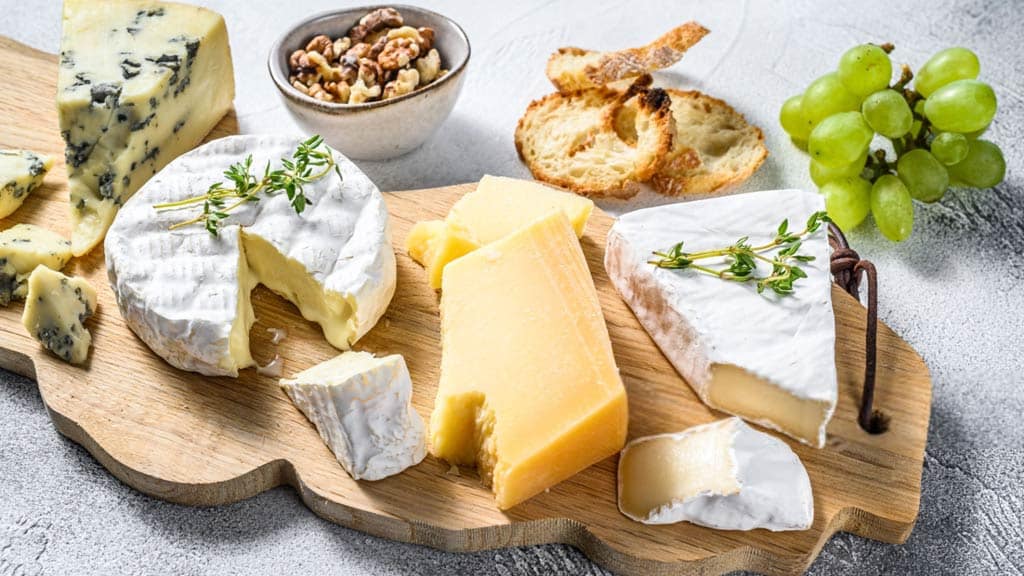
We’ve tried to put together the perfect cheese plate, one that can stand honourably in the middle of the table or replace a light wine dinner. And importantly, this cheese plate is made up of cheeses that can be found in our shop.
The main characters in this white mould cheese category are Camembert and Brie. Favourites due to the mouldy taste and smell, which are obvious here, but much milder and quieter than in blue cheeses, which I’ll talk about a little later. Camembert and brie are similar, but when you compare them to each other, brie is fluid and pungent in flavour, Camembert is firmer and a little calmer in flavour.
Affordable and well distributed cheeses that are sold in every market in our country. I like to bake Camembert, but then it becomes more fluid, which makes it nice to dip something in. Baked Camembert can also decorate a cheese plate, but let it sit on the side so that it doesn’t spread out and dip into the other cheeses.
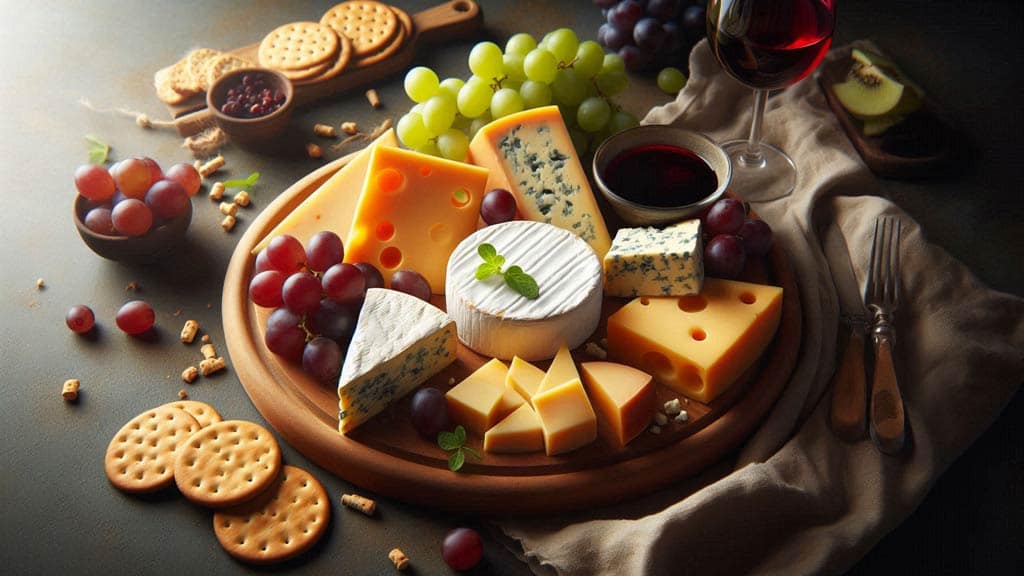
From the category of semi-hard cheeses, the first thing to go on the plate is maasdam. It’s beautiful, with characteristic holes like in the pictures, and pleasantly firm. It has a bright cheese flavour, but the brightness is quiet. Maasdam is the kind of cheese that can be eaten like seeds: you can send it into your mouth piece by piece without diluting its flavour with anything else. I would also recommend red cheddar as a semi-hard cheese. It’s a cheese with a rare colour that will create a beautiful palette on the plate with the other cheeses.
Very bright odour, not everyone adds it to the plate, personally I don’t really like it there. But if you want it, let it be – just as an aside so it doesn’t clash too much with the rest of the raw, it’s too flavourful. If you can’t find real Swiss gruyere, use its analogues – the unique flavour will be spelled out in them too.
Goat cheese chevre can be hard, it can be soft, but whatever it is, the plate needs it due to its amazing unique spirit. The hard one is mainly the bearer of that distinctive flavour, while the soft one gets both flavour and aroma.
Let the hard cheese on the plate be represented by Parmesan. It is an important product for cheese-making and occupies a special niche. Parmesan has its own amazing texture: while hard, it crumbles well and has a rare, well-known flavour. Many hard cheeses are called Parmesan nowadays, but in fact, real Parmesan is made only in Italy; other producers find it difficult to achieve the same texture and richness. But if you don’t have Italian Parmesan, get some other cheese – six months or better still nine months old: the cheese plate needs this kind of cheese to harmonise everything on it.
Bright smoked flavour, a noticeable saltiness, a nice rubbery hardness. If you have beer or strong drinks on the table, don’t spare the scamorza, let it lie in a slide.
A soft cheese with a specific flavour and aroma that it owes to mould. Whether it’s a lightweight gorgonzola or intense dorblu and Roquefort, which is rarely found in the shops. Actually, we love blue mould cheeses, aka blue cheeses, for these too bright and slightly island flavour and pungent smell. When you put such cheese on the plate, find a place for it aside: there will probably be a guest who thinks that blue cheese smells like socks, there is such category of citizens.
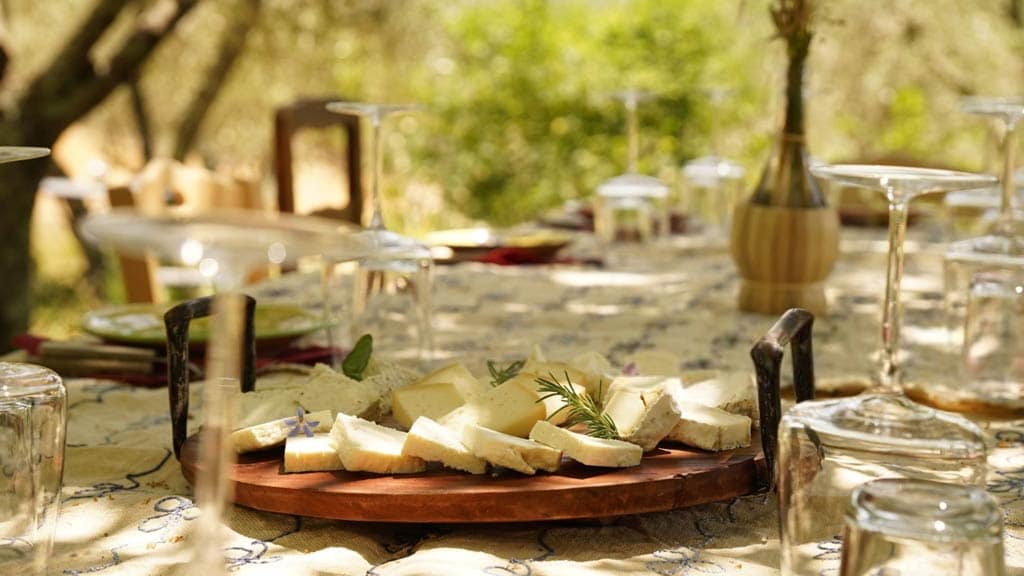
The secret to a one-cheese platter is simple: choose either a cheese that is everyone’s favourite or a speciality cheese. If you have access to such products, the following varieties canonically can be included in a cheese plate.
For a proper two-cheese plate, you’ll need one hard cheese and one soft cheese. Here are the best choices in those categories.
Three cheeses are perfect. You’ll need the hard and soft cheeses we talked about above, as well as some kind of cheese with a twist.
If you can’t get such varieties, find alternatives from the cheeses available in your region. Or take a different approach by having one cheese each from the milk of different animals on the plate: cow, sheep and goat.
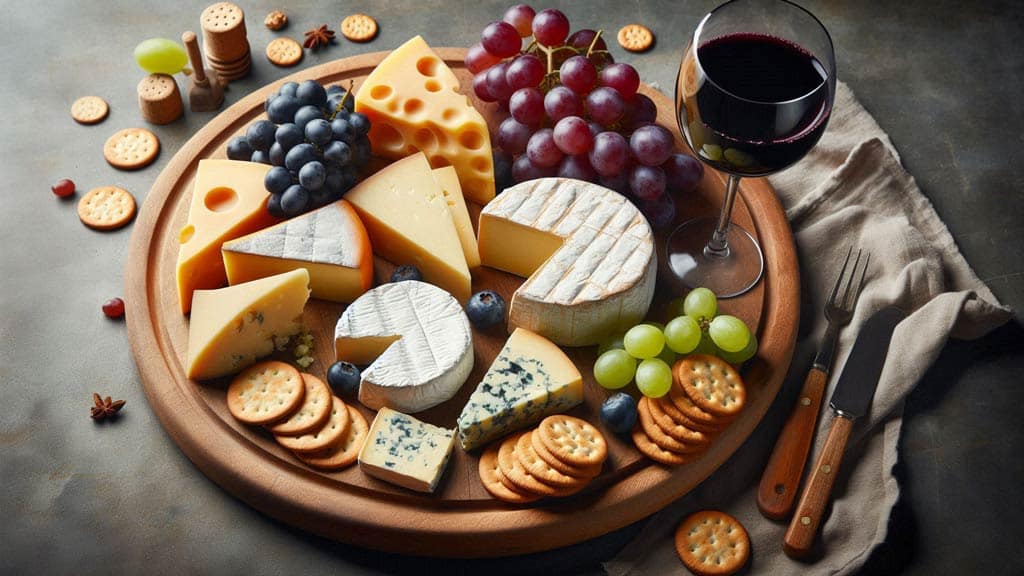
Once you’ve chosen your cheeses, you can think about tasty accompaniments. You’ll need something sweet, something salty, sweet and savoury sauces, as well as bread and crackers.
Apples, grapes, pears, blueberries, strawberries, any berries and fresh figs compensate for the rich salty taste of dairy products with sourness, refreshing the palate.
Tart and sweet dried cherries, cranberries and apricots add a bright note to the flavour of cheeses. Dried fruits are a good choice for a multi-variety plate, as they are equally harmonious with both sharp and soft cream cheeses.
Instead of buying a jar of olives of one type, buy olives of different sizes and degrees of maturity. Just be sure to remove the pips beforehand or be sure to warn your guests about them.
The main pickles you can offer for the cheese plate are gherkins. They have a nice sourness to them and look very nice.
Don’t get carried away so that the cheese plate doesn’t turn into a meat plate. Choose one quality meat and let it set off the cheeses. If you’re serving lots of rich, salty or spicy cheeses, choose something quieter, like a good cooked sausage (ideally like Italian mortadella). But spicy salami, rich meat or liver pate will not spoil the cheese plate.
Mixed nuts, candied walnuts, pistachios or almonds can be served with cheese. Those who like unusual flavours can experiment, for example, by combining almonds with soy sauce and wasabi.
If you haven’t tried cheese and honey yet, it’s time to do so: they are made for each other. Jams and jellies will also create a wonderful sweet effect, especially those with a tart flavour.
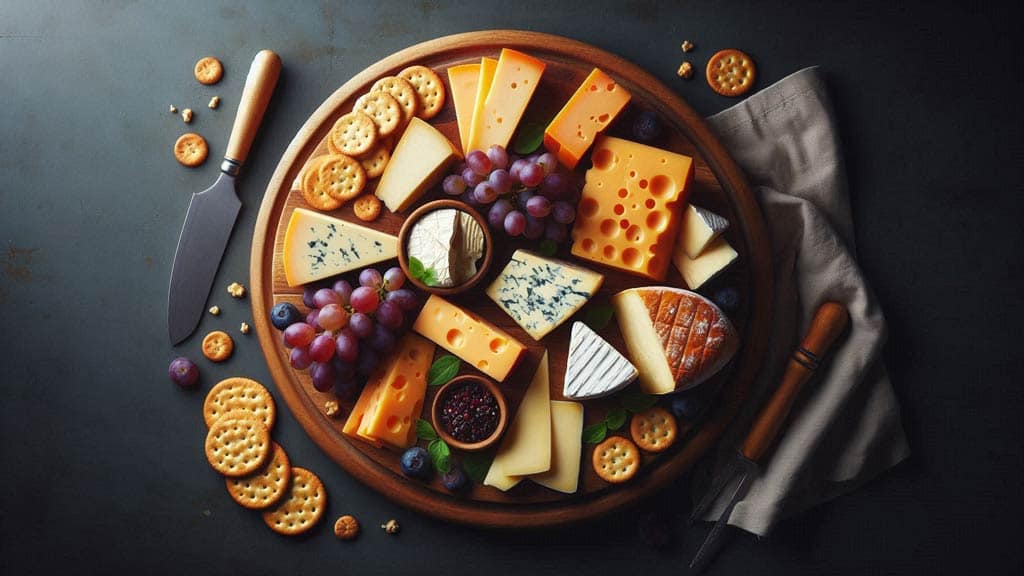
Cheese, as a fatty dairy product with a rich flavour, needs acid, and grainy mustard can satisfy this need. Cheese can also be sprinkled with drawn thick vinegar or pomegranate syrup.
These foods will be needed to ‘transport’ the cheese into your mouth, rather than detract from its flavour. Small crunchy toasts, crackers or crisps, including those made from fruit, will do the job.
You don’t need a lot of greens, and you can even do without them. But a few leaves of mint will not interfere, and, on the contrary, will decorate the plate. You can sprig of rosemary, it will decorate and create a flavourful flair in the plate. Some people like to lightly burn rosemary to make it smell brighter.
The most important thing is to play the cheese correctly, if you stop at one variety. You’ll need at least one matching product that will make the lone cheese the star of the evening. Here are some possible combinations.
Dubliner is a hard Irish cheese made from cow’s milk, somewhat reminiscent of cheddar and parmesan. It’s both islandy, nutty, sweet and salty at the same time. Because it has such a complex and rich flavour, simple croutons will suffice. And thin slices of green apple will help refresh your receptors so you don’t feel over-saturated with dairy and eat more cheese.
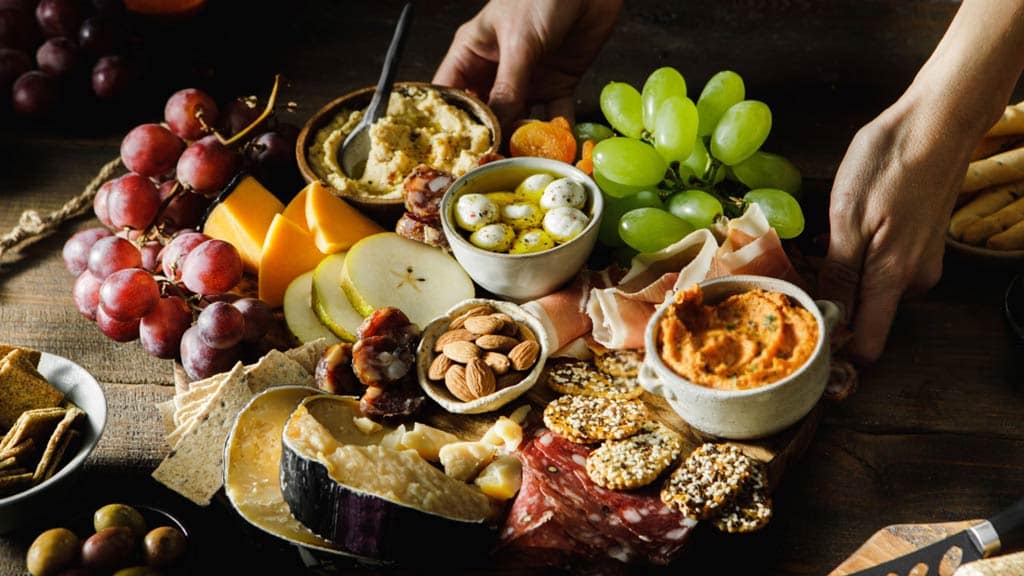
A splash or dip of aged balsamic vinegar is enough to bring out the spicy flavour of Parmesan.
Cambozola is a triple French soft camembert cheese plus Italian gorgonzola. It combines the mild flavour of blue cheese with a whole bunch of creamy tones. Cambozola is good served with fig, olive and cranberry crisps. It also goes well with honey, as with any cheese with mould.
Baking or marinating the cheese is also a great solution for a single-variety cheese plate. Try serving brie baked in puff pastry (brie en croute), goat cheese with tomato sauce, marinated mozzarella or feta (and in our realities, feta).
Cheese for serving should be fresh and warmed to room temperature. Half an hour before slicing it should be taken out of the fridge. Each variety should be sliced on a separate board so that their flavours do not mingle.
There are several types of slicing: cubes, thin slices, coarse slices. Ideally, you should slice so that the edge, crust, and centre of each variety are visible. Soft variants with mould are better cut into triangles, hard – thin slices or large slices that can be broken with your hands. Mozzarella is better served in the form of balls or semicircular pieces, feta and firm – large cubes, and semi-firm can be rolled into tubes.
The pieces should not be too small, so that they do not become weathered and dry. Special knives are used for slicing different varieties. Noble variants with mould weighing up to 300 grams can be served whole heads.
The amount of products should be moderate. Calculate it based on the proportion: 50-100 grams per person for an appetiser and 20 grams if there is bread. If this will be the main course, then the amount should be increased.
To serve a cheese plate, it is customary to use wooden or stone boards of any shape. Also suitable are ceramic or porcelain plates, earthenware or terracotta dishes, depending on the general decoration of the table. Soft cheeses are better laid out on a glass saucer or a plate on a thin stem, with a spoon attached.
Fruits, berries, sauces and nuts can be placed in the centre of the dish, having dried the fruit thoroughly beforehand so that dripping water does not spoil the taste. Cheese pieces are arranged around the centre. Bread and crackers are better served separately, but you can also lay them out around the edge.
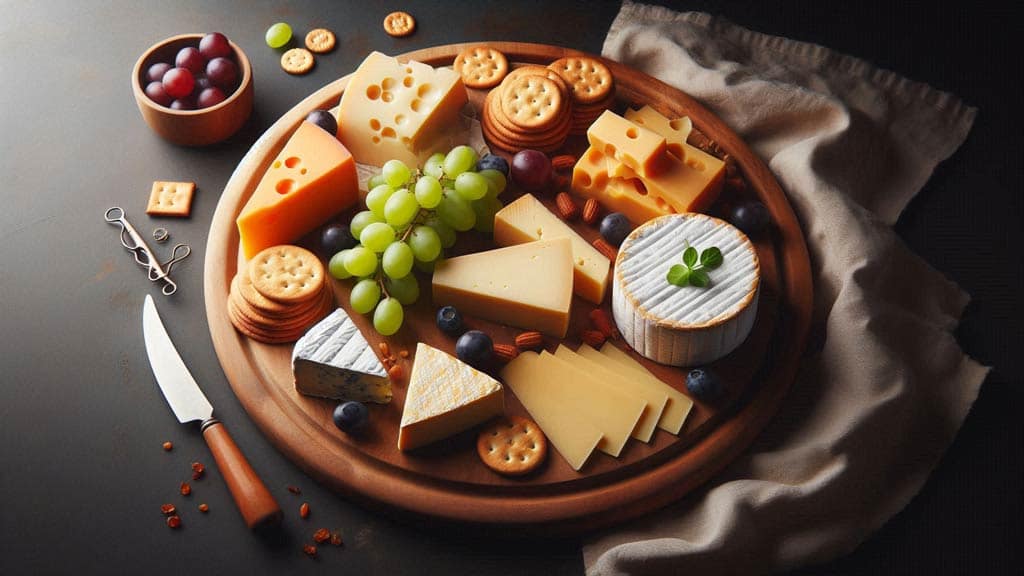
The cheeses should be arranged clockwise: first the most delicate and fresh, then sharp, hard and savoury. It is important to make sure that the flavours do not mix.
For convenience, skewers and paring knives should be provided if whole heads are served. The pieces do not have to be laid out strictly symmetrically, a slight carelessness will add naturalness and attractiveness.
The plate can be themed by laying out varieties from the same country, which will add sophistication and originality to your table.
Whichever way you choose to fill and serve it, the cheese plateau will be the perfect accompaniment. This simple and elegant solution will please even the most capricious gourmets, and its versatility will allow you to use it for any occasion.
Based on these recommendations, you can experiment and create your own variants of snacks from the cheeses available in your region. About good domestic varieties of cheese that can be included in this dish, and about overseas cheeses that you like, write in the comments.

Enter your email address below and subscribe to our newsletter