
Optimum air humidity is the key to good health, especially for children. In a room with a normal microclimate, where there is a minimum of viruses, bacteria and allergens, a person feels good. Answering the question, why do you need a humidifier, it is worth noting that optimal humidity contributes to the normal condition of the room without mould and fungus.
In summer, opening the windows is enough to maintain humidity. In winter, it is more difficult to maintain sufficient humidity because the air is dried out by heating, poor ventilation and the presence of many people in the room. An air humidifier is an advantageous and functional alternative to an open window or a damp cloth on the radiator. It is often impossible to ventilate the room in winter because of the cold and the risk of getting sick. It is worth determining the technical characteristics and the principle of operation of the humidifier in order to choose an affordable and optimal option.
Humidifiers can be divided into four types of humidifiers according to their working principle: traditional, steam, ultrasonic and hybrid with enhanced filtration. They differ in the way they maintain the humidity in the room and in the additional functions they offer.
These devices do not create vapour, but saturate air streams with moisture. The design of this type consists of a fan, a water tank and a filter. The air drawn in from the room is drawn out through a water-soaked cartridge, which additionally traps dust. Thanks to this natural process, a comfortable microclimate is maintained in the room.
Traditional humidifiers do not waste a lot of electricity and are not demanding on water quality. The disadvantages include a rather slow speed of operation, low productivity and the need to constantly change the filter.
It saturates the air with moisture using hot steam. Water is heated in a container inside and then evaporates. In the design of these devices, filters are not necessary – the liquid is purified in the process of boiling. Models of this type consume more electricity than traditional ones.
A steam humidifier should be monitored so as not to overdo the amount of moisture. Compared to other types, this one makes more noise while boiling water. Of course, the steam output is warm – not suitable for giving freshness. On the other hand, this can be a positive thing when you want to warm up. However, you should not expect a noticeable increase in the temperature in the room.
Scale forms on the heating element of a steam humidifier if unfiltered water is poured inside. In addition, condensation forms on the surfaces around the device.
Devices of this type create a cold vapour or mist. The water from the tank is transformed by a membrane that vibrates very quickly at high frequencies. Ultrasonic humidifiers combine the advantages of the previous models: they save energy, are very quiet and safe for others.
Such devices deliver medium level performance and moisturise the air quite evenly. Additionally, some models can be equipped with a water heating system, which allows you to maintain a more comfortable temperature in the room.
Disc humidifiers, or air washers, are a hybrid version of a traditional or ultrasonic humidifier and air purifier. The main element of the design is a rotating drum with water-soaked rollers or a membrane. A fan draws air in, dust and other harmful particles are trapped inside, and purified and humidified streams or vapour are delivered outside.
These features affect run time and humidification efficiency. Performance figures tell you how much water the device uses per hour. The larger and more powerful the device, the larger the area it can cover. And the volume of the tank determines how often it will need to be refilled.
The average performance is considered to be about 300 ml / h. It is better to choose a humidifier that is able to produce 350-400 ml / h. For each device, manufacturers also specify the area on which the model will work in the optimal mode. It should be borne in mind that this indicator is assessed by ideal conditions, which are quite difficult to achieve in the room.
According to the area of the room, you can roughly estimate the volume of the tank to choose. For example, for a small room of 15 m² a volume of 4 litres is suitable, and for 25-30 m² – models with a tank for 6-7 litres of liquid.
The air performance characteristic is also important for traditional devices. The higher the indicator, the more air the device can pass through it in an hour. For small rooms, it is advisable to choose a humidifier with a capacity of 100 m³/h, for larger rooms – from 400 m³/h.
The control system can be mechanical or electronic. The mechanical type is more commonly used in budget humidifiers, but there are also premium models with this type of control for those who like minimalism.

Basically, modern humidifiers are set up using a built-in electronic panel. A more advanced option is a remote control system with a remote control included. There are also devices that can be controlled from a smartphone via Wi-Fi or Bluetooth. Such devices are suitable for work in a smart home system. They transmit data to a mobile app and are able to activate themselves to maintain the humidity level set by the user.
Preferably, the humidifier should have a hygrometer and hygrostat installed. The hygrometer determines the level of humidity. However, the accuracy of the measurement is not very high because it measures close to the vapour source. The hygrostat allows you to automatically adjust the intensity. If there is no hygrostat, you will have to do it manually.
Manufacturers also produce devices with built-in thermometers and other additional sensors. Useful will be the function of automatic shutdown when tipping over and low water level in the tank. This is especially critical for steam models. Budget humidifiers may not have such a mechanism – they only warn of danger with a signal.
Noise is an important characteristic for a humidifier. A quiet device will not distract from household chores or work during the day and will not wake you up at night. Manufacturers indicate this indicator in the documentation. It is better to choose a device with a noise level of about 30 dB.
Humidifiers periodically emit sounds during water intake and heating. The volume of gurgling, gurgling and other characteristic noises differs depending on the design features of the device.
The design of the humidifier also has a noticeable effect on its usability. Water must be added to the tank on a regular basis. This process becomes tedious and unpleasant if the liquid cannot be refilled without switching off the power and removing the tank.
Cleaning the inside of the device from scum or limescale will be problematic if the design has hard-to-reach places and non-disassembling parts. The filters must also be suitable for regular cleaning. Otherwise, you will have to often buy new consumables, which are not always easy to find on sale.
It is good if the humidifier has an adjustable steam direction. This will help you to choose the most suitable location for the device without damaging the furniture and walls, which can be harmed by condensate accumulating on them.
Before buying, you should carefully examine the humidifier, if you choose in a shop, or check by video reviews, if you order online. Consider how convenient it will be for you to do all the above-mentioned manipulations.
A humidifier with an ioniser saturates the air with negatively charged ions and slightly affects its composition. This can have a positive effect on breathing. But in practice, ionisation does not bring a significant effect, so you can safely do without such an option.
In models from the premium segment there is a function of water protection from bacteria. The device can sterilise steam, heat water or engage filters together with an antiseptic inner coating of the tank.
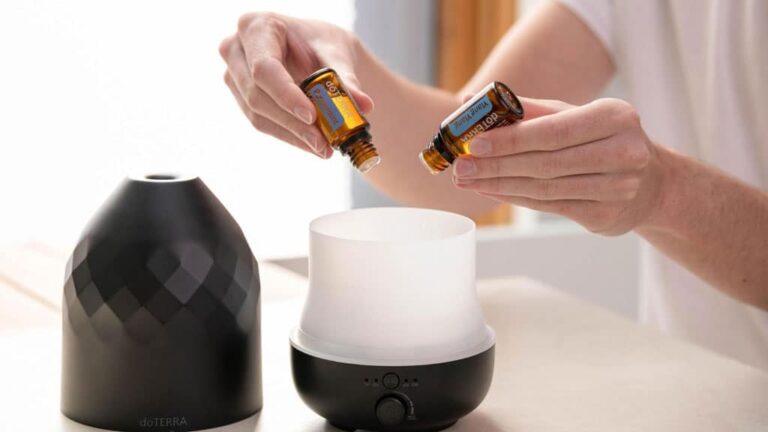
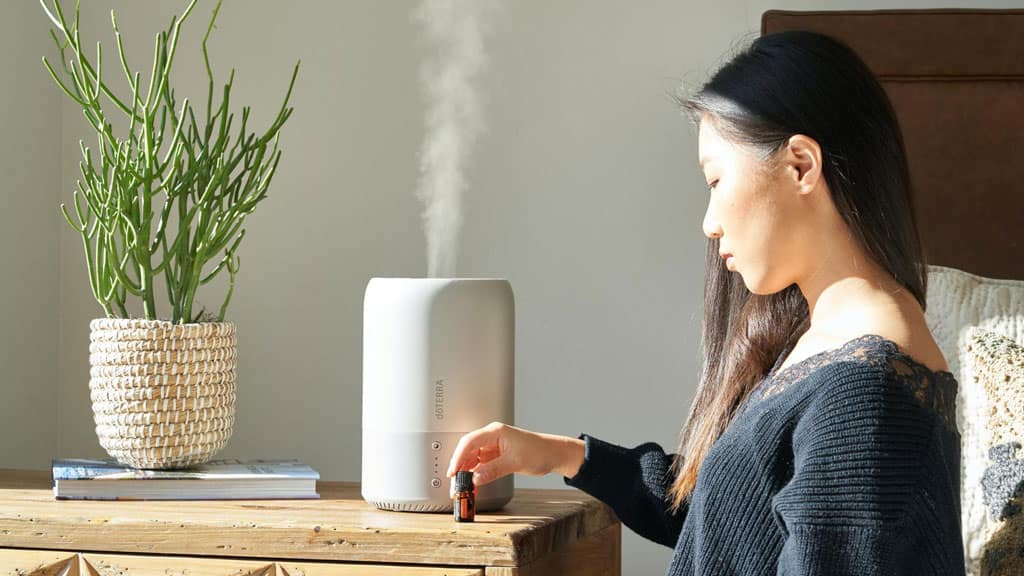
To create a special atmosphere in the room, aromatic oils can be added to many humidifiers. Most often they need to be dripped directly into the main water tank, but some devices have a separate reservoir for this purpose.
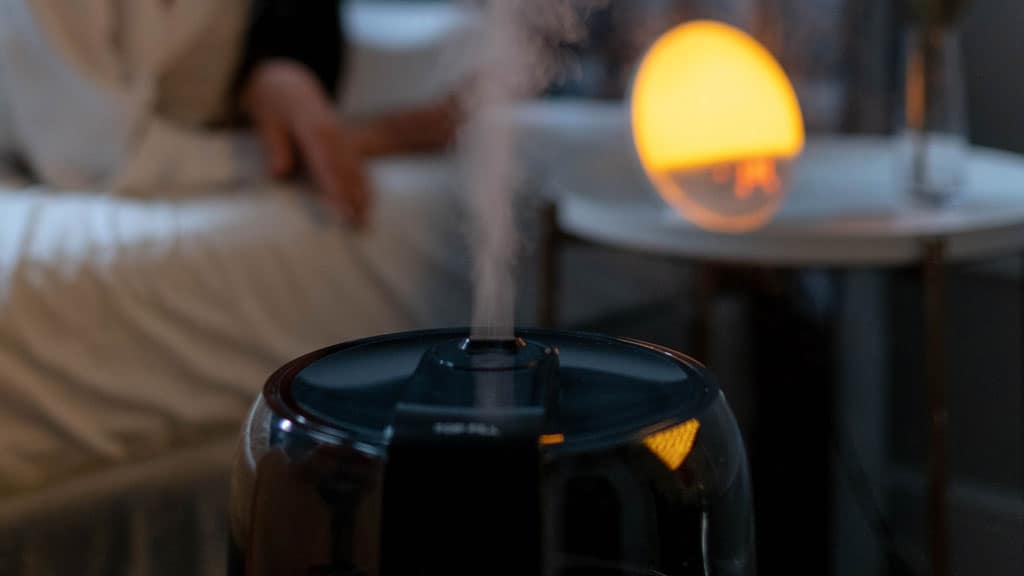
At night, a special mode of operation of the humidifier, in which the backlighting of indicators and controls is dimmed or completely extinguished, will be useful. In addition to this will be useful timer, with which you can set the time of automatic switching off and switching on the device. Some models with a transparent tank are additionally equipped with a backlight. This chip turns the humidifier into a night light.
In any device does not hurt the indicator, which shows that it is time to clean the filter or change the cartridge.
The choice of humidifier depends on where, in what conditions and by whom it will be used.
The main condition is to correctly determine the area to be served. Then you can choose the right type of humidifier.
For a family with children and animals, an ultrasonic or traditional humidifier will do: they are safe even when tipped over. The maximum you will have to do is wipe off the water, and this does not apply to all models. In some models with a bottom fill, the tank is screwed down with a lid that prevents large amounts of water from escaping.
For quick humidification in a house where there are no children and animals, you can use a steam humidifier, especially in winter: it will slightly heat the air and compensate for the loss of moisture due to working heating devices. In summer it can be a little hot with such a device, so you can buy both a hot steam humidifier and a cold steam humidifier.
In a child’s room, quiet and bright models with a night light are ideal, which will delight the baby. The safe design will keep the child away from dangerous situations, and the soft light of the night light will not disturb the sleep.

In a room where there are many plants, it is best to put an ultrasonic humidifier: positive changes will be noticeable soon: more lush leaves, less yellow shoots, and in the case of fruit-bearing plants, improved flowering and ripening of fruits.
For those who want to make the air not only humidified but also clean, air washers or humidifiers with a traditional method of evaporating moisture are suitable. These are especially good for bedrooms and children’s rooms.
It is best if the device has a built-in hygrometer and automatic control of humidification intensity.
The price and design of the device is a matter of taste. Manufacturers offer both models with laconic design, fitting into any interior, and fanciful options. The price can vary from small to premium level.