
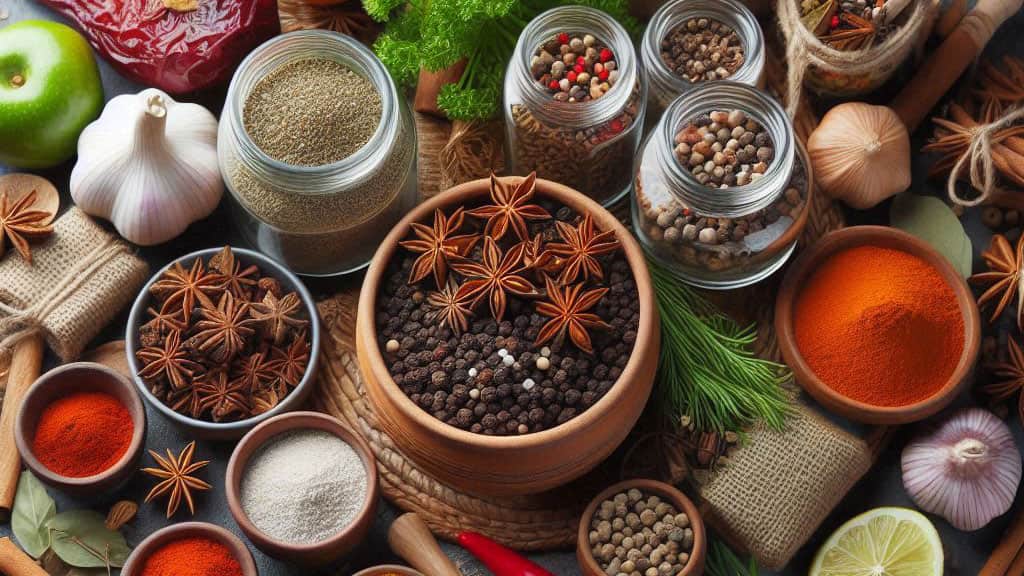
Popular spices give savoury, rich, specific spicy notes to dishes. From anise and cardamom to a mixture of peppers and Italian herbs, there are many of them. Spices enhance the taste of food, make it even more appetising and aromatic. Spices do not tend to spoil quickly, they cannot sour. But their shelf life is also limited. Over time, spices lose their bright and intense flavour, which harmoniously unfolds in different dishes.
To avoid this, you should not throw them “as it happens” in the kitchen, ignore the appropriate container. Let’s understand how to store spices, and where to ergonomically place them for convenience and usefulness in home cookery.
The question of how much to store spices, worries many hostesses. All spices have their own expiry dates, which you need to know about:
In hermetically sealed factory packaging, spices retain their freshness for up to three years. The record holders in terms of shelf life are cinnamon, cloves and cardamom. These spices contain essential oils, the flavour of which is fully revealed in the process of cooking.
Tip! Check the suitability of spices by their smell. If it is weathered, the product will not be of any use.
Knowing how much spices can be stored, you will avoid using expired products and will not spoil your favourite dish.
Provide reliable storage of spices in the kitchen can every hostess. But it is not enough to prepare a suitable container for your favorite seasoning – it is important to place it correctly in the room, to ensure first-class ergonomics without damage to products and shortening the shelf life. Let’s highlight the basic rules for storing seasoning spices:
On a side note! If you keep the spice in a metal container, avoid heating it. This material gets very hot, which negatively affects the properties of the contents.
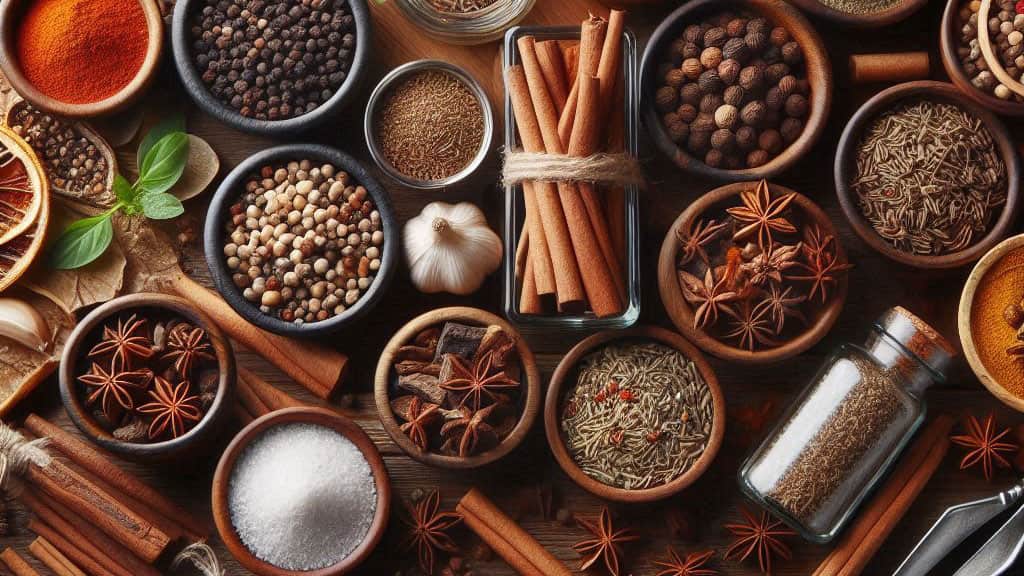
If you are thinking about what to store spices and seasonings in, choose ceramic containers. Containers made of environmentally safe material look presentable, do not wear out like plastic, do not heat up like metal ones. But with a compact arrangement can be a problem – not every kitchen is adapted to large ceramic containers and jars with spices. When choosing containers, try to stick to a single style, size, colours. You can follow the “matryoshka doll” principle and put miniature containers in larger ones.
Tip: Be sure to label your spice jars. You can make signatures with names on pieces of painter’s tape.
If you are looking for the right way to store spices, do not focus on textile bags. Only spices in the form of roots or herbs can be kept in them. But beforehand, the bags should be held in a concentrated salt solution and then dried. Spices can only be stored in them for a short period of time.
Low temperature and high humidity are “companions” of the microclimate in any refrigerator. This is not a suitable environment for ground and dried spices, as lumps appear under the influence of moisture and mould forms. But you can store spices in the fridge if you use chilli, dried paprika and red pepper frequently in cooking. These spices feel great at low temperatures and retain their colour, smell and taste. Use the fridge to store them every day, but be sure to keep the containers airtight.
You can also store fresh spices in the fridge. For example, onions, lemongrass, ginger or chilli peppers.
On a side note Dried garlic, onions, ginger and celery can also be kept in the fridge without shortening the shelf life.
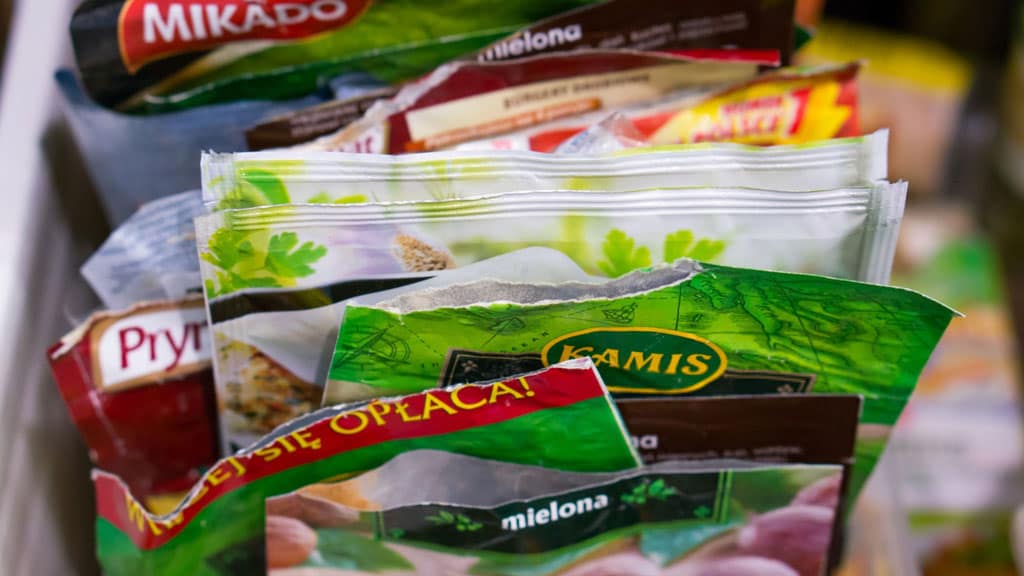
Almost every hostess wonders if spices can be left in store-bought packaging. If the product is sold in foil packets, safely store them for 10-12 months. Only fix the place of cutting the package with a paper clip or clothespin. You can use special snaps, dispensers with a clip to close the bag. This option for storing spices is not popular. Plastic or paper packaging can not create a favourable microclimate for spices. Do not think about how to store spices in bags for many years. The smell in them is quickly lost and the richness of flavour is lost.
Don’t know where to store spices so that no one gets in the way of sachets/jars? It’s easy to organise spice containers ergonomically! Designers and experts have come up with many interesting ideas. If the spices are distributed in sachets, place them on a special carousel stand or wall holder. Jars can be neatly arranged in a hanging cupboard, using plastic stands or sliding panels to save space. The spices are arranged in rows. Pull-out panels are made of plastic or metal for durability.
Tip! Place spices in sachets on a shelf on the cupboard door. Use textile or cardboard “pockets”.
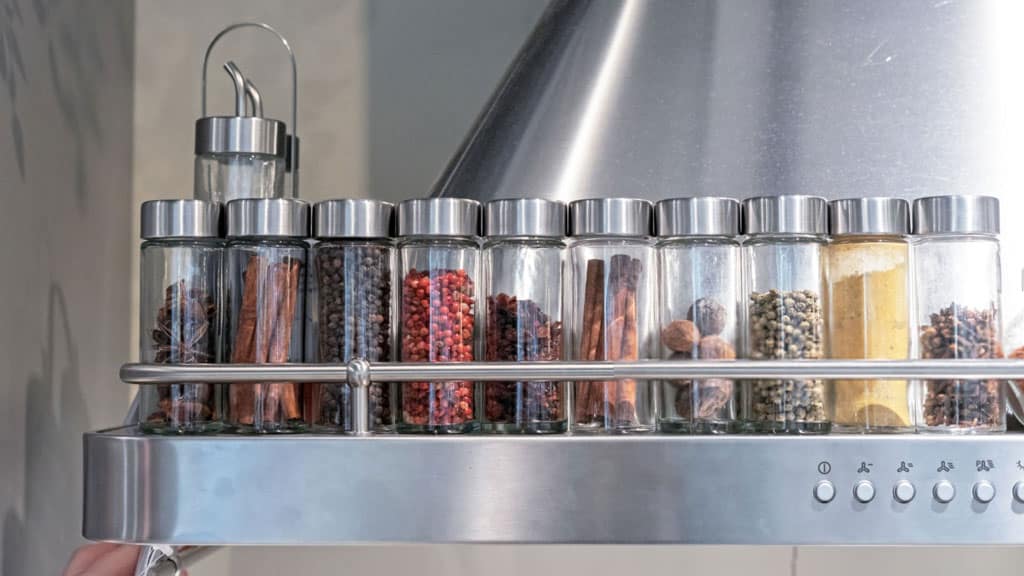
A cluttered kitchen is not the best solution. Ergonomic arrangement of containers with seasonings will help to free up space. About how to store spices ideas from experts will tell you more.
The back of a cupboard door with jar mounts or even shelves built directly into the door – what a space-saver! But remember that condiments don’t like temperature fluctuations, so don’t store them near the hob or radiator.
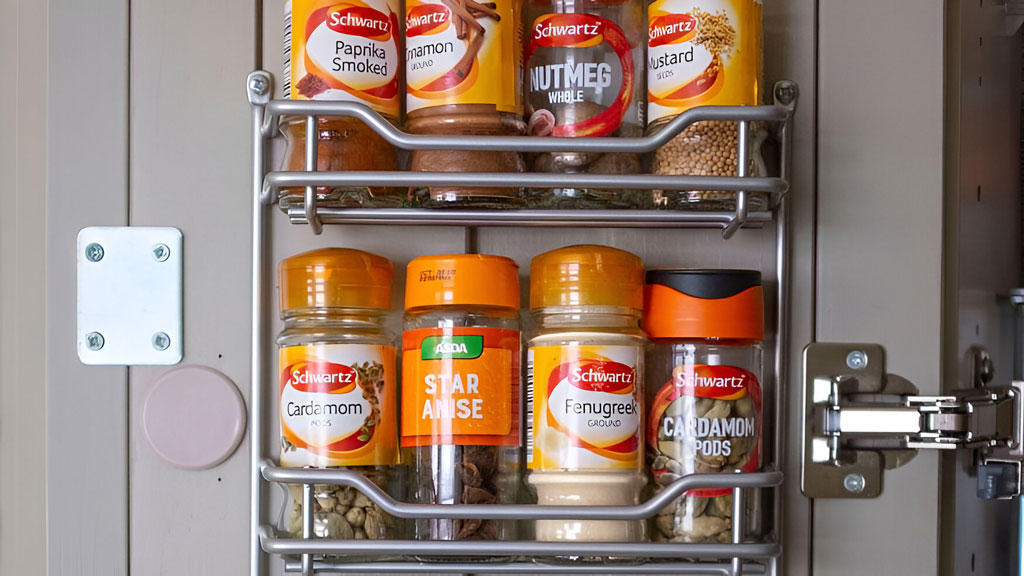
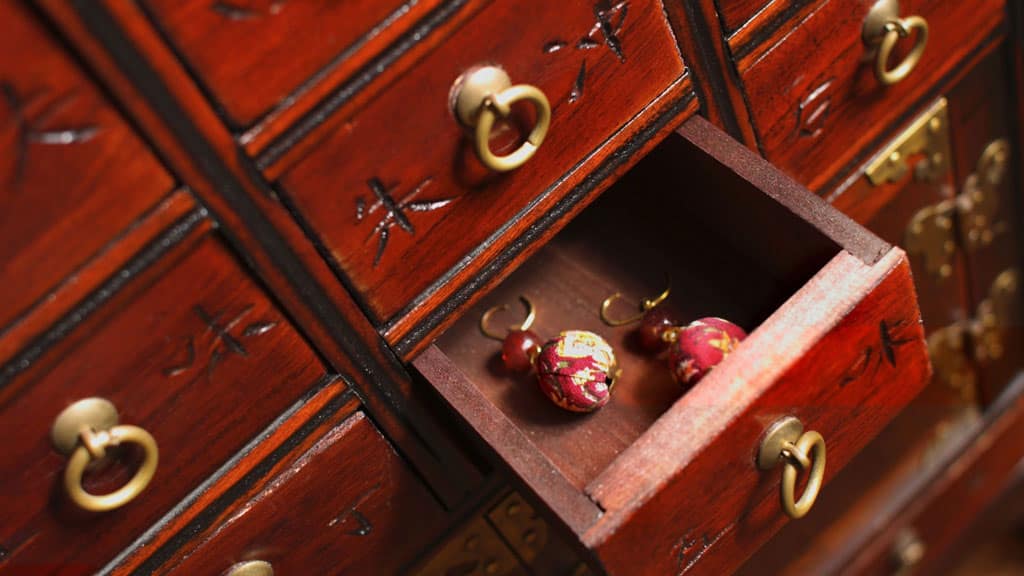
A separate cupboard just for condiments is a luxury. Consider using a narrow medicine cabinet or a small dresser.
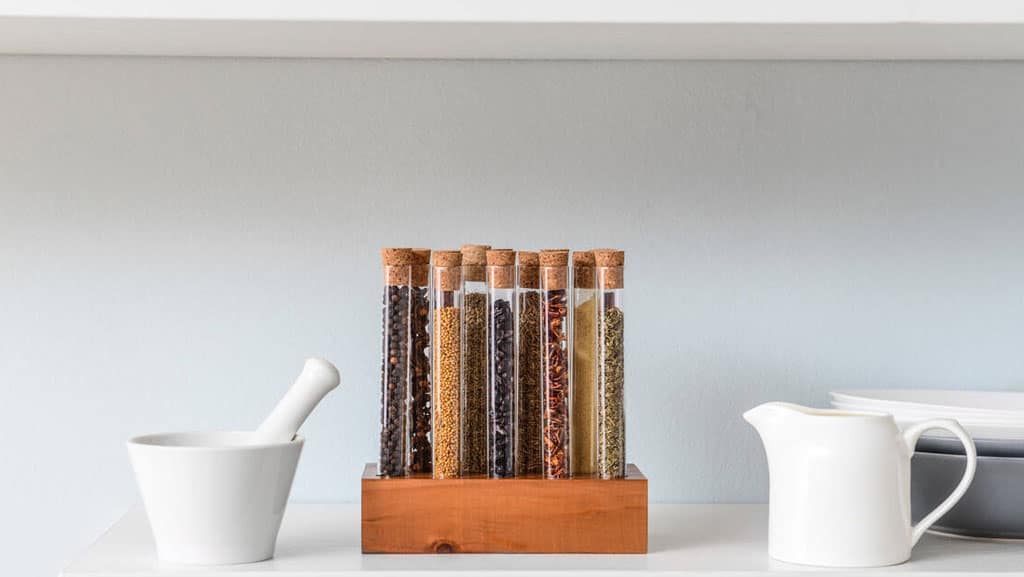
Another storage method that turns your kitchen into an alchemist’s office is test tubes. Store them in a drawer or metal basket and make sure the stopper is tight – otherwise moisture can spoil the spices.
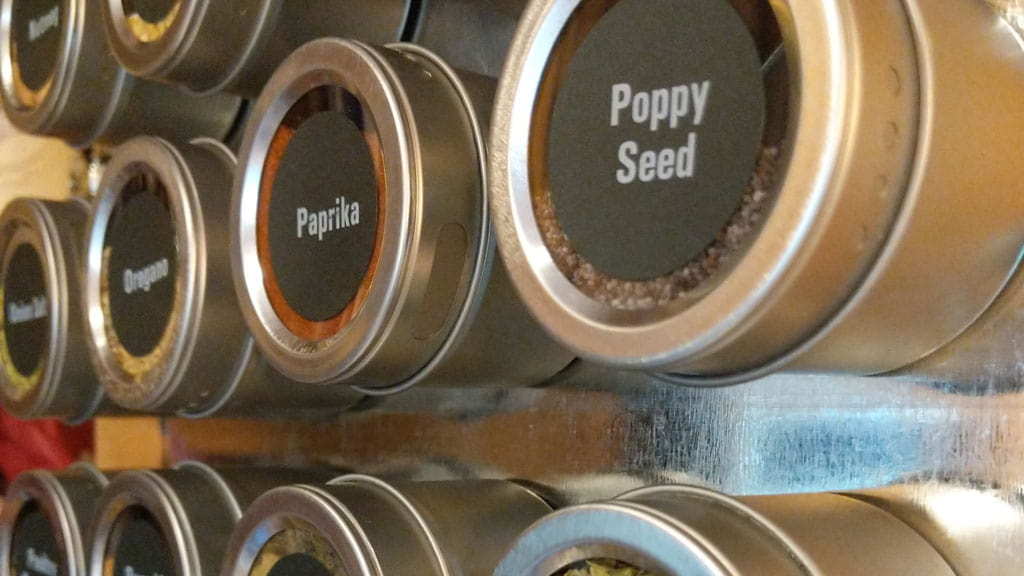
Spices in jars with magnets are conveniently attached to any metal surface. For example, on the fridge. Magnets from travelling will have to be sacrificed.
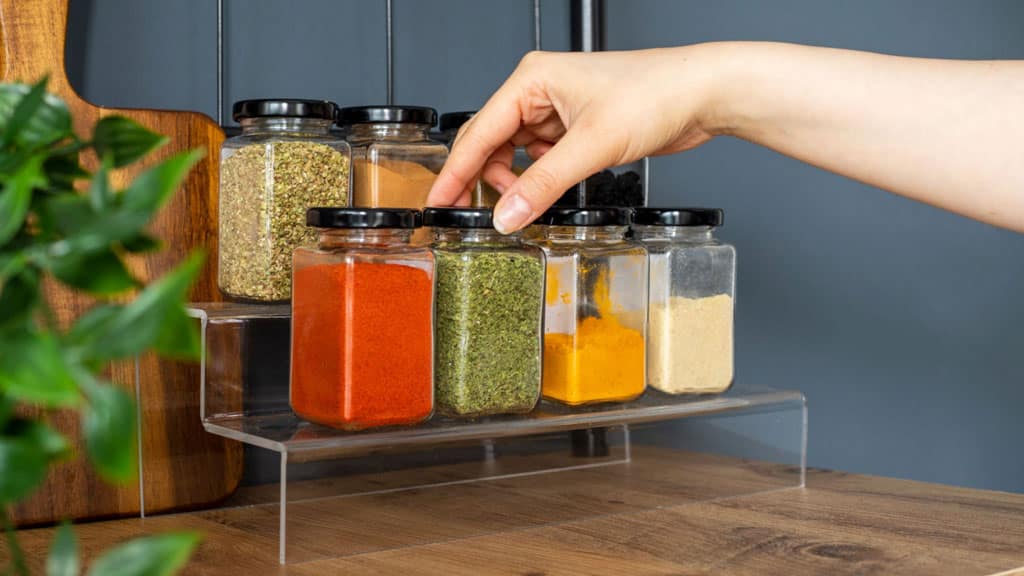
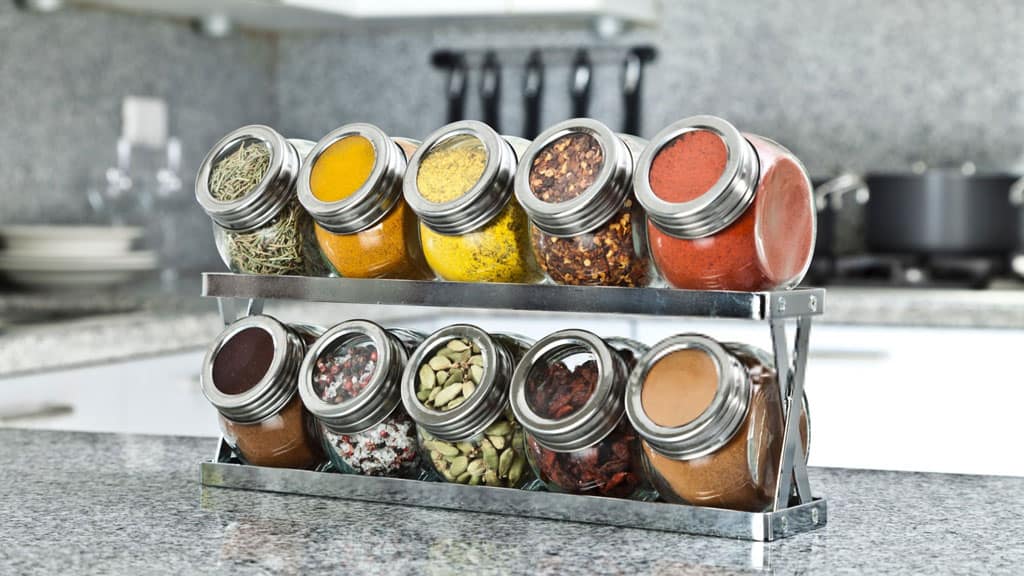
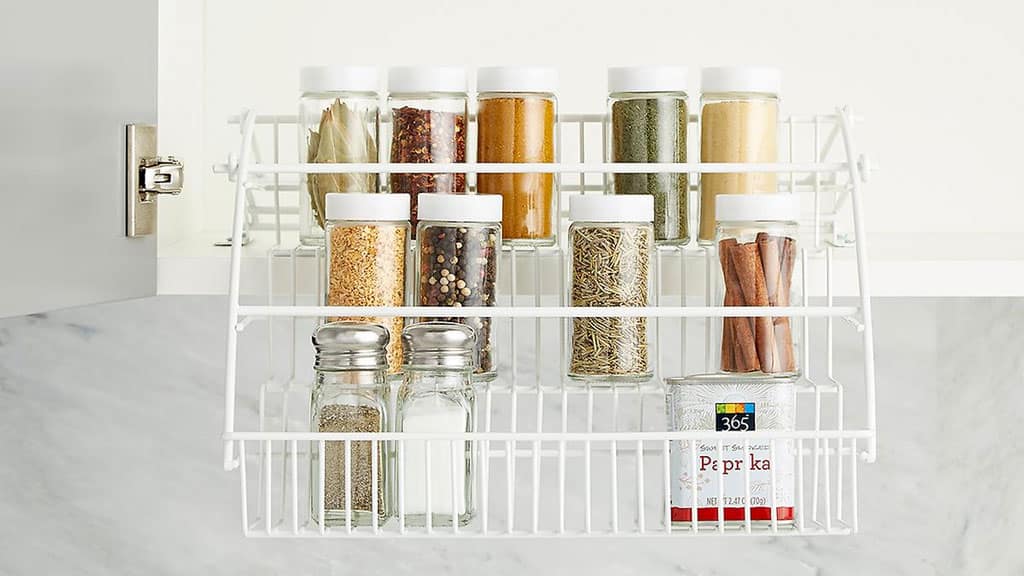
Jars and miniature containers with spices look great in tiered stands. They resemble small ladders with several steps. On them you can arrange all the containers so that you can see the full range. If you want to try out an interesting recipe, you won’t be distracted by long searches for the right seasoning. Wooden three-tiered stands look spectacular. They can easily be placed directly on the worktop or in a cupboard.
Supports for drawers in kitchen cabinets are designed for horizontal placement of containers. They include several shelves or miniature cells for spice jars.
On a side note! Traditional stands can be replaced with magnetic tape for metal containers. It is fixed from the inside of the hanging cabinet. The optimal position is on the door.
Rotating stands for corner sections differ in shape and design. They are selected for the kitchen interior, impress with futuristic elements or laconic execution. Rotating designs allow you to collect all the spices in one place and provide quick access to them.
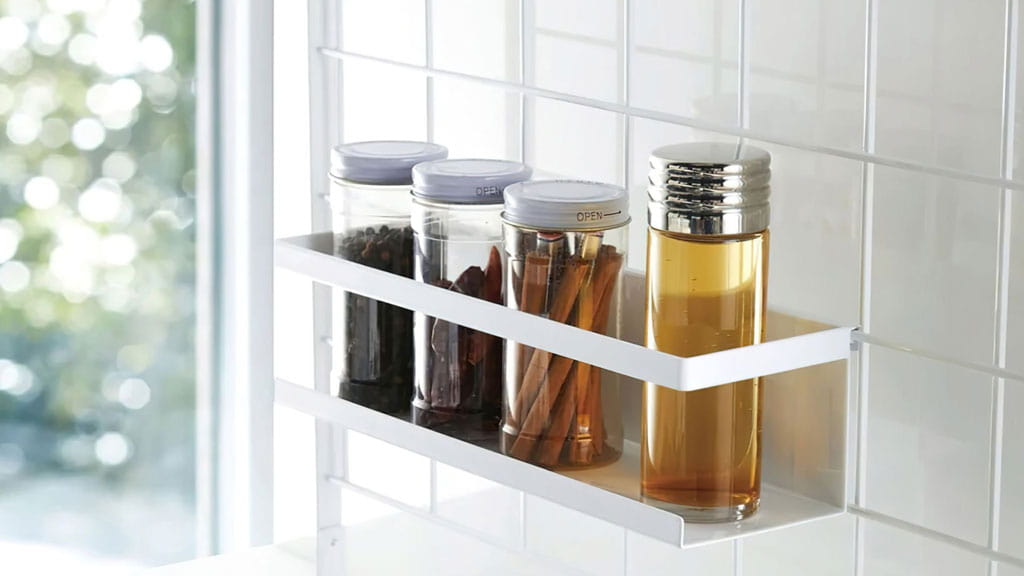
How to properly store spices in stylish transparent jars? Place them on hanging shelves. These devices are easy to install – elementary cling to the kitchen cabinet and save vertical space. Some shelves are additionally equipped with holders for paper towel rolls.
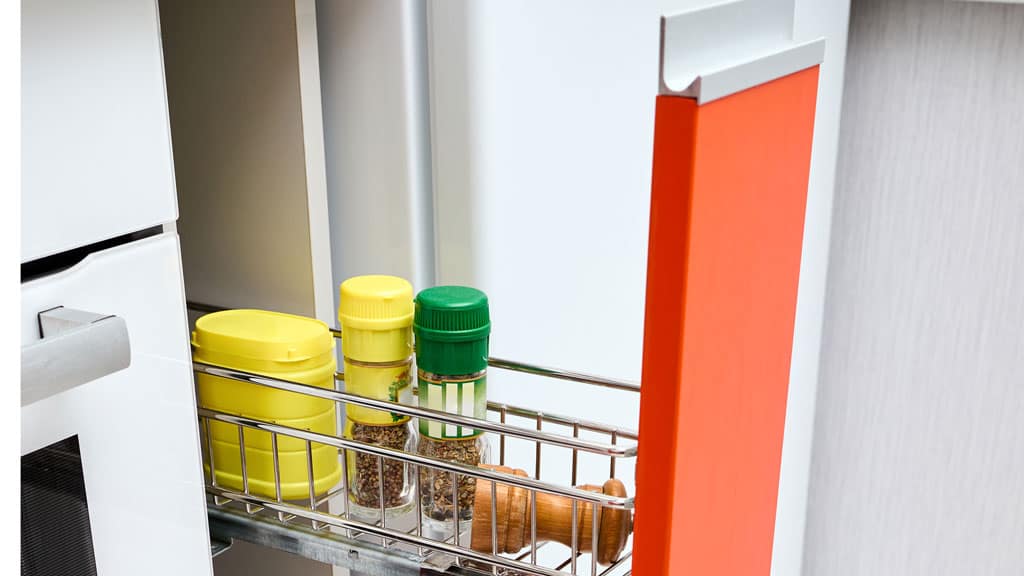
Narrow drawers, built into the headsets, have a convenient vertical direction. In them, condiment jars can be ergonomically arranged “at attention”. A large depth and the possibility of distribution in three or four rows is the key to saving space. Horizontally, such drawers occupy only 15-20 cm.
Miniature round containers can be placed near the kitchen apron or on any other wall. The principle of fixing the jars is magnetic. It is recommended to choose containers of the same type and size to maintain design harmony.
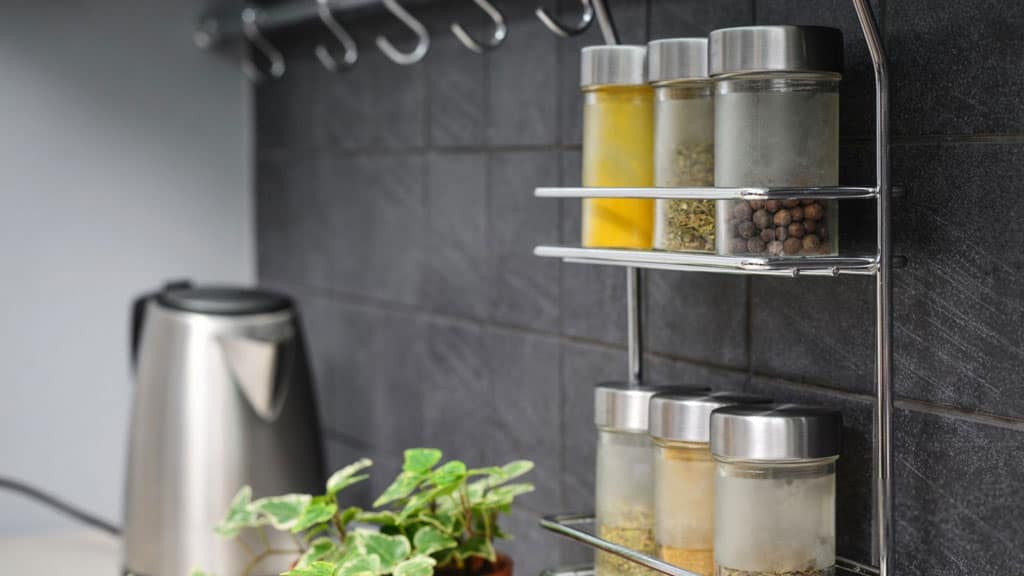
You can use kitchen rails to hang jars through special holes or purchase the above-mentioned metal hanging shelves. Shiny chrome designs look spectacular. The pros of the rails include:
Tip! If all the walls are occupied, attach magnetic jars directly to the fridge door. Or you can glue the lids of the containers to the bottom of the upper cabinets and, if necessary, unscrew them in a few seconds.
If you are not looking for easy solutions and want to organise a non-standard storage system for condiments, order secret drawers. They are placed at the bottom of the kitchen cabinets, hinged on chains or slide out with a slight slope. To maintain a uniform design concept, the drawers should be made of the same material as the range.
Saving kitchen space, where everything is eternally occupied by containers, boxes, cans, is of great importance for hostesses. Still thinking about how to store spices in the kitchen? Use the listed ideas and options, but always observe the only condition. Do everything with a positive attitude!