

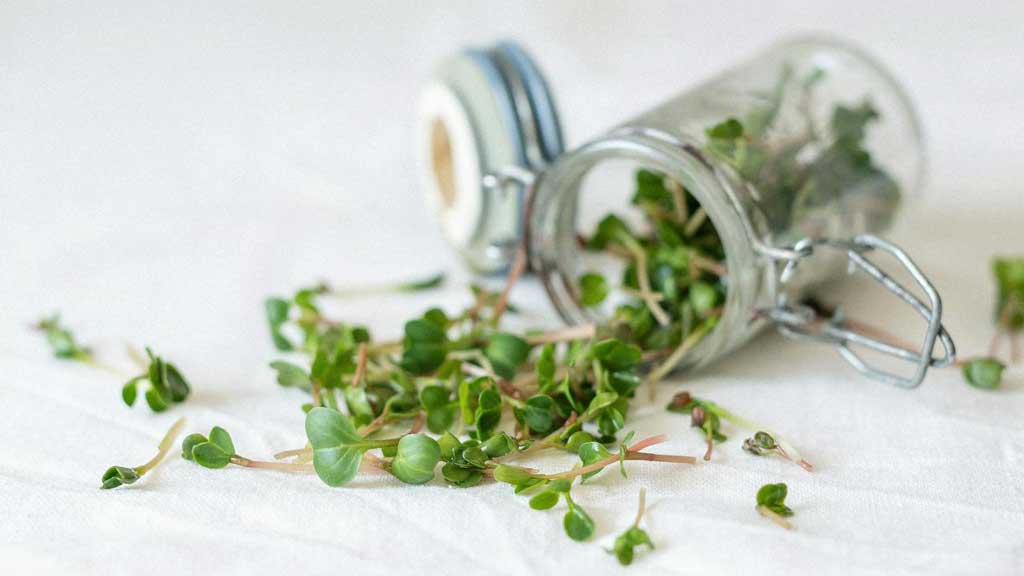
Sprouted seeds, grains and legumes are a treasure trove of vitamins, minerals, enzymes and antioxidants. A real find for lovers of healthy eating. As there are fewer fresh seasonal vegetables and fruits available in autumn and winter, sprouts are a great year-round solution to have a concentrated serving of vitamins, a healthy snack and a new ingredient for your meals. In this article, we’ll tell you what makes sprouts so good and how easy and simple it is to grow them at home.
Sprouts are considered one of the most valuable products in terms of both the content of useful substances and the ease and speed of their digestion. Thanks to their increased biological value, they fill the body with health and energy, which is especially important in the conditions of urban life.
In dry seeds that have not been treated, all the valuable substances are “preserved”. During the germination process, a magical transformation takes place: the enzymes contained in the germ are activated, breaking down complex nutrients into simpler ones. As a result, the sprouts become already partially “digested” food and are therefore easier to digest.
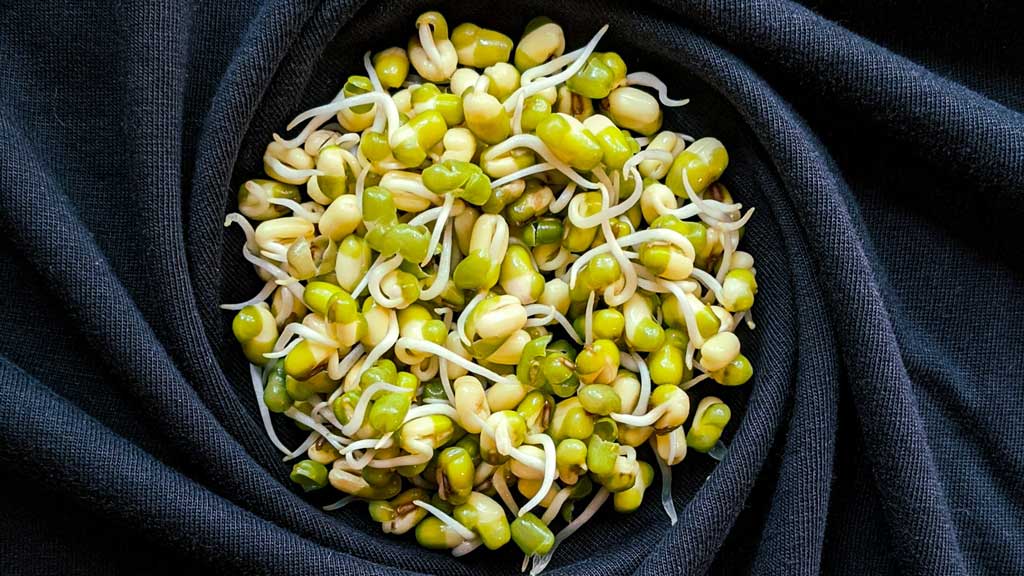
By eating sprouts, we get the most essential nutritional elements and save a lot of energy for digestion. In addition, during sprouting, the content of vitamins, trace elements and antioxidants in the seeds increases many times over.
The benefits of eating sprouted grains are enormous. It strengthens immunity, cleansing from toxins, slowing down aging processes, preventing colds and inflammation, improving metabolism, increasing efficiency and even anticarcinogenic effect.
Ready-made sprouts have appeared on the shelves of many health food shops, but the process of growing them at home is not difficult at all and has a number of advantages. Firstly, it is much cheaper. Secondly, by buying organic seeds, legumes and grains yourself, you can be 100% sure of the quality of the sprouts. Finally, you’ll always have this super healthy ingredient on hand for salads, soups, smoothies and other dishes. Let’s not forget that food grown with warmth and love with your own hands has extra value.
Various grains, legumes and nuts are suitable for sprouting: alfalfa (alpha-alpha), wheat, rye, barley, spelt, spelt, spelt, mungbean, beans, chickpeas, lentils, oats, peas, green buckwheat, sunflower seeds, flax seeds, sesame seeds, pumpkin seeds and others.
Sprouts of different types of seeds differ from each other with special properties and benefits. For example, sprouted flaxseeds and pumpkin seeds are anti-parasitic, sprouted legumes are rich in protein, and alfalfa and amaranth seeds strengthen the cardiovascular system.
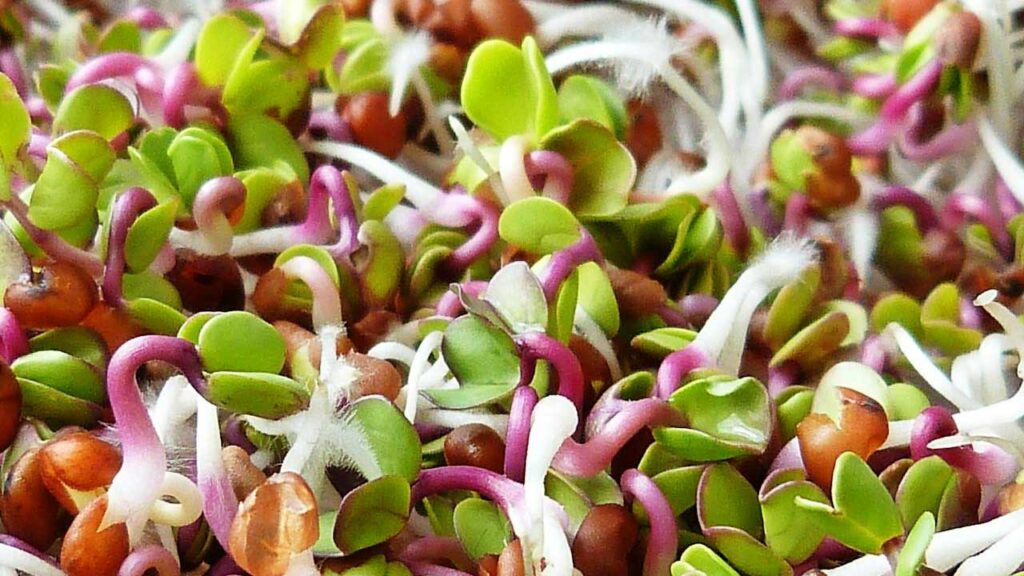
It is better to buy sprouting grains from trusted shops, pharmacies or farm shops. If possible, choose organic crops and speciality grains for sprouting to maximise the health benefits. The grains should be whole, free of stains, fungal growths, unripened and not over-dried. You can find a wide range of seeds for germination in online shops, including such exotic varieties as arugula, mustard and amaranth seeds.
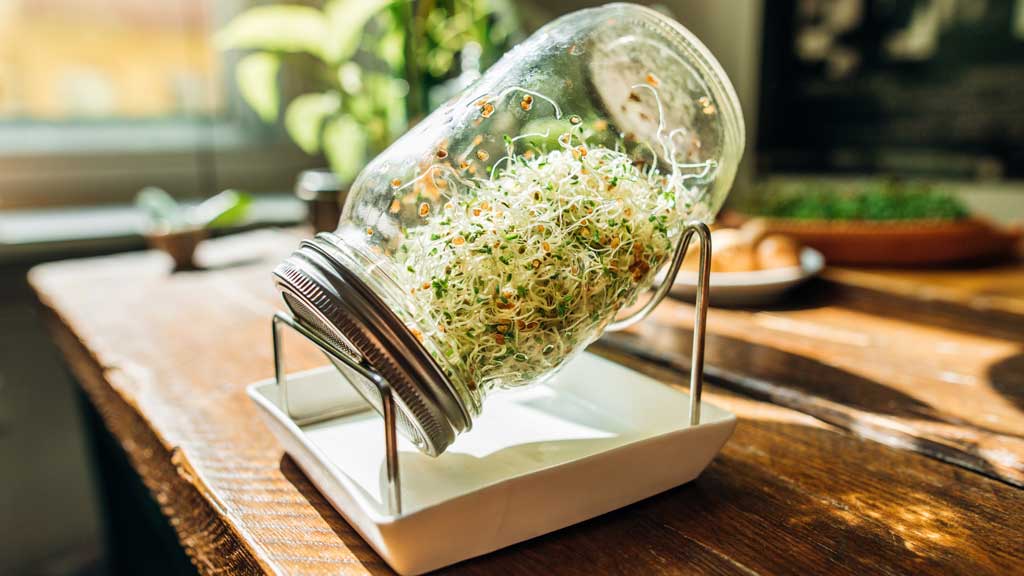
The most convenient are special portable germinators that keep your labour to a minimum. However, a glass jar with a volume of 0.5 to 2 litres will also do. The principle of germination of all seeds is the same, the only difference is the time after which they will rise.
Take 1-2 tablespoons of seeds or cereals and wash them first. Place the seeds in a jar and pour drinking water at room temperature so that there is 2-3 times more water. It is more convenient to do this in the evening, as the average soaking time is 8 to 12 hours. Cover the jar with gauze in several layers and fix it with a rubber band.
The next morning, drain the water in which the seeds were soaked through the gauze and rinse the seeds with water again. After soaking the seed “awakens” and growth processes start in it. Rinse the seeds at least twice a day. After rinsing, turn the jar upside down and place it at an angle of about 45 degrees so that the excess water drains out, but leaves room for air to enter and creates a greenhouse effect in the jar. Regular rinsing ensures optimum seed moisture and removes harmful microorganisms, fungal growth, pesticide residues and so on. Finally, the water “escapes” inhibitor substances that block the seeds from germinating in a dormant state.
Another way to germinate seeds is the plate method. After soaking, spread the washed seeds on a plate and cover them with gauze. At least twice a day, rinse the grains through a sieve or colander and then spray the gauze with a sprayer from time to time. The seeds should be moist, but not too wet, as this will lead to mould.
Seeds take an average of one to five days to germinate – depending on the crop.
Sprouted grains (wheat, rye, oats) should preferably be eaten when their size does not exceed 2-5 millimetres. In overgrown grains, most of the useful substances go into the sprouts, and then the grain itself does not represent a special energy value for the body.
Legumes can be eaten both with small, just sprouted sprouts and those that have reached 3-5 centimetres.
Small seeds (alfalfa, broccoli, chia, arugula, mustard) are sprouted until microgreens appear – sprouts 2-6 centimetres long.
Be sure to rinse the sprouts with water before consumption. To ensure that the beneficial properties of the seeds do not diminish, eat them fresh, without heat treatment. Sprouts significantly increase the nutritional value of any dish. Add them to salads, soups, main dishes, smoothies, sandwiches, porridge. One of the easiest ways is to grind them in a blender along with fruits, vegetables and herbs.

Sprouts differ from each other with different flavours. For example, radish sprouts are spicy, alfalfa is quite neutral, and sprouted sunflower seeds are juicy, fleshy and good for satiety.
From wheat sprouts you can grow a grass – vitgrass, rich in chlorophyll, enzymes, vitamins, minerals and amino acids. It makes a very healthy fresh juice that is one of the most popular superfoods in the world.
Do not consume sprouts along with milk or dairy products! This can cause abdominal bloating and increased gas.
Prepared sprouts keep for an average of two to five days in the refrigerator. Store them in a container without tightly closing the lid. It is advisable to rinse them daily with clean water.
By consuming sprouts, we get to eat a real living organism containing the maximum amount of essential vitamins and antioxidants that can protect us from disease, heal and prolong our youth and beauty. We hope that now this useful product will take a permanent place in your daily diet.